
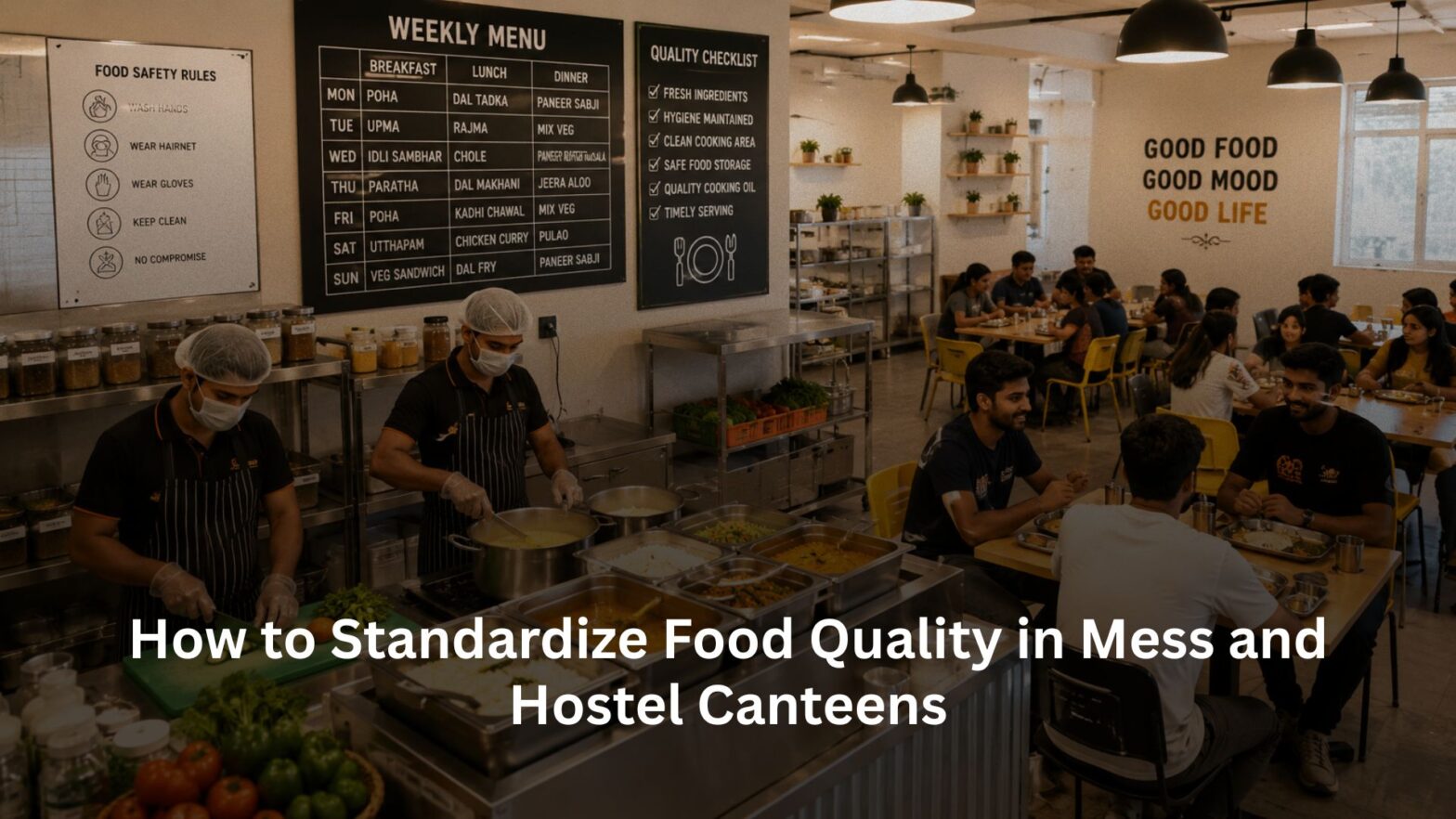
How to Standardize Food Quality in Mess and Hostel Canteens
Food quality is one of the few things in hostel and PG operations that residents notice every single day without fail. A tenant may ignore slightly outdated furniture, tolerate delayed maintenance for a while, or adjust to limited amenities over time, but inconsistent food immediately becomes part of the property’s daily conversation. The moment meals start feeling repetitive, unhygienic, poorly prepared, or operationally disorganized, dissatisfaction spreads quickly among residents.
This is because food is not treated like an “extra facility” inside hostels and PGs. It becomes part of the tenant’s lifestyle, routine, comfort, and emotional experience while living away from home. For students, food often affects concentration, energy levels, and emotional familiarity. For working professionals, it directly influences convenience and day-to-day living comfort after long work hours.
That is why professionally managed hostel operators no longer treat mess management casually. They understand that food quality directly affects:
- tenant retention because residents are far more likely to renew stays in properties where daily living feels stable and comfortable,
- online reputation since food complaints appear repeatedly in Google reviews and heavily influence future tenant decisions,
- and occupancy consistency because prospective residents almost always ask existing tenants one question before booking: “How’s the food there?”
The challenge, however, is that many hostel kitchens are still managed informally. Procurement decisions change randomly, menu planning lacks structure, hygiene systems weaken over time, and operational feedback only gets addressed after residents become frustrated. Initially, this may seem manageable in smaller properties, but once occupancy grows, operational inconsistency becomes extremely visible.
This is why standardization matters so much.
The strongest food operations are not necessarily the most luxurious or expensive. They are the ones built on systems that maintain consistency every single day regardless of occupancy pressure, staffing changes, or operational workload.
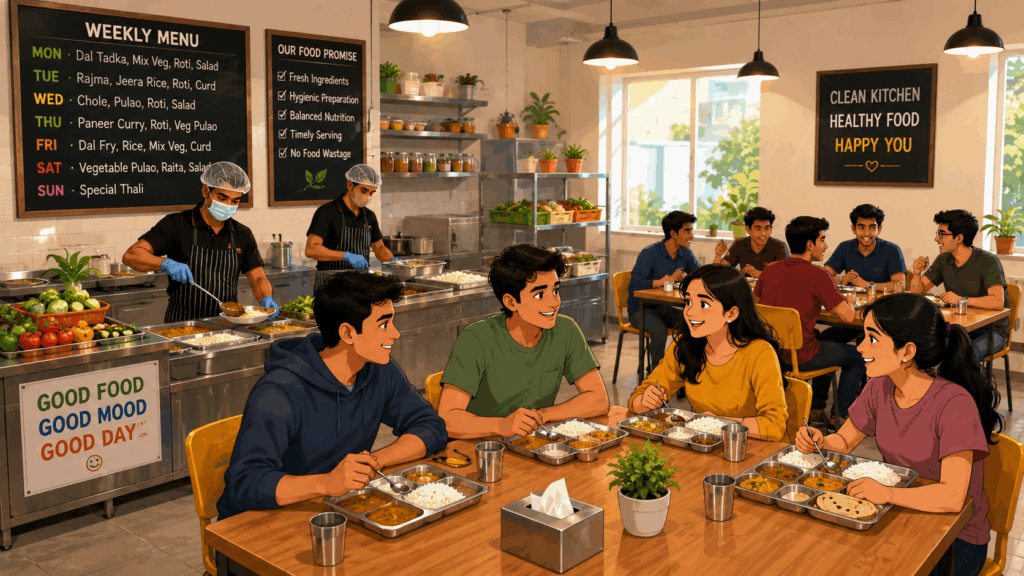
Why Food Problems Escalate Faster Than Other Hostel Complaints
Food complaints spread differently compared to most operational issues inside hostels and PGs. A maintenance issue may affect only one room temporarily. A Wi-Fi issue may frustrate residents occasionally. But food impacts everyone collectively, repeatedly, and emotionally.
Residents discuss meals constantly:
- during breakfast before classes or office hours,
- while eating dinner together in common dining areas,
- inside WhatsApp groups where complaints spread quickly,
- and during conversations with prospective tenants considering move-ins.
This creates a multiplier effect around food dissatisfaction.
For example, a tenant may initially complain about oily meals or repetitive breakfasts casually. But when several residents start experiencing the same frustration daily, the issue quickly evolves into a larger operational problem involving:
- declining trust in management responsiveness,
- increasing negativity around the property environment,
- and stronger dissatisfaction with overall living standards.
Food complaints also become emotional much faster because tenants subconsciously associate meals with care, comfort, and operational reliability. When food quality feels neglected, residents often feel the management itself has become careless.
That perception affects:
- resident morale,
- long-term retention,
- and even referral growth within student and working professional communities.
This is why food operations cannot rely entirely on improvisation anymore. Strong operators proactively build systems that prevent inconsistency before complaints start escalating across the property.
The Biggest Operational Mistake Hostel Operators Make
One of the most common mistakes in mess management is running kitchens reactively instead of systematically. In many hostels, food operations only receive attention after complaints increase significantly. Until then, management often depends on temporary fixes and verbal coordination rather than structured processes.
For example, operators may:
- switch vendors abruptly based on short-term pricing differences without evaluating ingredient consistency or long-term reliability,
- change cooks frequently without maintaining documented preparation standards, causing taste and quality fluctuations across different shifts,
- or modify menus randomly every week without balancing nutritional planning, procurement efficiency, and kitchen execution capability.
The result is operational unpredictability.
Residents may not expect restaurant-level dining every day, but they absolutely expect consistency. They want meals that feel:
- hygienic,
- stable in quality,
- reasonably balanced,
- and operationally dependable.
Professional hostel kitchens understand this very clearly. They focus less on “impressing” residents occasionally and more on delivering a reliable dining experience consistently over time.
That operational mindset changes everything because consistency builds trust far faster than occasional excellence.
Why Vendor Management Quietly Determines Food Quality
Most operators focus heavily on kitchen staff while overlooking the role procurement plays in food consistency. In reality, many food quality problems begin before ingredients even enter the kitchen.
For example, inconsistent sourcing can quickly affect:
- rice texture and overall meal satisfaction when vendors keep changing based purely on cost,
- vegetable freshness and nutritional quality when procurement cycles become irregular,
- dairy consistency during breakfast service, especially in large occupancy properties,
- and cooking oil quality, which residents often notice surprisingly quickly through taste and heaviness in meals.
When these inconsistencies continue over time, tenants start perceiving the food system as unstable. Even if cooks are skilled, fluctuating ingredient quality makes consistent execution difficult.
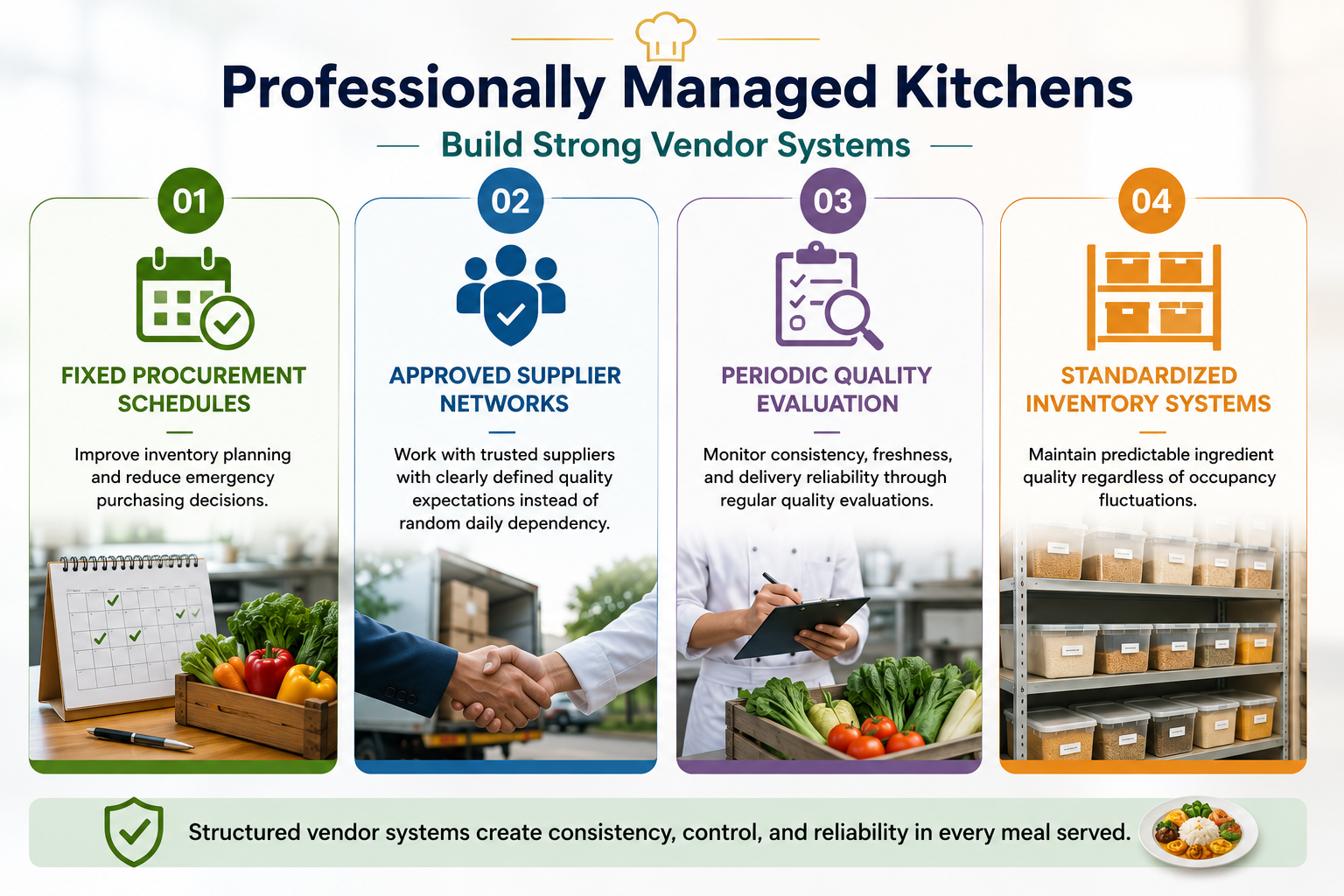
This is why professionally managed hostel kitchens usually maintain structured vendor systems involving:
- fixed procurement schedules that improve inventory planning and reduce emergency purchasing decisions,
- approved supplier networks with clearly defined quality expectations instead of random daily vendor dependency,
- periodic quality evaluation processes that monitor consistency, freshness, and delivery reliability,
- and standardized inventory systems that help kitchens maintain predictable ingredient quality regardless of occupancy fluctuations.
Strong procurement systems create operational stability inside the kitchen itself. Instead of constantly adjusting to inconsistent raw materials, kitchen teams can focus on preparation discipline, timing efficiency, and hygiene execution.
Over time, this improves:
- resident satisfaction,
- kitchen efficiency,
- and cost predictability simultaneously.
Why Menu Planning Needs Strategic Thinking
One of the fastest ways to create tenant dissatisfaction is poor menu planning. Many hostel kitchens either become excessively repetitive or operationally chaotic due to random experimentation.
Both approaches eventually fail.
Residents generally accept routine if the routine itself feels balanced, hygienic, and professionally managed. Problems begin when meals start feeling:
- nutritionally repetitive,
- operationally inconsistent,
- poorly timed,
- or disconnected from resident preferences.
At the same time, excessive menu changes create new operational problems:
- procurement complexity increases,
- kitchen preparation becomes inconsistent,
- food wastage rises,
- and staff coordination weakens during peak occupancy periods.
The strongest hostel kitchens balance:
- variety,
- operational simplicity,
- nutritional consistency,
- and resident familiarity.
This is why many successful PGs now follow rotating meal systems instead of random day-to-day planning. Structured weekly or monthly menu cycles help operators:
- maintain procurement discipline because inventory forecasting becomes much more predictable,
- reduce resident fatigue by introducing controlled variation without operational confusion,
- improve kitchen execution consistency since preparation processes become more repeatable,
- and maintain healthier cost control while still offering balanced meal diversity across the month.
Good menu planning is not about creating complicated meals every day.
It is about creating operationally sustainable meal systems that residents can trust long-term.
Why Hygiene Standards Require Continuous Operational Discipline
One major misconception in hostel food management is assuming hygiene depends mainly on deep cleaning or occasional inspections. In reality, hygiene quality is built through everyday operational discipline.
Initially, most hostel kitchens maintain acceptable standards. But as occupancy increases and operations become busier, small shortcuts slowly start appearing:
- food storage becomes inconsistent during rush hours,
- refrigerators become overloaded without proper monitoring,
- utensils remain unwashed longer during serving pressure,
- waste disposal timing weakens,
- and preparation surfaces stop receiving regular sanitation attention.
These issues may initially seem operationally minor, but tenants notice hygiene deterioration very quickly because food is emotionally sensitive.
The moment residents start questioning kitchen cleanliness, overall trust in management weakens significantly.
This is why professionally managed kitchens maintain structured hygiene systems involving:
- scheduled cleaning checklists covering storage areas, preparation counters, serving zones, and refrigeration systems,
- staff hygiene protocols that define grooming standards, uniforms, handling practices, and kitchen discipline expectations,
- ingredient monitoring systems that reduce expired inventory risks and improve freshness consistency,
- and periodic operational audits that identify hygiene gaps before residents begin escalating complaints publicly.
Strong hygiene management is not about creating a “visually clean” kitchen for inspections.
It is about maintaining operational confidence consistently every single day.
Why Resident Feedback Systems Matter So Much
Many hostel operators only discover food dissatisfaction after frustration has already spread across the property. By then, complaints are usually emotional rather than constructive.
Professional food systems solve this differently by creating structured feedback loops early.
Instead of waiting for tenants to become angry, strong operators consistently track:
- repetitive meal dissatisfaction patterns,
- complaints regarding portion consistency or serving quality,
- recurring concerns around oil usage, spice balance, or freshness,
- and operational gaps involving meal timing or dining coordination.
This helps management identify issues before they escalate into property-wide dissatisfaction.
For example, if residents repeatedly mention:
- oily dinner preparation,
- repetitive breakfast options,
- delayed serving during peak hours,
- or inconsistent food temperature,
management can respond proactively instead of reactively.
The strongest operators treat feedback as operational intelligence, not criticism.
Because residents usually identify declining food consistency much earlier than management teams do internally.
Feedback systems also improve trust because tenants feel:
- management is actively listening,
- improvements are visible,
- and complaints are not being ignored casually.
That emotional confidence plays a major role in long-term tenant satisfaction.
Why Food Operations Become Much Harder at Scale
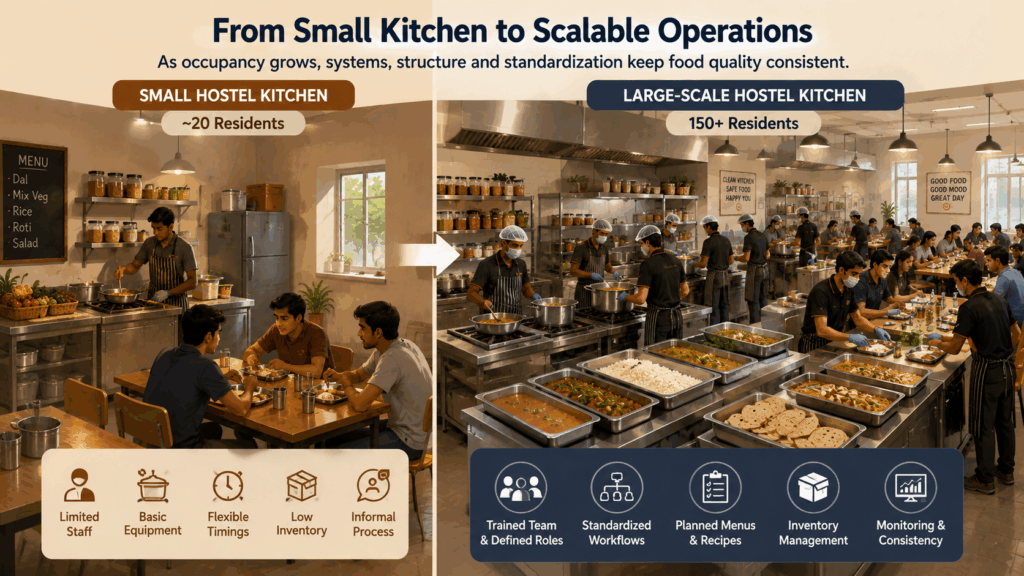
Food systems that function smoothly for:
- 20 residents
often collapse operationally at: - 150 residents.
This is where many hostel operators struggle during growth.
As occupancy increases, kitchens face:
- significantly higher procurement pressure,
- faster inventory movement,
- stricter serving timelines,
- staffing coordination challenges,
- and much stronger consistency expectations from residents.
Without systems underneath, scaling usually weakens:
- taste stability,
- hygiene discipline,
- preparation quality,
- and portion consistency.
This is why professionally managed large-scale hostels rely heavily on:
- documented kitchen workflows that reduce dependency on verbal coordination,
- standardized preparation systems that maintain taste consistency across shifts,
- inventory visibility tools that improve procurement planning and reduce shortages,
- and operational monitoring systems that help management identify inefficiencies quickly.
Because once kitchens scale beyond smaller occupancies, operational structure matters far more than individual effort alone.
How RentOk Helps Streamline Hostel Operations
Managing hostel food operations consistently becomes difficult when occupancy tracking, resident communication, complaint handling, and operational coordination remain scattered across different systems. Many operators still depend heavily on notebooks, informal communication, spreadsheets, and disconnected workflows, which eventually creates visibility gaps as occupancy grows.
RentOk helps hostel and PG operators centralize:
- tenant management and occupancy visibility so meal planning becomes more accurate and operational forecasting improves significantly,
- complaint tracking and communication coordination so recurring food-related concerns become easier to identify, monitor, and resolve systematically,
- operational workflows across teams without relying heavily on scattered chats or manual follow-ups,
- and resident management visibility that helps operators maintain more organized day-to-day hostel operations as scaling complexity increases.
As hostel businesses grow, maintaining food quality becomes heavily dependent on operational clarity underneath. Strong systems improve coordination, reduce management confusion, and help operators maintain more structured and professional property operations overall.
Conclusion
Food quality in hostels and PGs is no longer just a support service sitting in the background of operations. It has become one of the strongest indicators of management quality, operational discipline, and resident experience.
The operators who maintain strong food systems successfully are usually the ones who focus on:
- procurement consistency,
- structured menu planning,
- hygiene discipline,
- operational visibility,
- and proactive feedback systems
instead of constantly reacting to complaints after dissatisfaction has already spread.
Because ultimately, residents are not simply evaluating the meal itself.
They are evaluating whether the entire living environment feels stable, reliable, and professionally managed over the long term.
If you want to streamline hostel operations, improve resident management, and build more organized property workflows, explore RentOk to manage modern PG and co-living operations more efficiently through one centralized platform.