
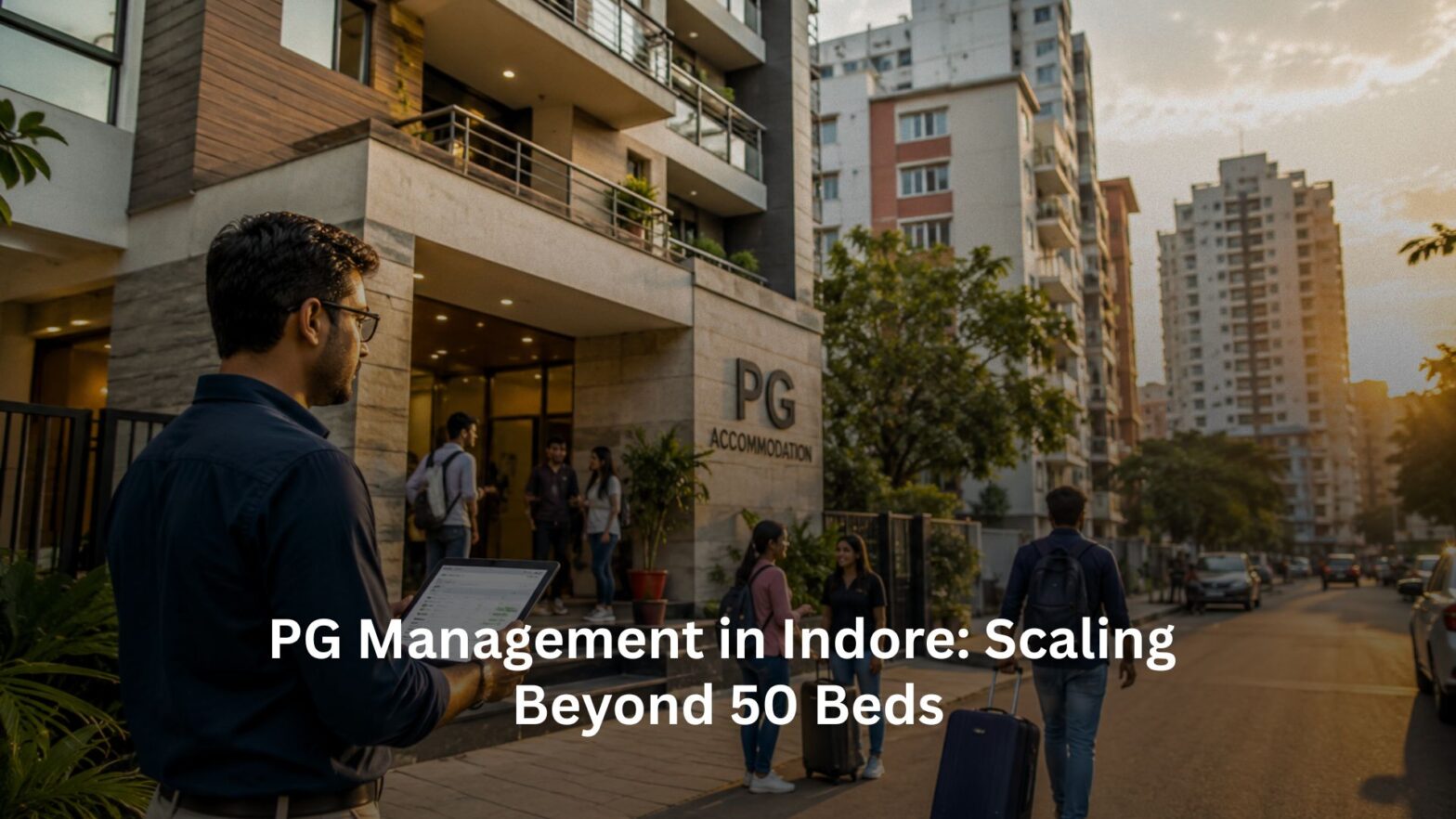
PG Management in Indore: Scaling Beyond 50 Beds
A few years ago, most discussions around India’s rental housing market revolved around metropolitan cities like Bengaluru, Delhi, Mumbai, or Hyderabad. Today, that narrative is changing rapidly. Tier-2 cities are no longer just emerging markets, they are becoming some of the fastest-growing destinations for students, working professionals, and businesses alike. Among them, Indore has established itself as one of the strongest growth stories, creating new opportunities for PG owners and co-living operators.
The city’s expanding IT sector, educational institutions, manufacturing hubs, and startup ecosystem have led to a steady increase in migration. Every month, thousands of students and professionals arrive in Indore looking for accommodation that is affordable, secure, and well-managed. For property owners, this has translated into stronger occupancy levels and the confidence to expand beyond a single building.
However, growth brings its own challenges.
Managing a 20-bed PG is very different from operating a property with 50, 80, or even 150 beds. The systems that worked when you knew every tenant personally begin to break down as occupancy increases. Rent collection becomes more complex, maintenance requests multiply, staff coordination becomes difficult, and communication gaps start affecting the overall tenant experience.
This is why many successful PG operators in Indore are shifting their focus from simply increasing occupancy to building operational systems that can support long-term growth. Instead of relying on manual registers, WhatsApp messages, and spreadsheets, they are adopting structured processes that help them manage larger properties efficiently.
If you’re planning to expand your PG business in Indore, or already managing more than 50 beds, understanding these operational shifts can help you stay ahead in an increasingly competitive market.
Why Is Indore Emerging as a PG Hotspot?
Indore’s growth is not happening by chance. It is being driven by a combination of economic development, infrastructure expansion, and a steady influx of people relocating for education and employment. Unlike many cities where demand fluctuates throughout the year, Indore benefits from multiple tenant segments that keep the rental market active across seasons.
Several factors are contributing to this momentum:
- A rapidly expanding employment market has attracted professionals working in IT, manufacturing, logistics, finance, and service industries. As more companies establish operations in the city, the demand for quality rental accommodation continues to rise.
- Educational institutions across the city bring in thousands of students every academic year. Since many students prefer professionally managed PGs over traditional rental housing, operators are seeing higher occupancy in areas surrounding colleges and universities.
- Improved infrastructure and connectivity have made Indore an attractive destination for businesses and young professionals. Better roads, public transport, and commercial development have increased the appeal of several residential localities.
- Affordable living costs compared to metro cities encourage both students and working professionals to choose Indore without compromising on lifestyle. This has also made the city attractive for companies expanding into Tier-2 markets.
As tenant expectations evolve alongside this growth, PG owners are finding that simply offering a room is no longer enough. Residents increasingly compare properties based on cleanliness, digital payment options, maintenance responsiveness, internet connectivity, security, and the overall living experience.
This shift means operational excellence is becoming just as important as location.
As tenant expectations continue to evolve, operators also need to understand what today’s residents value beyond rent and location. Our blog What Modern Indian Tenants Expect from a PG in 2026 explores the changing priorities that are shaping accommodation decisions across cities like Indore.

Growth Creates Opportunities, but It Also Creates Complexity
Crossing the 50-bed mark is often seen as a milestone for PG owners. It usually reflects strong demand, successful occupancy management, and confidence to expand. But operationally, this is also the point where many businesses discover that their existing processes no longer scale.
At a smaller level, daily operations are relatively easy to control. Owners often manage payments themselves, communicate directly with tenants, and keep track of maintenance requests informally.
As occupancy grows, those same methods begin creating inefficiencies.
For example, rent collection becomes far more than checking who has paid. Property managers now need visibility into overdue payments, security deposits, electricity charges, advance rents, and payment histories across dozens of tenants. Similarly, maintenance requests can no longer be handled through individual phone calls because multiple issues may arise simultaneously across different floors or buildings.
The operational workload starts increasing in areas such as:
- Tenant communication, where announcements, policy updates, rent reminders, and maintenance notifications need to reach every resident consistently without creating confusion.
- Financial tracking, which involves monitoring recurring rent payments, deposits, utility bills, outstanding dues, and revenue across multiple rooms.
- Staff management, as housekeeping teams, security personnel, cooks, and maintenance staff require better coordination to maintain service quality.
- Occupancy planning, where owners need visibility into upcoming move-ins, notice periods, vacancies, and room availability to minimise revenue loss.
Many owners initially try to solve these problems by hiring additional staff. While increasing manpower may help temporarily, it rarely addresses the root issue. Without structured systems, more people often lead to more communication gaps rather than better efficiency.
This is one of the biggest differences between a growing PG business and a scalable one.
What Are Successful PG Owners Doing Differently?
The most successful operators in Indore aren’t necessarily the ones with the largest properties. Instead, they’re the ones who have realised that operational discipline becomes a competitive advantage as occupancy grows.
Rather than reacting to problems every day, they focus on creating repeatable processes that keep the business organised regardless of the number of tenants.
Some of the operational practices becoming increasingly common include:
- Standardising onboarding processes so every tenant receives the same documentation, house rules, payment details, and move-in information without depending on individual staff members.
- Digitising rent collection to reduce manual follow-ups, improve payment visibility, and minimise errors in financial records.
- Maintaining centralised tenant information instead of storing documents and payment records across multiple spreadsheets or messaging apps.
- Tracking complaints through structured workflows, allowing maintenance requests to be monitored from the time they are raised until they are resolved.
- Planning occupancy in advance by monitoring notice periods and expected move-outs rather than responding only after rooms become vacant.
These changes may seem operationally small, but together they significantly improve efficiency while reducing the workload on owners and staff.
Structured systems not only improve day-to-day operations but also enhance the tenant experience, leading to stronger resident retention. Faster communication, better maintenance coordination, and transparent payment records help build trust and reduce turnover. If reducing tenant churn is one of your priorities, read our blog, “The Psychology of Tenant Retention: Reducing Churn in High-Density Housing,” to learn how operational improvements can strengthen long-term occupancy stability.
Technology Is Becoming the Biggest Competitive Advantage
As the PG market in Indore becomes more organised, technology is no longer something only large co-living brands invest in. Independent property owners managing 50 to 100 beds are also recognising that digital tools are essential for maintaining consistency as operations become more complex.
This doesn’t mean replacing people with software. Instead, it means enabling staff to work more efficiently while giving owners better visibility into what’s happening across their properties.
Think about a typical day at a growing PG. Rent reminders need to go out, a few tenants are moving in, housekeeping schedules have to be managed, maintenance requests need follow-ups, and several enquiries are coming in for vacant rooms. If all of this depends on phone calls, registers, and memory, mistakes become inevitable.
On the other hand, structured systems allow owners to focus on improving the business instead of constantly firefighting operational issues.
Some of the biggest benefits operators are seeing include:
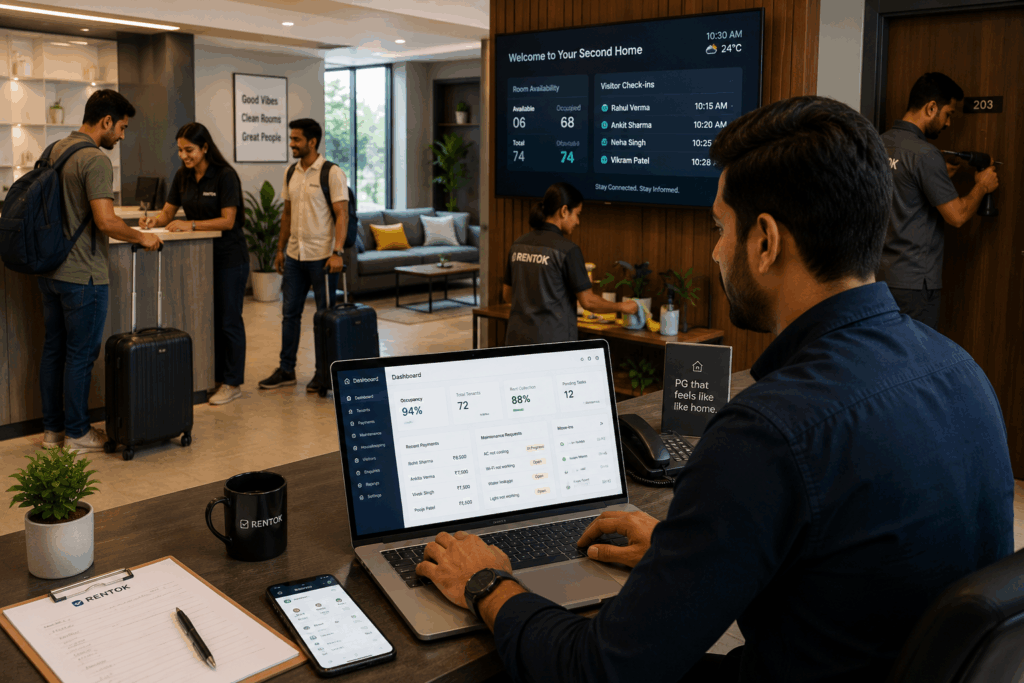
- Greater visibility across the property, allowing owners to monitor occupancy, payments, and pending tasks from a single dashboard instead of checking multiple spreadsheets or contacting staff repeatedly.
- Reduced dependency on manual follow-ups, as automated reminders and organised workflows ensure routine operational tasks continue without constant intervention from the management team.
- Improved accountability among staff, because housekeeping, maintenance, and administrative responsibilities become easier to assign, track, and review over time.
- More professional tenant experiences, where residents receive timely updates, transparent payment records, and quicker responses instead of relying on informal communication channels.
This operational maturity doesn’t just improve efficiency internally. It also strengthens the property’s reputation, making it easier to attract and retain quality tenants.
What Today’s Tenants Expect From a PG in Indore
The expectations of tenants have changed significantly over the last few years. While affordability continues to play an important role, it is no longer the only factor influencing accommodation decisions.
Students and working professionals now compare properties based on the overall living experience. Before finalising a PG, they often look beyond room photos and rental prices to understand how professionally the property is managed.
Some of the factors that influence their decisions include:
- Transparent payment processes, where rent, deposits, and utility charges are clearly communicated without confusion or unexpected adjustments.
- Responsive maintenance support, ensuring issues like internet connectivity, plumbing, or electrical faults are resolved promptly without repeated follow-ups.
- Digital convenience, including online payments, digital receipts, visitor management, and organised communication instead of relying entirely on phone calls.
- Cleanliness and consistent housekeeping, which directly influence tenant satisfaction and long-term retention, especially in shared accommodation.
- Safety and operational professionalism, where residents feel confident that property rules, visitor policies, and emergency procedures are handled consistently.
These expectations are particularly common among young professionals relocating from metro cities. Having experienced organised housing ecosystems elsewhere, they naturally expect similar standards in Tier-2 cities like Indore.
For PG owners, meeting these expectations is becoming an important differentiator. In competitive localities where several properties offer similar pricing, operational quality often becomes the deciding factor.
Common Challenges PG Owners Face After Expanding Beyond 50 Beds
Expansion is exciting, but it also exposes operational gaps that may have gone unnoticed when occupancy was lower. Many owners discover that the systems which worked perfectly for 20 or 30 tenants become difficult to manage as the property grows.
Some of the most common challenges include:
- Communication becoming fragmented, with important announcements, maintenance updates, and payment reminders scattered across personal WhatsApp chats, calls, and tenant groups.
- Difficulty tracking payments accurately, especially when managing rent, electricity charges, deposits, and additional services for dozens of residents at the same time.
- Occupancy planning becoming reactive, as owners often realise a room will become vacant only after a tenant has already decided to move out, leaving little time to find replacements.
- Increasing pressure on staff, where housekeeping teams, wardens, and administrators spend more time answering repetitive questions than focusing on improving day-to-day operations.
- Limited visibility into business performance, making it harder to identify occupancy trends, revenue patterns, or recurring operational issues that affect profitability.
These aren’t signs of poor management, they’re natural challenges that emerge as a business grows. The difference lies in how quickly operators adapt their systems to support that growth.
Many of these challenges are also discussed in RentOk’s blog on Managing Tenant Lock-in Periods Without Conflict, which explores how structured operational processes can reduce occupancy uncertainty while improving tenant relationships.
Scaling Successfully Requires More Than Higher Occupancy
Higher occupancy is an important growth indicator, but sustainable expansion depends on more than just filled rooms. A property with 90% occupancy can still struggle if operations are unstructured, leading to overworked staff, delayed complaint resolution, and lower tenant retention.
Successful PG operators track multiple performance metrics, including:
- Occupancy trends
- Rent collection efficiency
- Tenant retention rates
- Average vacancy periods
- Complaint resolution timelines
- Operational cost per occupied bed
Monitoring these metrics together provides a more accurate picture of business health than occupancy alone. As Indore’s rental market becomes more competitive, operators who combine strong occupancy with efficient operations are better positioned to scale across multiple properties without compromising service quality.
Financial metrics only tell part of the story. To understand how reducing downtime between tenants can significantly improve annual revenue, read our guide, “The Hidden Cost of Vacancy in PG Businesses.“

How RentOk Helps PG Owners Scale Efficiently
Managing a growing PG business becomes significantly easier when operational workflows are connected through a single platform instead of being spread across registers, spreadsheets, WhatsApp conversations, and manual records.
RentOk helps PG owners streamline everyday operations by centralising tenant management, rent collection, occupancy tracking, complaint management, staff coordination, and communication in one place. Instead of spending hours on repetitive administrative work, operators gain better visibility into their properties while automating routine tasks that typically consume valuable time.
Whether you’re managing one property or expanding across multiple locations in Indore, structured systems make it easier to maintain service quality, improve operational efficiency, and scale without proportionally increasing manual effort.
You can also explore RentOk’s YouTube channel for practical demonstrations of property management features, operational workflows, and best practices that help growing rental businesses modernise their day-to-day operations.
Conclusion
Indore’s rise as one of India’s fastest-growing Tier-2 cities presents a significant opportunity for PG owners willing to think beyond occupancy. As tenant expectations evolve and competition increases, operational excellence is becoming just as important as location and pricing.
Owners who invest in organised processes, better communication, and technology-driven management are better equipped to handle larger occupancies while delivering a consistently better tenant experience.
If you’re planning to grow your PG business in Indore or looking to manage your existing property more efficiently, start your free RentOk trial today and discover how modern property management software can help you simplify operations, improve occupancy management, and scale your business with confidence.
FAQ’S
1. Is investing in a PG business in Indore profitable?
Yes, Indore’s growing student population and expanding job market continue to create steady demand for rental accommodation. Profitability depends on occupancy rates, efficient operations, and offering amenities that modern tenants value.
2. Which areas in Indore are best for opening a PG?
Locations near educational institutions, IT parks, industrial hubs, and commercial centres generally see stronger demand. Areas with good connectivity and access to public transport also tend to attract more long-term tenants.
3. What is the biggest challenge for PG owners as their business grows?
As occupancy increases, managing rent collection, maintenance requests, staff coordination, and tenant communication becomes more complex. Without organised processes, these daily operations can quickly become difficult to manage.
4. How can PG owners reduce tenant vacancies in Indore?
Maintaining good property standards, responding quickly to tenant concerns, offering transparent pricing, and ensuring a smooth move-in experience can significantly improve tenant satisfaction and reduce vacancy periods.
5. Do small PG owners also need property management software?
Yes. Even properties with 20–30 beds can benefit from digital tools for rent tracking, tenant records, and communication. Implementing software early makes future expansion much easier.
6. What amenities do tenants usually look for in a modern PG?
Apart from clean rooms, tenants often expect reliable Wi-Fi, security, housekeeping, online payment options, power backup, and prompt maintenance support before choosing a property.
7. How can PG owners attract more working professionals in Indore?
Working professionals typically prefer properties with flexible rental options, reliable internet, secure premises, and convenient access to business districts. Highlighting these features in listings can improve enquiry quality.
8. How often should PG owners review their rental pricing?
It’s a good practice to review rental prices every few months based on occupancy levels, local demand, nearby competition, and any improvements made to the property. Regular reviews help maintain profitability while staying competitive.