
5 Best Rent Collection Apps for Landlords
For many landlords, rent collection starts as a simple monthly task. A tenant pays, you confirm it, and move on.
But as soon as you begin managing multiple tenants or properties, the process becomes far more complex than it appears.
Payments come in at different times. Some tenants delay, some pay partially, and some require repeated reminders. At the same time, you’re expected to track everything, who has paid, how much, and what is still pending.
What starts as a routine task gradually turns into a system.
And when that system is manual, it becomes difficult to manage efficiently.
This is why more landlords today are shifting towards dedicated rent collection apps, not just to accept payments, but to bring structure and clarity into how rent is managed.
Why More Landlords Are Switching to Rent Collection Apps
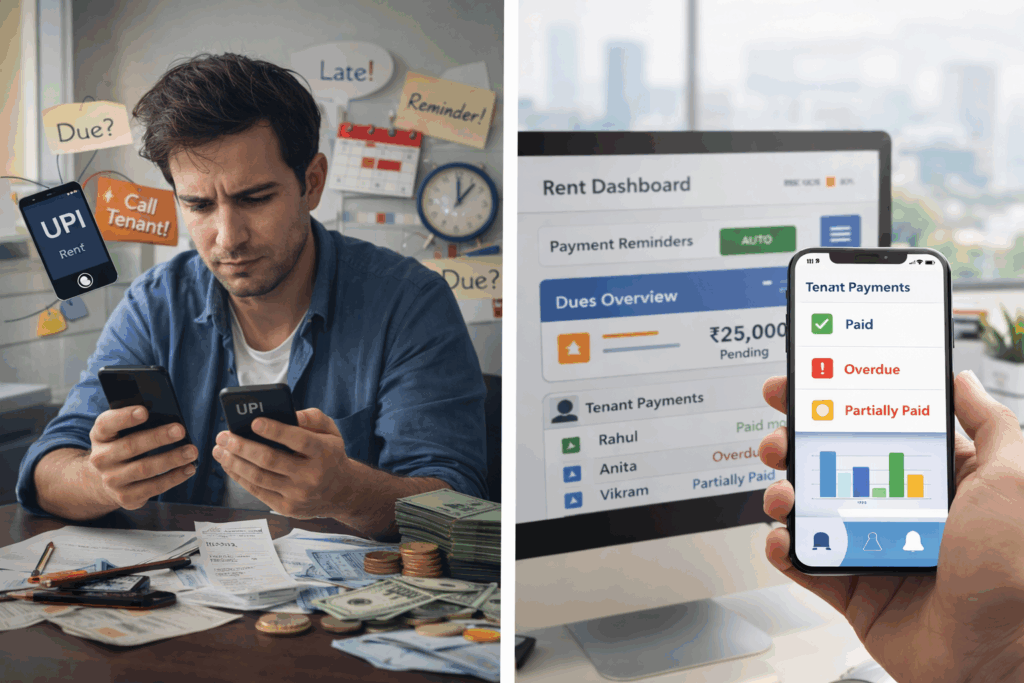
Traditional methods, cash, bank transfers, or even UPI, solve only one part of the problem: the transaction.
They do not address tracking, reminders, or visibility.
That’s where most inefficiencies arise.
For example, even if you receive payments through UPI:
- There are no automated reminders
- Dues are not tracked in a structured way
- Payment history is scattered
- There is no clear dashboard view
Over time, this leads to confusion, delays, and unnecessary effort.
A rent collection app connects all these elements into one system, where reminders, payments, and records work together. This creates consistency and reduces dependency on manual follow-ups.
What Actually Defines a Good Rent Collection App?
Before comparing apps, it’s important to understand what truly matters.
The “best” app is not the one with the most features, it’s the one that solves real operational problems.
A well-designed rent collection app should help you:
- Automate reminders so follow-ups are no longer manual
- Accept payments through multiple methods like UPI and links
- Track dues and payments in real time
- Maintain a clear tenant-wise ledger
- Provide a simple, easy-to-understand dashboard
These are the features that directly impact efficiency. Everything else is secondary.
Top 5 Rent Collection Apps for Landlords
There are several apps available today, but only a few are designed for how landlords actually operate on a daily basis.
Here’s a closer look at five widely used options:
1. RentOk
RentOk is built specifically for landlords, PG owners, and rental operators who want to move away from manual tracking.
Unlike basic payment apps, it focuses on the entire rent collection workflow, not just transactions.
With RentOk, you can:
- Automate rent reminders for all tenants
- Accept payments via UPI and payment links
- Track dues and payment status in real time
- Maintain a complete tenant-wise ledger
- Access everything through a central dashboard
What makes RentOk particularly effective is the visibility it provides.
Instead of checking multiple apps or maintaining separate records, you get a single, structured view where:
- You instantly know who has paid and who hasn’t
- Pending dues are clearly visible
- Payment history is organised and easy to access
It also extends beyond rent collection.
You can manage tenant records, track basic expenses, and handle operational tasks within the same platform, making it a complete rent management system rather than just a payment tool.
2. NoBrokerHood
NoBrokerHood is widely used in gated societies and apartment complexes.
It offers an integrated ecosystem that includes:
- Visitor management
- Community communication
- Maintenance tracking
- Rent collection
This makes it effective for large residential communities with centralised operations.
However, for independent landlords or PG owners, it may feel restrictive. The platform is designed more for society-level management than flexible, tenant-level control across multiple properties.

3. Paytm Rent Payments
Paytm is one of the most widely used payment platforms in India, making it convenient for tenants to pay rent.
Tenants can:
- Use UPI, wallet, or cards
- Complete transactions quickly using a familiar interface
While this improves convenience, Paytm primarily focuses on enabling payments—not managing them.
For landlords, this means:
- No structured dashboard for tracking dues
- No automated reminders
- No tenant-wise ledger
So while transactions are easy, management still requires manual effort.

4. MyGate
MyGate is another platform commonly used in apartment societies.
It combines:
- Security and visitor tracking
- Communication tools
- Basic rent payment features
It works well in large residential setups where operations are centralised.
However, for landlords managing independent properties, it may not offer enough flexibility or detailed financial tracking needed for efficient rent management.

5. Housing.com Pay Rent
Housing.com provides a rent payment feature designed to make online transactions easier for tenants.
It integrates smoothly with its platform and simplifies payments.
However, like other payment-focused tools, it does not provide a complete rent management system.
It lacks:
- Automated reminders
- Structured dues tracking
- Detailed payment visibility
This makes it useful for facilitating payments, but not for managing rent end-to-end.
Handling Partial Payments Without Confusion
Partial payments are a common reality in rental management.
Tenants may split payments, delay certain amounts, or carry forward dues. Without a structured system, this becomes difficult to track accurately.
You may find yourself:
- Rechecking past transactions
- Losing track of pending amounts
- Facing confusion or disputes
A rent collection app resolves this by automatically updating dues and maintaining a clear transaction history.
This ensures both you and your tenants always have clarity on payments and outstanding balances.
Why Ledger Integration Is Essential
A ledger is not just a record, it’s your financial clarity.
Without a proper ledger system, it becomes difficult to answer basic questions like:
- How much has a tenant paid over time?
- Are there any pending dues?
- What is your total rental income this month?
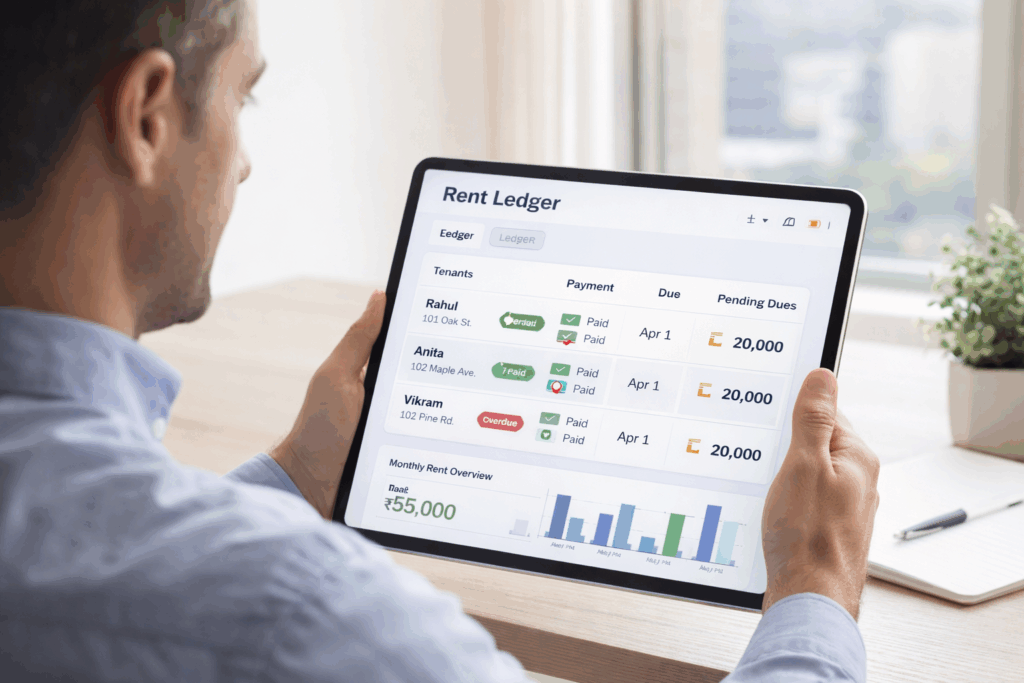
A rent collection app with built-in ledger functionality provides:
- Tenant-wise transaction history
- Clear payment timelines
- Accurate financial records
This not only improves transparency but also helps reduce disputes.
Moving from Collection to Automation
The real shift happens when rent collection moves from manual effort to automation.
Instead of:
- Remembering due dates
- Sending reminders individually
- Checking payments across platforms
The system takes over.
With automation:
- Reminders are sent on time, every time
- Payments are tracked instantly
- Records are updated automatically
This reduces workload while improving consistency and cash flow.
Choosing the Right App for Your Needs
Not every landlord requires the same level of functionality.
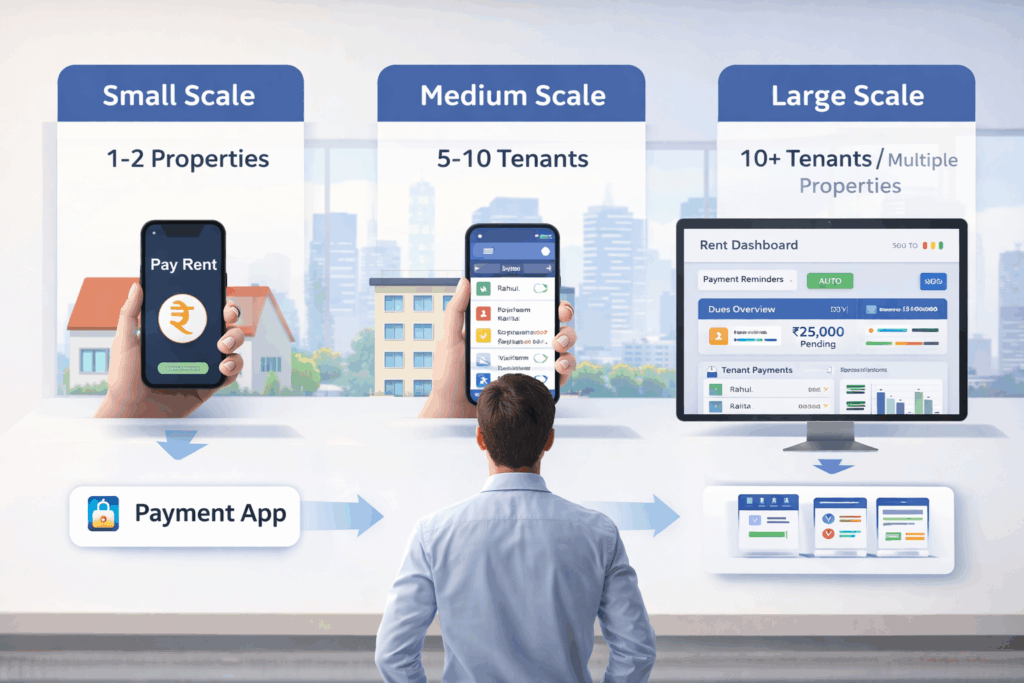
Your ideal solution depends on your scale:
- 1–2 properties → Basic payment tools may work
- 5–10 tenants → Tracking apps become useful
- 10+ tenants or multiple properties → A structured system becomes essential
The goal is to choose a solution that simplifies your workflow while giving you better control.
Take Control of Your Rent Collection
Manual rent collection may work initially, but as your number of tenants grows, it often becomes inconsistent and time-consuming.
A structured system allows you to move from tracking payments manually to managing a process that runs smoothly every month.
With RentOk, you can automate reminders, track dues in real time, and maintain complete visibility over your rental income, without relying on multiple tools or constant follow-ups.
Make rent collection simpler, faster, and more organised with RentOk.