
Property Management Software for Vacation Rentals
Vacation rentals don’t operate like traditional properties, and trying to manage them the same way almost always leads to inefficiencies. Unlike long-term rentals where tenants stay for months, vacation rentals function in a fast-moving cycle where bookings, guest turnover, and availability are constantly changing.
This shift has redefined property management. It’s no longer just about maintaining records or tracking rent, it’s about managing a system where multiple moving parts need to stay aligned at all times. Availability, pricing, guest experience, and operations all interact with each other continuously.
That’s where property management software for vacation rentals becomes essential. The right system doesn’t just organize your work, it helps you stay in control even as complexity increases.
Why Traditional Property Software Starts Breaking Down
Traditional property management software is built around stability. It assumes predictable rent cycles, long-term tenants, and minimal operational changes. While this works well for standard rentals, vacation rentals operate in a completely different environment.
Here, every booking creates a new operational loop. A guest checks in, stays for a short duration, and checks out, often followed immediately by another booking. This creates continuous movement that traditional systems struggle to handle effectively.
The real challenge isn’t just the number of bookings, it’s how frequently things change.
- Availability needs to update instantly across platforms to avoid mismatches and missed bookings
- Multiple booking cycles can overlap, making it difficult to track occupancy without a structured system
- Operations need to respond quickly, often within hours rather than days
Because of this, software needs to shift from being a passive tracking tool to an active system that supports real-time decision-making. It should help you manage what’s happening now, not just record what has already happened.

Pricing in Vacation Rentals Is Never Static
Pricing in vacation rentals is fundamentally different from long-term rentals. It’s not fixed, it evolves constantly based on demand, timing, and external factors.
A single property can have different pricing across:
- Weekdays and weekends, where demand patterns vary significantly
- Seasonal periods, where travel demand increases or drops sharply
- Local events, which can temporarily drive higher booking interest
Without a structured approach, pricing often becomes inconsistent. Many operators either leave money on the table during high-demand periods or struggle to attract bookings when demand is low.
Modern systems treat pricing as a dynamic layer rather than a fixed input. Instead of manually adjusting rates, they respond to patterns in real time.
This allows you to:
- Capture higher value during peak demand without constantly monitoring pricing manually
- Adjust rates intelligently to fill gaps in occupancy during slower periods
- Maintain consistency across platforms while staying competitive in the market
Over time, this creates a more balanced revenue strategy, one that adapts with demand rather than reacting too late.
Are You Managing Messages or Designing the Guest Experience?
In vacation rentals, communication is not just a support function—it’s part of the product you’re offering. Every interaction contributes to how a guest experiences their stay.
From the first inquiry to the final follow-up, communication plays a critical role. As bookings increase, managing this manually becomes difficult to sustain.
You’re not just replying to messages, you’re managing expectations at every stage.
- Responding quickly to inquiries directly impacts whether a guest chooses your property or moves on
- Sharing clear and timely check-in instructions helps avoid confusion and improves first impressions
- Following up after the stay influences reviews, ratings, and the likelihood of repeat bookings
Without structure, communication becomes inconsistent. Some guests receive timely updates, while others experience delays.
A structured system changes this completely. Instead of reacting to each message, communication becomes part of a predefined flow. Guests receive the right information at the right time, without requiring constant manual effort.
This consistency is what separates average stays from well-managed experiences.
Multi-Platform Distribution Without the Chaos
Listing properties on multiple platforms is essential for visibility, but it also introduces complexity that can quickly become difficult to manage.
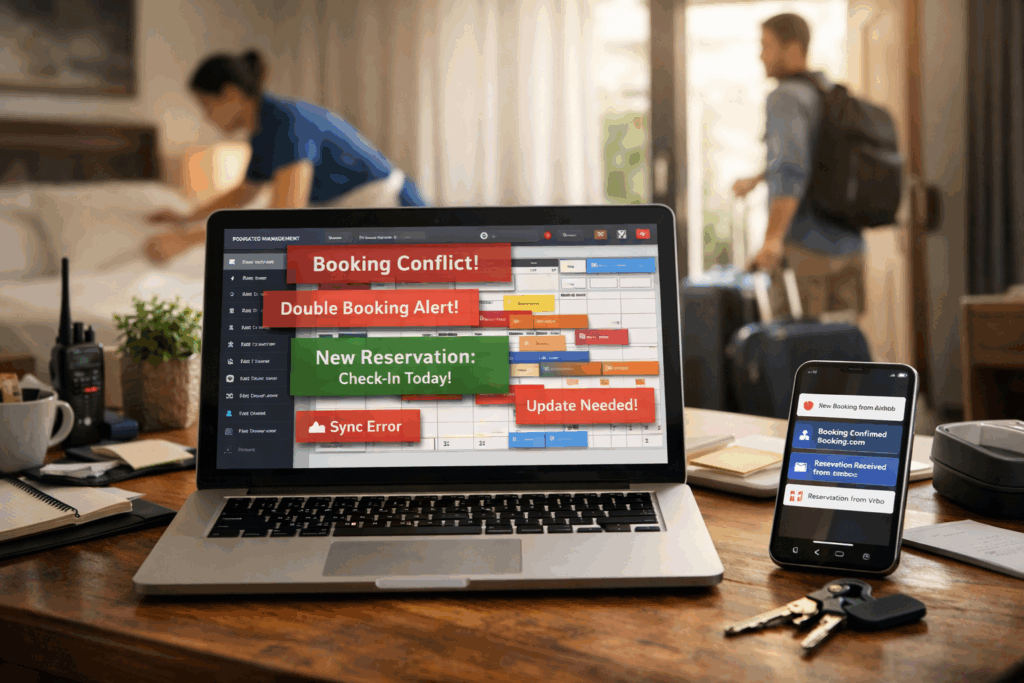
Each platform operates independently, and even a small delay in updating availability can create problems. For example, a booking confirmed on one platform may not reflect immediately on another, leading to double bookings.
As listings grow, managing this manually becomes unsustainable.
A centralized system simplifies this by bringing everything into one place.
- Availability updates reflect across all platforms instantly, reducing the risk of booking conflicts
- Pricing changes can be applied once and automatically synced across listings
- Reservations from different platforms are visible in a single dashboard for better tracking
This doesn’t just save time, it improves accuracy. And in vacation rentals, accuracy is directly tied to both revenue and guest trust.
Real-Time Visibility Changes How You Operate
One of the biggest shifts in vacation rental management is the need for real-time visibility. You need to know exactly what’s happening across your properties at any given moment.
In traditional setups, delayed updates are manageable. In vacation rentals, they can lead to immediate issues.
You should always have clarity on:
- Current availability across all properties and rooms
- Upcoming bookings and expected check-ins
- Occupancy trends over the next few days or weeks
Without this visibility, operations become reactive. You end up responding to problems after they occur rather than preventing them.
With real-time data, you gain control. Decisions become faster, more accurate, and more aligned with what’s actually happening on the ground.
The Operational Layer Most People Overlook
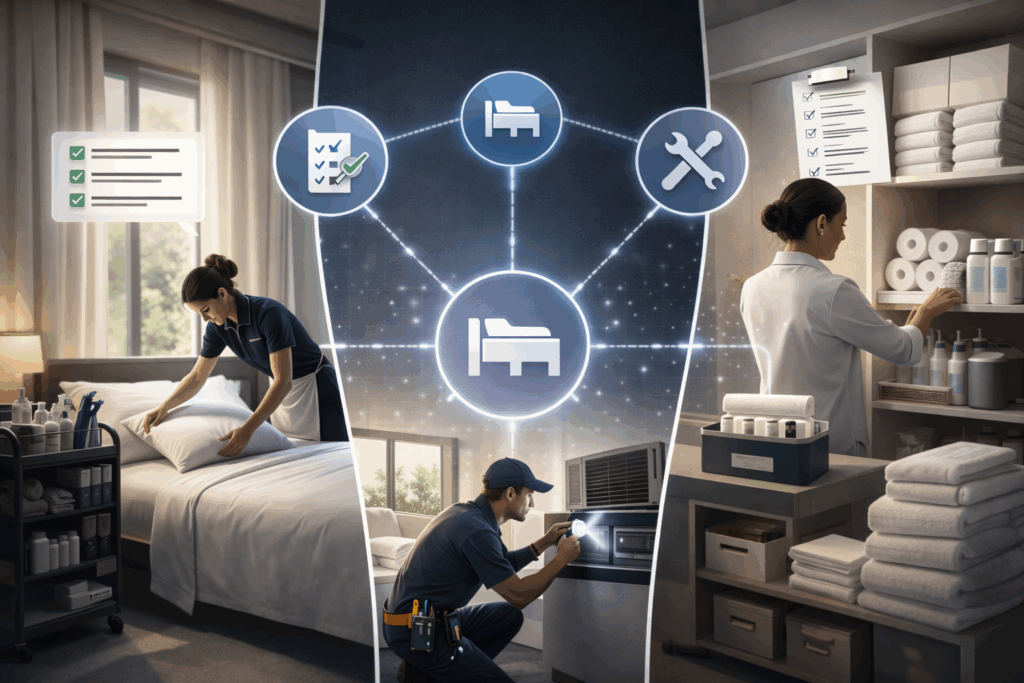
What most people underestimate is what happens between bookings. Every guest stay triggers a series of operational tasks that need to be completed before the next guest arrives.
These include:
- Cleaning and preparing the room to meet expected standards
- Inspecting the property to ensure everything is in working condition
- Restocking essentials or maintaining inventory where required
As bookings increase, these tasks begin to overlap. Without a structured system, coordination becomes difficult and delays become more frequent.
A good system brings visibility into this layer of operations. It allows you to track readiness, monitor progress, and ensure that every transition between bookings is smooth.
This is what keeps operations consistent, even as booking volume grows.
Why Traditional PMS Tools Start Feeling Limiting
Traditional property management systems were not built for high-frequency operations. They are designed for stability, not constant change.
As a result, they often lack:
- Real-time syncing capabilities needed for multi-platform listings
- Automation features required for repetitive workflows
- Flexibility to handle rapid booking cycles
Operators end up compensating for these gaps manually. Over time, this increases workload and introduces inefficiencies.
The issue isn’t just missing features, it’s that the system doesn’t match how vacation rentals actually operate.
Modern vacation rental software addresses this by aligning with real-world workflows. It supports speed, adaptability, and interconnected operations.
Where RentOk Fits Into This Workflow
Managing vacation rentals requires more than just booking tools. It requires a system that connects availability, operations, and financial tracking into one clear workflow.
RentOk brings this structure together. Instead of switching between multiple tools, you can manage everything from one platform.
With RentOk, you’re able to:
- Track real-time availability across properties without relying on manual updates
- Manage bookings and occupancy in a way that reflects actual guest movement
- Monitor payments alongside reservations for better financial clarity
This makes it particularly useful for operators managing short-term rentals, hybrid setups, or properties with frequent turnover.
By centralizing everything, RentOk reduces manual coordination and helps you operate more efficiently as your business grows.
Final Thoughts
Vacation rental management has evolved. It’s no longer just about listing properties, it’s about managing a system that is constantly moving.
Bookings, pricing, communication, and operations all influence each other. Managing them separately creates friction that becomes harder to handle as you scale.
The right software brings these elements together, giving you clarity and control over your operations.
It helps you:
- Stay accurate across platforms
- Reduce manual effort
- Improve guest experience
As your rental business grows, this becomes essential, not optional.