
Why Manual PG Management Fails at Scale
Running a PG often begins in a very simple way.
The first few tenants are easy to manage. Rent is tracked in a notebook or spreadsheet, communication happens through phone calls or WhatsApp, and daily issues are handled personally by the owner or a small team.
At this stage, manual systems seem perfectly manageable.
But things begin to change as the property grows. More tenants mean more payments to track, more maintenance requests, more inquiries, and more operational decisions to make every day.
What once felt simple slowly becomes difficult to control.
This is the stage where many PG operators start noticing the limits of manual management. Tasks begin slipping through the cracks, staff coordination becomes harder, and financial visibility becomes unclear.
Let’s explore why manual PG management often fails as the business scales.
When PG Operations Grow Faster Than Systems
A PG with 10 tenants operates very differently from one with 50 or even 100 tenants.
In the early days, most operators handle everything themselves. Rent reminders, tenant onboarding, maintenance coordination, and expense tracking are all done manually. Because the number of tenants is small, these tasks remain manageable.
However, as occupancy increases, the number of daily operational activities grows rapidly.
A growing PG typically involves managing:
- Monthly rent collections from multiple tenants
- Continuous tenant communication
- Maintenance and facility issues
- Room availability and bookings
- Staff coordination and supervision
Without a structured system, managing all these activities manually becomes increasingly difficult.
Over time, the business begins to rely more on memory, scattered records, and constant follow-ups instead of clear processes.
Operational Chaos: When Everything Runs on Memory
One of the biggest challenges with manual PG management is the lack of structure.
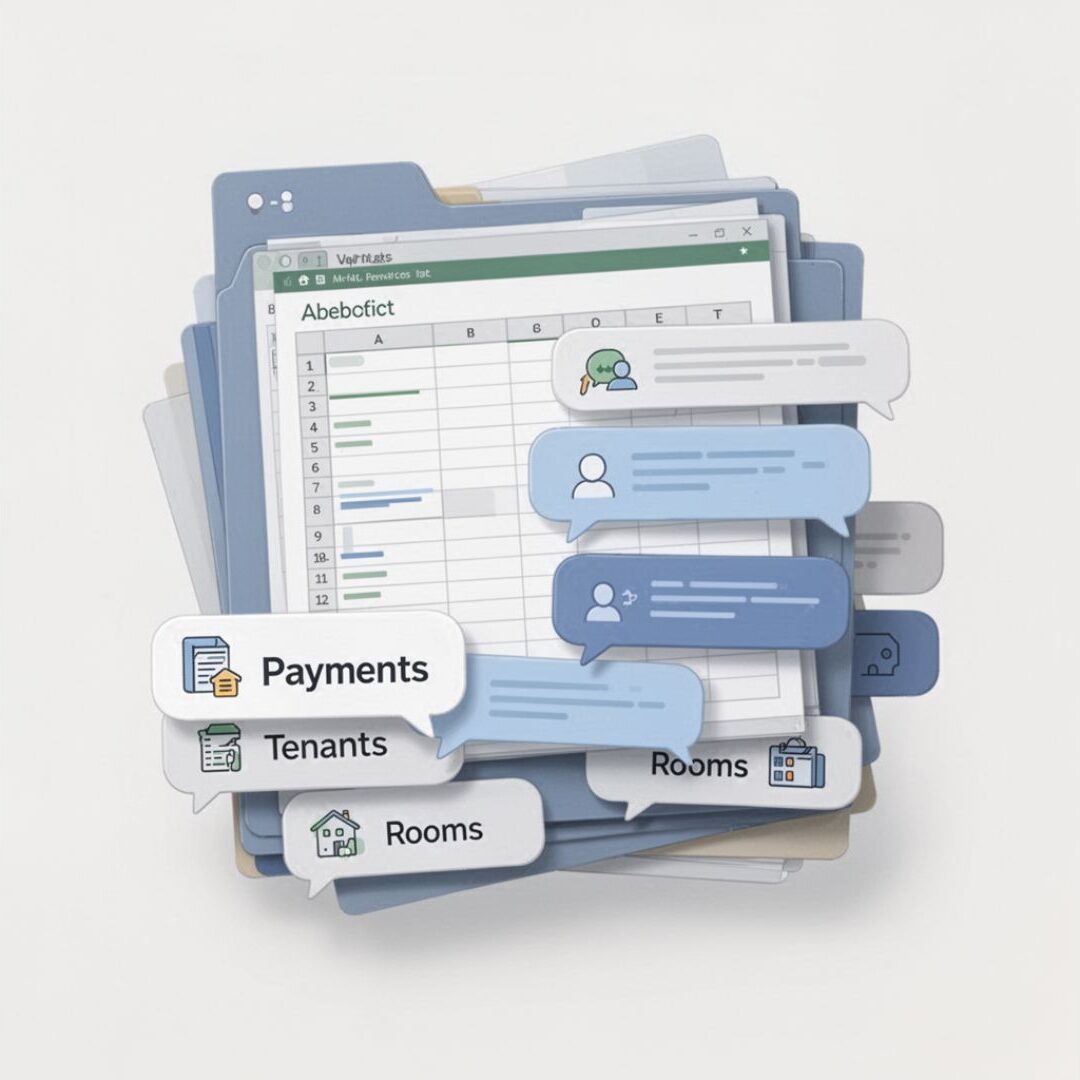
When records are spread across notebooks, spreadsheets, WhatsApp chats, and verbal instructions, it becomes difficult to maintain consistency in daily operations.
For example, rent reminders may depend on someone remembering to send them. Maintenance requests might be communicated informally and forgotten later. Tenant details may exist in different places, making them difficult to access when needed.
These small inefficiencies slowly create operational chaos.
Some early warning signs include:
- Rent reminders being delayed
- Difficulty identifying tenants with pending payments
- Complaints getting missed or delayed
- Important tenant information being hard to locate
While these issues may seem minor at first, they quickly multiply as the number of tenants increases.


Staff Misuse Becomes Harder to Control
As PG operations expand, most operators begin relying on staff members to manage daily tasks.
Caretakers, managers, or administrative staff may help with rent collection, tenant coordination, maintenance supervision, or property operations.
Delegation is necessary for growth, but manual systems often make oversight difficult.
For instance, if rent is collected manually, operators may not always have immediate clarity on:
- Which tenants have paid their rent
- The total amount collected during the month
- Whether any payments were missed
Similarly, if maintenance requests are communicated verbally, it becomes difficult to track whether issues were actually resolved.
Without clear systems and records, monitoring staff activities becomes challenging. This can lead to inefficiencies and sometimes even misuse of responsibilities.
Structured systems help create transparency and accountability in daily operations.
Financial Errors Become More Common
Financial tracking is another area where manual management struggles as PG businesses scale.
Apart from rent collection, operators also deal with:
- Security deposits
- Electricity or utility charges
- Maintenance expenses
- Refunds during move-outs
When these transactions are recorded manually, mistakes become more likely.
Some common financial challenges include:
- Deposit amounts not being documented properly
- Confusion around partial payments
- Utility bills being calculated incorrectly
- Missing expense records
Even small accounting errors can create misunderstandings with tenants or distort the overall financial picture of the property.
Over time, inaccurate records make it difficult for operators to understand how their PG business is actually performing.
Lack of Visibility Slows Down Decision Making
As PG businesses grow, operators need clear visibility into their operations.
Important questions start coming up regularly:
- How much rent has been collected this month?
- Which tenants still have pending dues?
- What are the total property expenses?
- Which rooms are currently vacant?
When data is scattered across different records and tools, answering these questions becomes time-consuming.
Instead of accessing instant insights, operators often need to search through spreadsheets or ask staff members for updates.
This lack of visibility slows down decision-making and makes operations harder to manage efficiently.

Why More PG Owners Are Switching to Automation
Because of these operational challenges, many PG operators eventually reach a stage where manual systems stop working effectively.
Automation doesn’t remove the operator’s role from daily management. Instead, it simplifies repetitive administrative tasks and keeps important information organized in one place.
When processes are automated, operators no longer have to depend entirely on memory, scattered records, or manual follow-ups. Instead, the system helps ensure that routine tasks happen consistently.
Automation can support several day-to-day operations such as:
- Sending automated rent reminders to tenants
- Maintaining structured tenant profiles and records
- Tracking deposits and rent payments accurately
- Managing booking inquiries and room availability
- Generating financial reports and summaries
These improvements may seem small individually, but together they can significantly reduce the operational workload for PG owners.
Many operators who initially managed everything manually eventually move toward structured systems as their business grows. In fact, there are real examples of PG businesses scaling successfully after adopting organized management processes. For instance, you can read this case study of a PG operator who scaled operations to 3,500 beds while managing properties using RentOk, which highlights how structured systems can support large-scale PG operations more effectively.
By shifting from manual tracking to centralized management, operators gain better visibility into their business and can manage growth with far greater confidence.
How PG Management Platforms Help
Technology has become an important support system for modern PG operators.
Instead of juggling multiple spreadsheets, chat conversations, and paper records, many operators now rely on PG management platforms to centralize operations.
A dedicated system allows operators to manage multiple aspects of the business from one place.
With platforms like RentOk, operators can:
- Maintain detailed tenant profiles
- Track rent and deposit payments
- Manage complaints and maintenance requests
- Monitor occupancy and bookings
- Generate financial reports easily
This centralized approach reduces operational confusion and helps operators manage growing PG businesses more efficiently.
Preparing Your PG Business for Growth
Every PG business eventually reaches a stage where manual management begins to slow things down.
What once worked smoothly with a small number of tenants becomes difficult to handle as operations expand. Tasks multiply, communication becomes scattered, and financial tracking becomes harder.
Introducing structured systems at the right time can significantly improve operational efficiency. Instead of constantly reacting to problems, operators can build processes that keep everything organized and predictable.
For PG owners planning to scale their business, using a centralized platform like RentOk can simplify tenant management, payment tracking, and operational visibility, making it easier to run and grow a PG business without relying on manual systems.
If you’re planning to move away from spreadsheets and manual tracking, the next step is seeing what automated PG management actually looks like.