
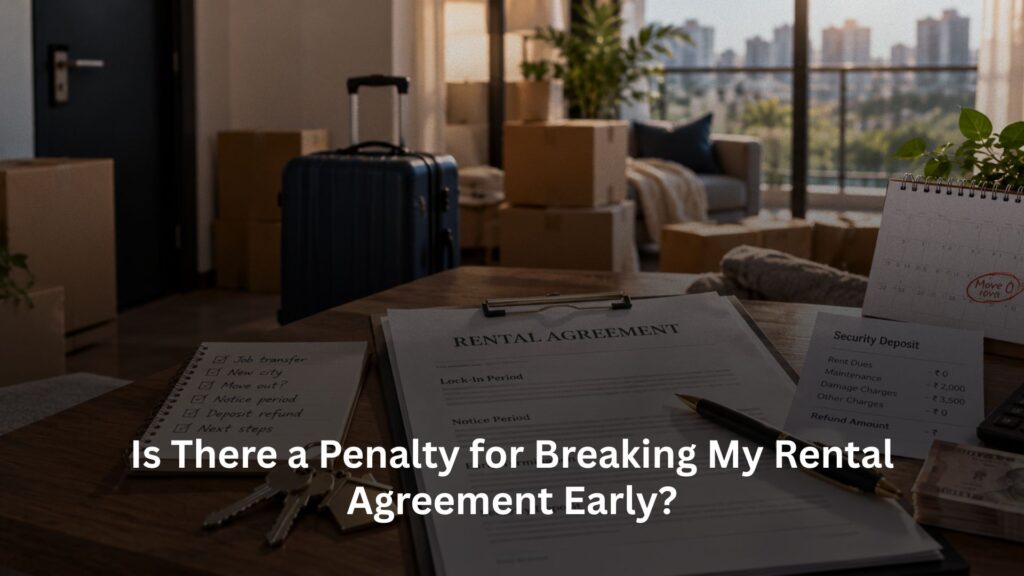
Is There a Penalty for Breaking My Rental Agreement Early?
A rental agreement sets out the terms of a tenancy, including rent, security deposit, duration, and conditions for early termination. However, circumstances can change. A job transfer, a change in college plans, family responsibilities, or problems with the accommodation may require a tenant to move out sooner than expected.
Leaving early does not automatically mean losing the entire security deposit or paying a fixed penalty. The outcome depends on the agreement, the circumstances of the exit, and the laws applicable to the tenancy. Understanding these factors can help tenants assess their obligations, negotiate an early exit, and avoid unnecessary disputes.
What Happens When You Break a Rental Agreement Early?
When a tenant decides to leave before the agreement expires, the first step is to review the termination conditions. Depending on the contract, the tenant may need to provide notice, settle outstanding dues, pay agreed compensation, or obtain the landlord’s consent.
Two clauses are particularly important: the lock-in period and the notice period. A lock-in period establishes a minimum contractual commitment. A notice period specifies how much advance notice must be provided before ending the tenancy. These provisions can operate separately, so fulfilling one does not necessarily satisfy the other.
Consider a tenant paying ₹15,000 per month under an agreement with a six-month lock-in and a 30-day notice period. If the tenant decides to move out after three months, providing 30 days’ notice does not automatically remove obligations associated with the lock-in. The early-termination clause must be examined to understand the possible consequences.
An early exit can affect several aspects of the tenancy:
- Rental payments: Rent may remain payable during the applicable notice period or another agreed period. The tenant should confirm the relevant dates and any agreement for an earlier release.
- Security deposit: Outstanding rent, utilities, documented damage, or other permitted deductions may affect the final settlement. However, early departure does not automatically justify forfeiture of the entire deposit.
- Contractual obligations: Leaving without following the agreed process may lead to a claim from the landlord. The validity and amount of that claim depend on the agreement and applicable law.
- Move-out formalities: The tenant may need to settle bills, document the property’s condition, return keys, and obtain confirmation of the handover.
For a closer look at these conditions, read What Happens If You Break Your Rent Agreement Before the Lock-In Period?.


Common Penalties for Breaking a Rental Agreement
The financial consequences of early termination vary between agreements. Some specify an early-exit charge, while others address notice requirements, lock-in periods, and security deposits separately. There is no single penalty that automatically applies to every rental agreement in India.
Forfeiture of Security Deposit
Landlords may seek deductions for unpaid rent, utility bills, documented damage, or other amounts permitted under the agreement. Some agreements also contain clauses addressing deposit forfeiture when a tenant leaves during the lock-in period.
However, the entire security deposit is not automatically forfeited in every early-termination situation. The deductions must be assessed against the contract and applicable law.
Tenants should request an itemised settlement explaining each deduction. This helps distinguish outstanding expenses from disputed penalties. For a broader understanding of deposit clauses, explore How to Create a Legally Valid Rent Agreement in India.
Lock-In Period Penalties
A lock-in period establishes a minimum contractual commitment. Leaving before it expires may trigger financial consequences under the agreement. Depending on the wording, compensation may be calculated using rent for a specified period or another agreed amount.
Some agreements use one or more months’ rent to calculate an early-exit charge. However, there is no universal rule that every tenant must pay one to three months’ rent for leaving early.
Section 74 of the Indian Contract Act, 1872, addresses compensation where a contract stipulates an amount payable for a breach or includes a penalty. It provides for reasonable compensation, subject to the statutory limit. Therefore, an amount written into an agreement should not automatically be treated as the amount recoverable in every dispute.
Landlords and tenants can also learn more about setting clear expectations through Managing Tenant Lock-In Periods Without Conflict.
Notice-Period Rent
Many rental agreements require written notice before a tenant can end the tenancy. The period may be 30 or 60 days, for example, but the applicable duration depends on the agreement and relevant law.
If a tenant moves out without providing the required notice, rent may remain payable for the applicable period. Giving notice also does not automatically override a separate lock-in clause.
Read What Is the Legal Notice Period Before Vacating a Rented Property? to understand how notice requirements can vary between rental arrangements.
Early-Termination Fees
Some agreements specify a fixed early-termination fee or another method of calculating compensation. The amount may be expressed as a multiple of monthly rent, but the terms vary between contracts.
Before accepting such a demand, ask the landlord to identify the relevant clause and explain the calculation. Check whether the fee applies to your circumstances and whether the agreement provides an alternative exit process.
A stated amount should not automatically be treated as the final amount recoverable in every dispute.
How to Minimise or Avoid Early-Termination Penalties
An early exit does not always have to lead to a prolonged dispute. Reviewing the agreement, communicating early, and negotiating a mutually acceptable arrangement can help tenants understand their options.
Whether a penalty can be avoided depends on the contract, the circumstances, and applicable law.
Check for a Break Clause
A break clause specifies the conditions under which a tenant or landlord may terminate an agreement before the original end date. It may require advance written notice, compliance with particular conditions, or payment of an agreed amount.
If the agreement contains such a clause, check the dates and requirements carefully. Do not assume that every agreement contains a break clause or that a notice period automatically permits early termination during the lock-in.
If the wording is unclear, seek clarification before acting. How to Read a Rent Agreement Before Signing explains why termination and deposit clauses deserve particular attention.
Find a Replacement Tenant
A suitable replacement tenant may help reduce the property’s vacancy period. It can also give the landlord a reason to consider an earlier release.
For example, a tenant relocating for work could help identify a replacement who meets the landlord’s requirements. Both parties may then be able to negotiate a practical settlement.
However, finding a replacement does not automatically cancel the original tenant’s obligations. Obtain the landlord’s approval and confirm the revised terms in writing. These should cover the move-out date, remaining rent, charges, and deposit settlement.
Negotiate a Mutual Surrender
A mutual surrender is an arrangement in which the tenant and landlord agree to end the tenancy before the original term expires. The tenant can explain the reason for leaving, propose a practical handover date, and discuss how outstanding payments will be settled.
The landlord may agree to waive or reduce an early-exit charge, particularly if the property can be reoccupied quickly. However, this should not be assumed.
Record the arrangement in writing. The confirmation should establish the termination date, final amount payable, deposit settlement, and any remaining obligations. This gives both parties a clear record of the revised agreement.
Check for Legal Exceptions
Certain circumstances may affect whether an early-termination penalty can be enforced. These can include an express contractual right to terminate, a mutually agreed release, or a serious failure by the landlord to fulfil contractual obligations.
For example, a significant unresolved issue involving essential services or the property’s agreed condition may require legal assessment. The tenant should document the circumstances and communicate the issue in writing.
A job transfer, personal emergency, or maintenance complaint does not automatically guarantee a penalty-free exit. The facts, contractual wording, and applicable law determine the available options. Seek qualified legal advice if the dispute involves a substantial amount or an unclear contractual obligation.
What to Check Before Signing a Rental Agreement
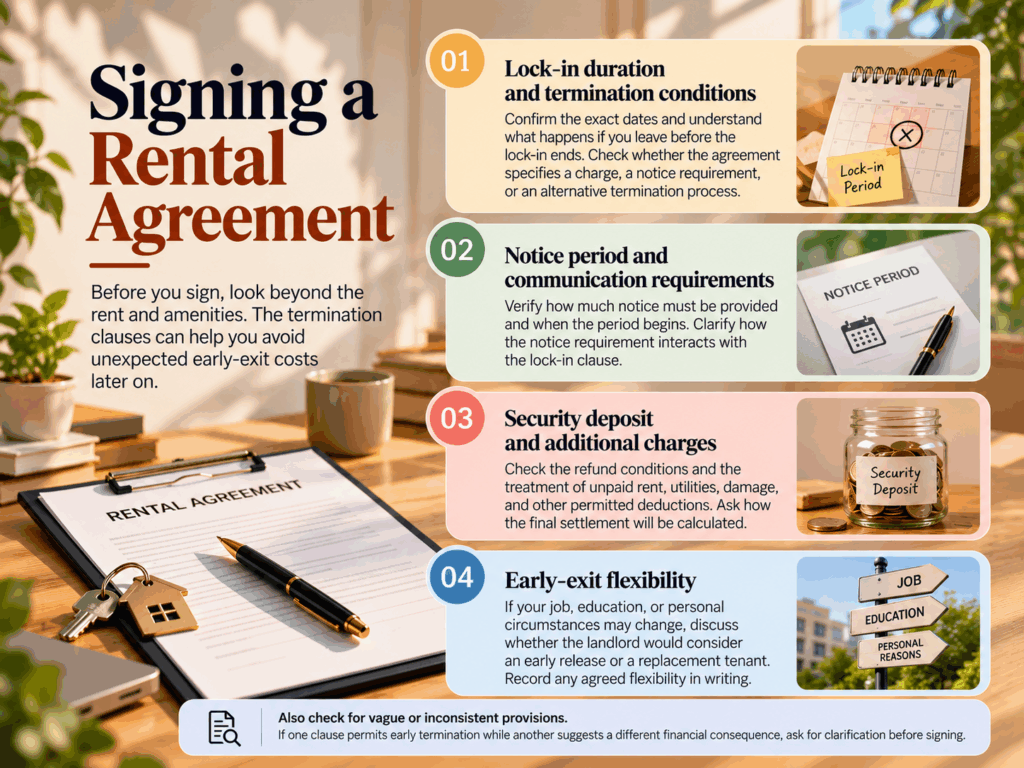
The easiest way to avoid unexpected early-exit costs is to review the termination provisions before signing. Tenants often focus on rent, location, amenities, and the security deposit. However, the clauses governing notice and early termination can be just as important when circumstances change.
Before committing to the agreement, review these details carefully:
- Lock-in duration and termination conditions: Confirm the exact dates and understand what happens if you leave before the lock-in ends. Check whether the agreement specifies a charge, a notice requirement, or an alternative termination process.
- Notice period and communication requirements: Verify how much notice must be provided and when the period begins. Clarify how the notice requirement interacts with the lock-in clause.
- Security deposit and additional charges: Check the refund conditions and the treatment of unpaid rent, utilities, damage, and other permitted deductions. Ask how the final settlement will be calculated.
- Early-exit flexibility: If your job, education, or personal circumstances may change, discuss whether the landlord would consider an early release or a replacement tenant. Record any agreed flexibility in writing.
It is also worth checking whether the agreement contains vague or inconsistent provisions. If one clause appears to permit early termination while another suggests a different financial consequence, ask for clarification before signing.
For a more detailed overview of rental documentation, read PG Rental Agreement Format: Free Template. It covers important terms such as lock-in periods, notice requirements, deposits, and additional charges.

How RentOk Helps You Manage Rental Agreement Terms
RentOk helps property owners and managers organise tenant information, payment records, occupancy timelines, and move-in and move-out coordination through a connected property management platform. Better-organised records can make it easier to review tenancy timelines, identify outstanding payments, and coordinate handovers. Although RentOk does not replace legal advice or determine whether a penalty is enforceable, structured property management can support clearer communication and more transparent rental operations.
Conclusion
Breaking a rental agreement early can have financial and contractual consequences, but the outcome depends on the agreement and the circumstances of the exit. Early-termination charges, rent obligations, and security deposit deductions should be examined separately. In some situations, a mutually agreed exit or an applicable contractual provision may allow a tenant to leave without an additional charge.
Before moving out, review the agreement, communicate with the landlord in writing, and obtain a clear final settlement. Understanding the terms before signing is equally important, particularly when future circumstances may be uncertain.
Explore RentOk to learn more about rental management and make more informed decisions throughout the rental journey.
FAQ’S
1. What is the penalty for breaking a tenancy agreement early?
The penalty depends on your rental agreement and its lock-in, notice-period, and early-termination clauses. Under Section 74 of the Indian Contract Act, 1872, compensation for a breach is subject to legal limits and must be reasonable.
2. Can I end my 12 month tenancy early?
Yes, you may be able to end a 12-month tenancy early, depending on the agreement’s terms. Check for a break clause, notice requirements, and any applicable early-termination charges before moving out.
3. What are valid reasons to end a tenancy?
Valid reasons may include a mutual agreement with the landlord, a termination clause in the agreement, or a serious breach of contractual obligations. Whether a reason allows you to leave without a penalty depends on the circumstances and applicable law.
4. What happens to my security deposit if I break my tenant rental agreement early?
Your landlord may deduct legitimate outstanding dues, damage costs, or agreed and legally recoverable amounts. However, the entire security deposit is not automatically forfeited in every case; the agreement and applicable law matter.
5. Can my landlord refuse to let me leave before the agreement ends?
A landlord may rely on the agreement’s lock-in or termination clauses when you want to leave early. However, your options depend on the contract and applicable law, so discuss a written mutual exit if needed.
6. Do I need to give written notice before leaving a rental property?
In most cases, you should follow the notice period specified in your rental agreement. Give written notice and keep a record of the communication to help prevent disputes about your move-out date or outstanding rent.