

How to Return a Security Deposit Without a Dispute
Returning a security deposit should be one of the simplest parts of a tenant’s move-out journey. Unfortunately, it often becomes one of the most disputed. Whether it’s disagreements over deductions, delays in refunds, or confusion about what the deposit actually covers, a poorly managed settlement process can quickly turn a smooth exit into a legal and reputational headache.
For PG owners and property managers, these disputes are rarely about the money alone. They consume valuable time, strain tenant relationships, generate negative reviews, and sometimes even lead to legal notices. On the other hand, a transparent and well-documented refund process builds trust, reinforces professionalism, and leaves tenants with a positive final impression of your property.
The good news is that most security deposit disputes are preventable. They usually stem from unclear expectations, inconsistent documentation, or informal communication rather than genuine disagreements over damages. By putting a structured process in place from day one, landlords can significantly reduce the chances of conflicts when it’s time to refund the deposit.
In this guide, we’ll explore why security deposit disputes happen, how to create a fair refund process, and the operational practices that help property owners handle security deposit refunds confidently and professionally.
Why Do Security Deposit Disputes Happen So Frequently?
Many landlords assume that disputes begin on the day a tenant vacates the room. In reality, the disagreement often starts much earlier, sometimes at the time of move-in.
When tenants don’t clearly understand the property’s refund policy, notice period, or deduction criteria, they create their own expectations. Months later, when the final settlement differs from what they had assumed, even a justified deduction can feel unfair.
The issue becomes even more complicated in PGs and co-living spaces where occupancy changes frequently. Multiple move-ins and move-outs every month leave very little room for manual record-keeping or verbal agreements.
Some of the most common reasons security deposit disputes arise include:
- No documented room condition during move-in. Without photographs or inspection records, it becomes difficult to prove whether damages were already present or occurred during the tenant’s stay.
- Unclear deduction policies. Tenants are often unsure whether deductions apply only to physical damages or also include unpaid rent, electricity bills, housekeeping charges, or notice period violations.
- Delayed communication during move-out. When tenants don’t receive updates about inspections, pending dues, or refund timelines, uncertainty quickly turns into frustration.
- Poor record management. Deposit amounts, maintenance expenses, payment history, and adjustment calculations spread across spreadsheets, WhatsApp chats, and paper registers make it harder to justify deductions later.
The result is the same in almost every case, a conversation that could have been factual becomes emotional because neither side has complete visibility into the settlement process.

A Security Deposit Is More Than Just a Refundable Amount
Many people view the security deposit as a simple advance payment that is returned when the tenant leaves. Operationally, however, it serves a much broader purpose.
For landlords, the deposit acts as a financial safeguard against unpaid dues, excessive damages, or breaches of the rental agreement. For tenants, it represents an assurance that their money will be returned fairly once all obligations have been fulfilled.
The challenge lies in balancing these two expectations.
A professionally managed property treats the security deposit as a transparent process rather than a financial cushion. That means every deduction, adjustment, and refund should be backed by records, not assumptions.
A structured deposit management system typically covers:
- Outstanding financial obligations, including pending rent, utility bills, maintenance charges, or any agreed operational dues that remain unpaid at the time of move-out.
- Property damage beyond normal wear and tear, supported by inspection reports, photographs, or maintenance invoices rather than subjective opinions.
- Agreement-related adjustments, such as notice period violations or other contractual conditions that were clearly communicated and acknowledged before occupancy began.
Once both parties understand what the deposit is designed to cover, conversations around refunds become significantly easier because expectations are already aligned.
The Refund Process Starts at Move-In, Not Move-Out
One of the biggest mistakes property owners make is focusing on deposit management only when a tenant decides to leave.
By that point, many important details have already been forgotten.
Professional operators begin preparing for a future refund from the very first day of occupancy. Every important interaction, from room inspections to agreement signing, is documented because they understand these records will eventually support a smooth settlement.
A smooth security deposit refund doesn’t begin at move-out, it starts when the tenant moves in. If you’re looking to make the entire onboarding process more structured, read our guide on How to Onboard a New Tenant in Under 10 Minutes, where we explain how proper documentation, agreement management, and payment records reduce disputes later.
A strong move-in process usually includes:
- A detailed inventory of furniture, appliances, and fixtures available inside the room.
- Time-stamped photographs of the property’s condition before occupancy.
- A clearly explained security deposit policy, including refund timelines and deduction criteria.
- Written acknowledgement of notice period requirements and move-out procedures.
These small steps may seem administrative initially, but they eliminate countless disagreements later.
A structured onboarding process lays the foundation for a dispute-free move-out. If you’re building or refining your tenant onboarding workflow, read our detailed guide on Aadhaar-Based Digital KYC: A Step-by-Step Guide for PG Owners to understand why proper documentation from Day 1 makes every future process, including deposit refunds, far more transparent.
What Can You Legally Deduct from a Security Deposit?
One of the biggest sources of conflict is uncertainty around deductions.
Some landlords deduct cleaning costs without prior disclosure. Others adjust electricity bills that were never shared with the tenant. In contrast, tenants often assume the entire deposit should be refunded unless there is major physical damage.
Neither assumption is healthy.
Instead of making deductions reactively, establish clear categories that are communicated before occupancy begins.
Generally, legitimate deductions may include:
- Pending rent and utility payments that remain unpaid despite prior reminders. These adjustments should always be supported with invoices or payment records.
- Repair costs for damages beyond regular usage, such as broken furniture, damaged electrical appliances, stained mattresses, or structural alterations caused during the tenancy.
- Contractual adjustments that are specifically mentioned in the rental agreement, including notice period violations or agreed administrative charges where legally applicable.
At the same time, avoid deducting costs that were never disclosed or cannot be reasonably justified. Transparency is often more valuable than recovering a small amount because a fair settlement protects your reputation far beyond a single tenancy.
If you’d like a deeper understanding of how security deposits are governed, including legal expectations, documentation standards, and industry best practices, don’t miss our comprehensive guide on Handling Security Deposits: Legal Norms and Best Practices. It complements this article by focusing on policy creation rather than the refund process itself.
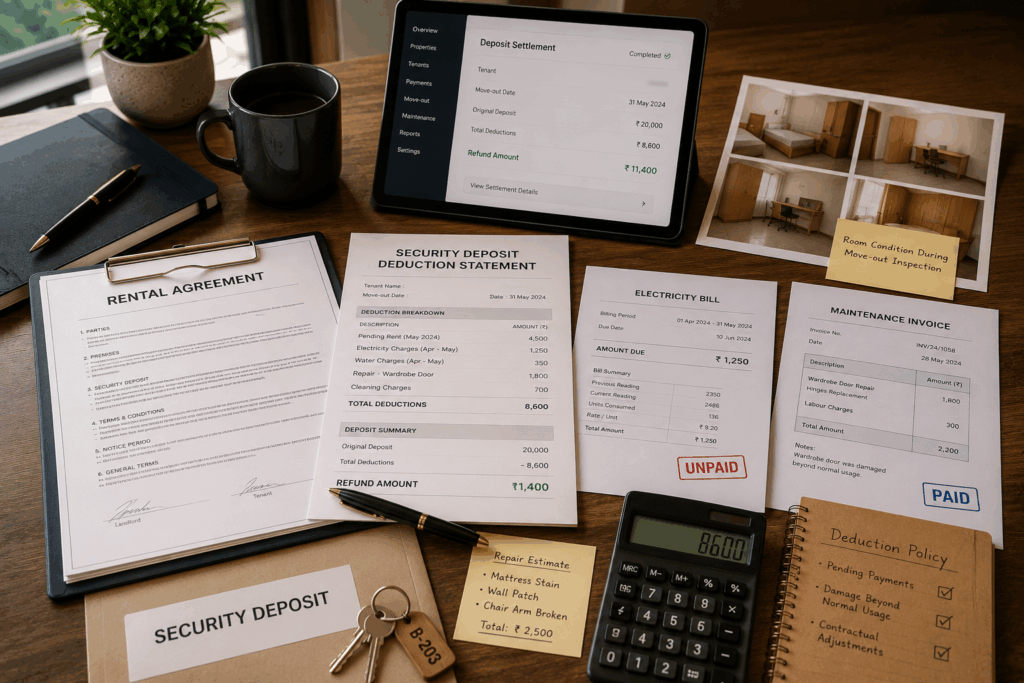
Why a Standardized Move-Out Inspection Makes All the Difference
By the time a tenant is ready to vacate the property, the focus often shifts to completing formalities as quickly as possible. Rooms need to be cleaned, keys have to be collected, and new tenants may already be scheduled to move in. In this rush, many property managers either skip the final inspection or conduct it informally, leading to disagreements once deductions are communicated.
A structured move-out inspection eliminates this uncertainty by creating a common point of reference. Instead of relying on memory or verbal discussions, both parties evaluate the property based on documented observations. This makes the process objective rather than emotional.
An effective move-out inspection should include:
- A room condition assessment that compares the property’s current state with the photographs and inventory prepared during move-in. This helps distinguish genuine damages from normal wear and tear, making deduction decisions easier to justify.
- Verification of pending financial obligations, including rent, electricity charges, Wi-Fi bills, housekeeping fees, or any additional services provided by the property. Sharing these calculations before processing the refund prevents unnecessary surprises.
- Joint inspection whenever possible, allowing both the tenant and the property manager to review the room together. This creates immediate clarity around any concerns and reduces the chances of disputes after the tenant has already left.
When tenants are involved in the inspection process, they are far more likely to accept reasonable deductions because they understand how the final settlement has been calculated.
Refund Delays Can Damage Trust Faster Than Fair Deductions
Interestingly, many disputes aren’t caused because landlords deduct money. They happen because tenants don’t know when they’ll receive the remaining amount.
A tenant who has vacated the property naturally expects timely communication. If days turn into weeks without any update, frustration begins to build. Multiple follow-up calls, unanswered WhatsApp messages, and uncertain timelines make tenants feel ignored, even if the refund is eventually processed correctly.
This is why every property should establish a clearly defined refund timeline before the tenant moves out.
A transparent refund process should communicate:
- When the room inspection will be completed, so tenants know when the assessment takes place instead of wondering whether it has even started.
- How long the final settlement will take, including the expected timeline for calculating pending dues, verifying utility bills, and approving any deductions.
- When the refund will be credited, along with the payment method being used. Even if the process requires additional time, regular updates reassure tenants that the settlement is actively being handled.
Clear timelines reduce uncertainty, and uncertainty is often the biggest reason otherwise manageable situations turn into disputes.
Strong communication plays an equally important role throughout this process. If you’re looking to improve tenant updates across the entire rental journey, not just during move-out, our guide on Best Communication Channels for Property Management explains how structured communication improves operational efficiency while building stronger tenant relationships.
Common Mistakes That Often Lead to Deposit Disputes
Security deposit conflicts usually don’t happen because landlords intentionally act unfairly. More often, they arise from small operational mistakes that gradually create confusion.
Recognizing these issues early can help property owners build a far more reliable refund process.
Some of the most common mistakes include:
- Explaining the refund policy only verbally. Conversations during onboarding are easy to forget, especially when tenants are busy shifting into a new city. Every important policy should also be documented within the rental agreement and shared digitally for future reference.
- Keeping incomplete records. Missing invoices, handwritten notes, scattered spreadsheets, or WhatsApp conversations make it difficult to justify deductions months later. Organized documentation protects both the property owner and the tenant.
- Treating every case the same. Not all move-outs are identical. While contractual policies should remain consistent, genuine relocation, medical emergencies, or mutually agreed circumstances may require a more flexible approach. Professional operators understand the importance of balancing policy with practicality.
- Failing to communicate during the settlement process. Even when deductions are completely valid, silence often creates unnecessary suspicion. Regular updates keep tenants informed and reduce repeated follow-ups.
These may seem like minor operational gaps individually, but together they have a significant impact on tenant satisfaction and your property’s reputation.
Another area that frequently leads to refund disagreements is the notice period. When move-out dates aren’t documented properly, both occupancy planning and deposit settlements become more complicated. Our article on How to Handle Notice Period in PG Business explains how clearly defined exit timelines help prevent unnecessary financial disputes.
A Simple Checklist for Dispute-Free Security Deposit Refunds
A standardized checklist ensures that every move-out follows the same process, regardless of which staff member is handling the settlement. Consistency not only improves efficiency but also builds confidence among tenants that refunds are being processed fairly.
Before refunding a security deposit, ensure that you have:
- Completed the final room inspection and documented the property’s condition with photographs wherever necessary.
- Verified outstanding rent, utility bills, maintenance charges, and any other applicable dues before calculating the refundable amount.
- Prepared a clear settlement summary showing the original deposit amount, individual deductions, and the final refund value.
- Shared the settlement details with the tenant before initiating the payment, allowing sufficient time for clarification if required.
- Processed the refund within the committed timeline and maintained a digital record of the transaction for future reference.
Following a structured checklist not only reduces disputes but also standardizes operations as your property portfolio grows.

How RentOk Helps You Manage Security Deposits More Efficiently
Managing security deposits manually becomes increasingly difficult as occupancy grows. Deposit records, payment histories, utility adjustments, and move-out settlements often end up scattered across spreadsheets, handwritten registers, banking apps, and messaging platforms. As a result, even a simple refund calculation can take considerable time while increasing the risk of errors or disputes.
RentOk helps property owners simplify this entire workflow by centralizing security deposit tracking, tenant payment records, occupancy details, move-in and move-out management, and financial settlements within a single platform. Instead of searching through multiple systems, operators can access complete tenant records whenever a refund needs to be processed.
This structured approach helps property managers:
- Maintain complete visibility into every tenant’s deposit amount and settlement history.
- Track pending dues before initiating refunds, reducing calculation errors.
- Improve transparency by keeping financial records organized and easily accessible.
- Process refunds faster while minimizing manual coordination between finance and operations teams.
As your business expands across multiple properties, having a centralized deposit management system becomes essential, not just for operational efficiency but also for delivering a more professional tenant experience.
Conclusion
A security deposit refund is often the final interaction a tenant has with your property. While the tenancy may last for months or even years, the move-out experience is what many residents remember and share with others. A transparent, well-documented, and timely refund process leaves a lasting impression, while unnecessary disputes can quickly overshadow an otherwise positive stay.
The most successful PG operators don’t wait until move-out day to think about security deposits. They build clear policies during onboarding, maintain accurate records throughout the tenancy, communicate openly during inspections, and follow a standardized settlement process. These small operational improvements not only reduce conflicts but also strengthen tenant trust and protect your property’s reputation in an increasingly competitive rental market.
If you’re looking to simplify security deposit tracking, streamline tenant settlements, and create a more transparent move-out experience, book a free demo of RentOk and discover how its Deposit Tracking feature helps you manage refunds with greater accuracy, visibility, and confidence.
FAQ’S
1. Can a tenant ask for a partial security deposit refund before moving out?
Generally, security deposits are settled after the tenant vacates the property and all dues and inspections are completed. Partial refunds are only possible if both parties mutually agree.
2. Should landlords issue a receipt for the refunded security deposit?
Yes. Providing a refund receipt or settlement acknowledgment creates a clear financial record for both parties and helps avoid future disputes regarding the amount refunded.
3. Is interest payable on a security deposit in a PG?
This depends on the rental agreement and applicable local regulations. In most PG arrangements, security deposits are refunded without interest unless specifically agreed otherwise.
4. What documents should a tenant keep until the security deposit is refunded?
Tenants should retain the rental agreement, payment receipts, deposit acknowledgment, utility payment records, and any written communication related to the move-out process until the refund is complete.
5. Can a landlord adjust the security deposit against the last month’s rent?
Only if the rental agreement explicitly allows it or both parties agree in writing. Otherwise, rent payments and security deposit settlements should be treated as separate financial transactions.
6. What should a tenant do if the security deposit refund amount seems incorrect?
The tenant should request a detailed settlement statement showing all deductions and supporting records. Most disagreements can be resolved quickly when both parties review the documented calculations together.