
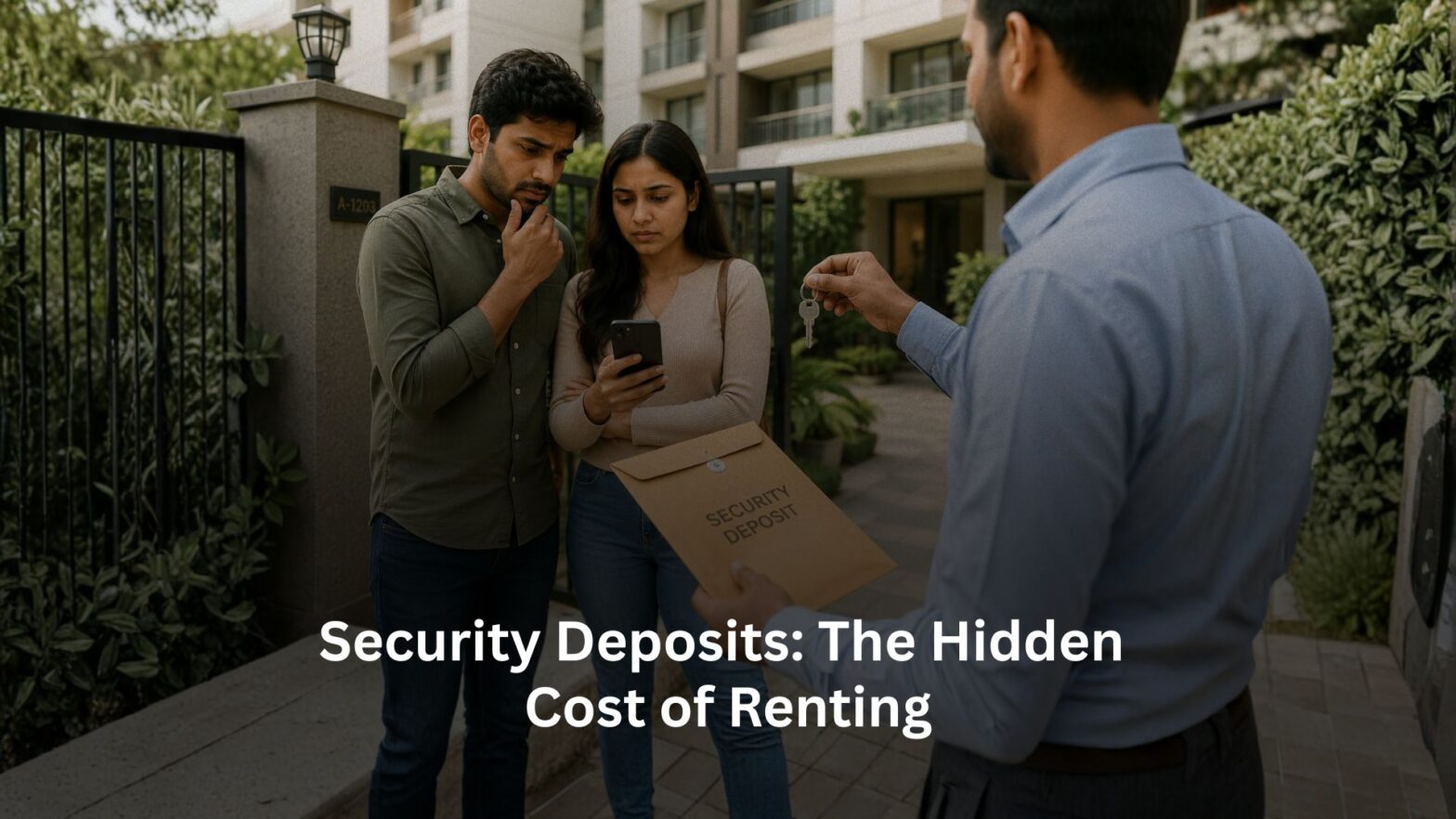
Security Deposits: The Hidden Cost of Renting
When people evaluate a rental property, the monthly rent usually becomes the deciding factor. But in reality, the biggest financial commitment often comes even before the first month’s rent is paid.
Security deposits have long been a standard part of renting, giving landlords financial protection against unpaid dues or property damage. However, as rental markets become more competitive and urban migration continues to rise, these upfront payments are creating a significant financial burden for tenants.
According to the NoBroker Rent Report 2026, tenants across six major Indian cities currently have over ₹1.26 lakh crore locked away in security deposits. That’s a substantial amount of household capital sitting idle, money that could otherwise be invested, used for emergencies, or support other financial goals.
The report shifts the conversation from “How expensive is rent?” to an equally important question: “How much does it actually cost to move into a rental home?”
Why Security Deposits Continue to Matter
Security deposits aren’t an arbitrary requirement. For landlords and property managers, they play an important role in reducing financial risk throughout a tenancy.
A well-defined deposit helps cover situations such as:
- Damage beyond normal wear and tear.
- Unpaid rent or utility bills.
- Unexpected move-outs without proper notice.
- Pending maintenance or repair costs after vacating.
For professionally managed rentals, deposits also provide confidence that the property will be returned in good condition. They encourage accountability while giving landlords a financial cushion if issues arise during or after the tenancy.
The challenge, however, is that while the purpose of security deposits remains valid, the amount tenants are expected to pay has increased significantly in many cities. As a result, what was once viewed as a safeguard has gradually become one of the largest upfront costs associated with renting.

The Financial Burden Goes Beyond the Deposit Amount
Unlike rent, which is paid monthly, a security deposit remains locked for the entire duration of the tenancy. Although tenants are expected to receive it back at the end of their stay, the money remains inaccessible for months, or even years.
For many renters, especially students, young professionals, and families relocating to a new city, arranging this amount isn’t always easy.
High security deposits often mean tenants have to:
- Delay investments or savings goals.
- Dip into emergency funds.
- Borrow money from family or friends.
- Compromise on a preferred property simply because the upfront payment is too high.
This is why security deposits have quietly become a hidden cost of renting. They’re not reflected in monthly rental budgets, but they significantly affect a tenant’s financial flexibility from day one.
Where Is the Most Money Locked in Security Deposits?
The NoBroker report highlights just how large this issue has become across India’s rental market.
| City | Security Deposits Locked |
|---|---|
| Mumbai | ₹41,156 crore |
| Bengaluru | ₹31,628 crore |
| Delhi-NCR | ₹24,054 crore |
| Chennai | ₹17,346 crore |
| Hyderabad | ₹6,843 crore |
| Pune | ₹5,015 crore |
Together, these six cities account for more than ₹1.26 lakh crore tied up in security deposits.
For a rapidly growing rental market, this represents far more than just money held by landlords. It reflects household savings that remain unavailable for investments, education, healthcare, business opportunities, or other financial priorities.
When the Deposit Influences the Rental Decision
Rental affordability is often measured by whether someone can comfortably pay the monthly rent. But today’s market tells a different story.
In many cities, tenants are increasingly making decisions based on the deposit rather than the rent itself.
Bengaluru offers a clear example. According to the report, 75% of tenants surveyed said they had to give up a property they liked because they couldn’t arrange the required security deposit.
Instead of choosing a home based on location, amenities, or convenience, many renters are forced to compromise because the upfront financial commitment is simply too high.
This changes the way people approach renting altogether. Rather than asking whether they can afford to live somewhere every month, they first have to determine whether they can afford to move in.

Getting the Deposit Back Isn’t Always Straightforward
Paying the security deposit is only one part of the rental journey. Recovering it can sometimes become an even bigger challenge.
Disagreements over deductions remain common, particularly when expectations haven’t been clearly documented from the beginning. Landlords may deduct amounts for repairs, painting, cleaning, or pending dues, while tenants often expect a full refund if they believe the property has been maintained well.
Some of the most common reasons behind deposit disputes include:
- Property damage assessments.
- Painting and maintenance charges.
- Cleaning costs after move-out.
- Utility bill adjustments.
- Normal wear and tear being treated as damage.
The report also found that 11% of tenants in Chennai said they never received their security deposit back, highlighting that refund-related concerns continue to be a major issue in parts of the rental market.
While every deduction may not be unfair, disputes often arise because there is limited documentation, inconsistent communication, or no structured process to verify charges before settlement.
Is It Time to Rethink the Traditional Security Deposit Model?
As India’s rental market continues to evolve, the conversation around security deposits is changing. While landlords still need financial protection, tenants are increasingly looking for more flexible and transparent rental experiences.
Globally, several rental markets have already adopted alternatives that reduce the upfront burden without compromising the landlord’s security. These include:
- Rental deposit insurance instead of large cash deposits.
- Bank-backed guarantees that act as financial protection.
- Low-deposit rental programmes for verified tenants.
- Monthly protection plans that spread the cost over time.
These models are still at an early stage in India, but they indicate a growing shift towards balancing landlord security with tenant affordability.
Rather than eliminating deposits altogether, the focus is gradually moving towards making the process more practical, transparent, and easier for both parties.
Transparency Matters More Than the Deposit Amount
One of the biggest reasons security deposit disputes occur isn’t always the amount involved, it’s the lack of clarity around how the deposit will be managed.
Questions like these often remain unanswered until the tenant decides to move out:
- What deductions are considered valid?
- How is normal wear and tear assessed?
- When will the deposit be refunded?
- What documents support the deductions made?
Without clear answers, even minor deductions can turn into lengthy disagreements.
Professional property managers reduce these conflicts by creating structured processes from the very beginning. Clearly documented agreements, regular property inspections, digital payment records, and transparent communication help both landlords and tenants understand their responsibilities throughout the tenancy.
When expectations are defined upfront, move-outs become significantly smoother and far less stressful.
What Can Property Managers Do Differently?
Security deposits may continue to remain a part of renting, but the way they are managed can make a significant difference to the tenant experience.
Instead of relying on manual records or verbal discussions, operators can adopt a more structured approach by:
- Clearly defining deposit terms before move-in.
- Digitally recording agreements and payment history.
- Conducting documented move-in and move-out inspections.
- Maintaining maintenance records throughout the tenancy.
- Providing itemised explanations for any deductions during settlement.
These practices not only reduce disputes but also build trust, helping landlords maintain stronger relationships with tenants.

How RentOk Helps Simplify Security Deposit Management
Managing deposits across multiple tenants can quickly become complicated when agreements, payment records, inspection notes, and communication are scattered across spreadsheets, WhatsApp chats, and paperwork.
RentOk brings these processes together on a single platform, making it easier for property managers to maintain complete visibility throughout the tenant lifecycle.
With RentOk, operators can manage:
- Tenant agreements and occupancy records.
- Security deposit details and payment history.
- Move-in and move-out tracking.
- Rent, utility, and dues management.
- Maintenance requests and service records.
- Centralised tenant communication.
Having all this information in one place makes deposit settlements more transparent, reduces manual errors, and helps property managers handle move-outs with greater confidence and consistency.
As rental portfolios grow, structured systems like these become essential for delivering a professional tenant experience while improving operational efficiency.
Final Thoughts
Security deposits have always played an important role in protecting landlords, but they have also become one of the largest upfront financial commitments for tenants. The NoBroker report brings attention to an issue that often receives less attention than rising rents, the amount of money that remains locked away for the duration of a tenancy.
As India’s rental ecosystem becomes more organised, success will depend on creating processes that protect landlords without placing unnecessary financial strain on tenants. Clear agreements, transparent documentation, and technology-driven property management can help bridge that gap.
For property managers, the goal isn’t simply to collect a security deposit, it’s to manage it professionally. And for tenants, a transparent deposit process can be just as important as finding the right home.
Looking to simplify tenant management and create a more transparent rental experience? Explore how RentOk helps property managers streamline agreements, payments, deposits, and day-to-day operations, all from one centralized platform.
FAQ’S
1. How much security deposit is usually charged in India?
The amount varies by city, property type, and landlord policies. In most cases, tenants are asked to pay anywhere between one and six months’ rent as a refundable security deposit.
2. Can landlords legally deduct money from a security deposit?
Yes, landlords can make deductions for unpaid rent, utility bills, or damages beyond normal wear and tear. However, the deductions should be reasonable and ideally supported by proper documentation.
3. What documents should tenants keep for security deposit claims?
Tenants should keep the rental agreement, payment receipts, move-in inspection photos, and any written communication regarding the property’s condition. These records help resolve disputes more easily.
4. Why is digital record-keeping important for property managers?
Maintaining digital records of agreements, payments, inspections, and maintenance creates transparency and reduces the chances of misunderstandings during move-out and deposit settlement.
5. How can property managers improve tenant trust regarding security deposits?
Clearly explaining deposit terms, documenting property conditions, and sharing timely updates during move-in and move-out helps build confidence and creates a better rental experience for tenants.
6. Can property management software help with deposit management?
Yes. Property management software like RentOk centralizes tenant records, agreements, payment history, and inspection details, making security deposit tracking and settlements more organized and transparent.