
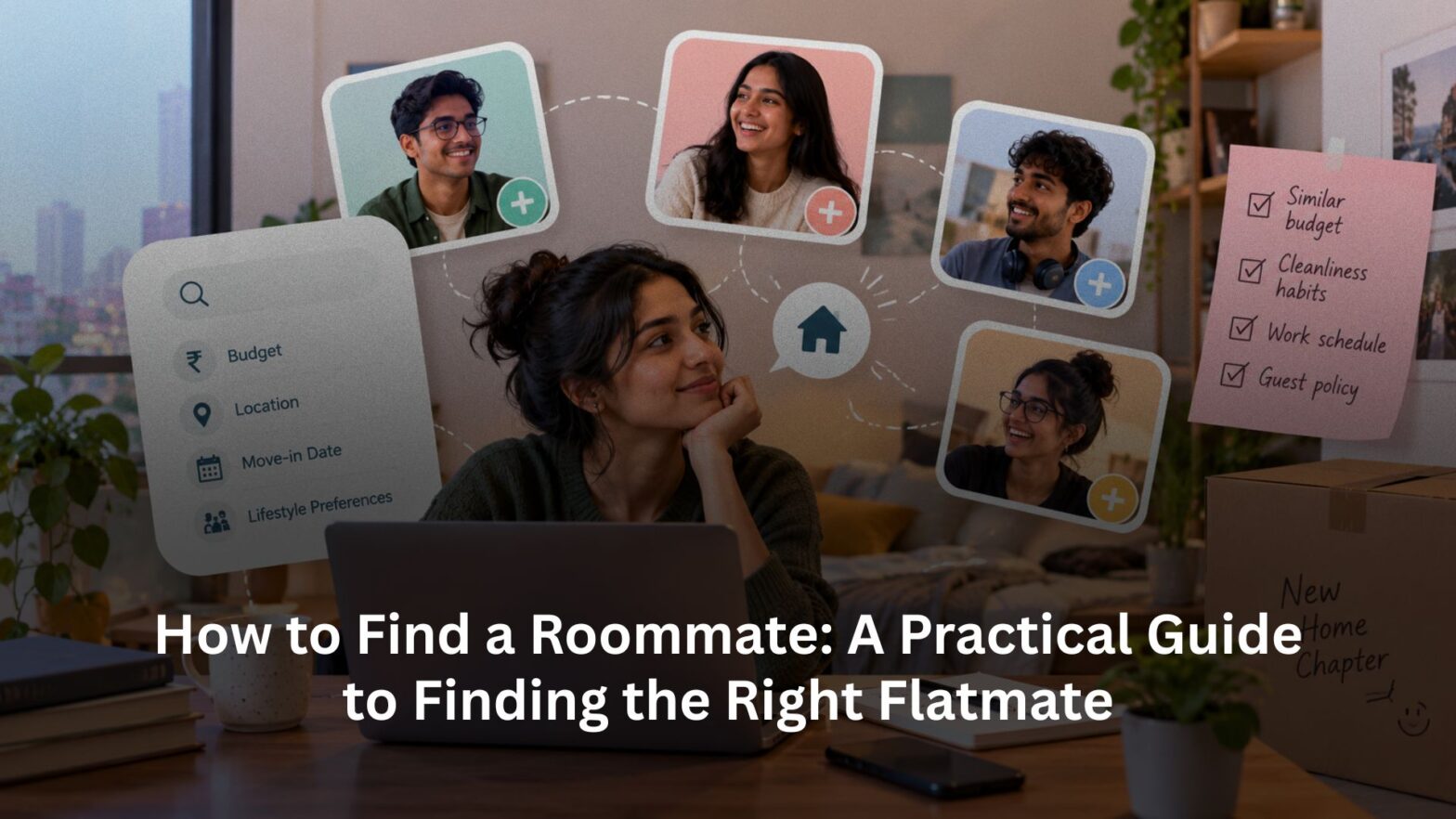
How to Find a Roommate: A Practical Guide to Finding the Right Flatmate
Finding a roommate can make renting a home more affordable, especially in cities where living alone comes with a high monthly cost. But sharing a home is about more than splitting the rent. Your roommate’s habits, expectations, and approach to managing household expenses can shape your everyday experience.
The good news is that you do not have to depend entirely on friends or spend hours searching random listings. Dedicated roommate-finding platforms, social media groups, rental websites, and personal referrals can help you connect with people who are also looking for a place to live.
The key is knowing where to look, what to ask, and how to check whether someone is a suitable flatmate before making a commitment.
What Is the Easiest Way to Find a Roommate?
The easiest way to find a roommate is to use a dedicated roommate-finder app or website where you can browse room listings, connect with people looking for shared accommodation, and compare preferences such as budget, location, and lifestyle.
These platforms can make the search more organised because you can start with people whose requirements are already similar to yours. For example, if you are moving to Bengaluru for work, you can look for someone searching in the same area, with a similar move-in date and monthly budget.
However, a platform is only the starting point. You should still speak to the person, verify the property details, and discuss household expectations before agreeing to share a home.
Where Can You Find a Roommate in India?
There is no single method that works for everyone. The right place to search depends on whether you need an entire flat, a room in an existing apartment, or someone to join you in renting a new property.
1. Use Dedicated Roommate-Finding Apps and Websites
Roommate-matching platforms are a useful starting point because they are designed specifically for people looking for shared accommodation. Depending on the platform and available listings, you may be able to create a profile, set your budget, mention your preferred location, and connect with potential flatmates.
Some platforms to explore include:
- FlatMate.in: An India-focused platform for finding rooms and flatmates. You can explore listings and connect with people based on your housing requirements.
- NextFlat: A platform for finding shared accommodation and flatmates in Indian cities. Check its current listings and available matching features for your location.
- FindMyRoom: A website to explore room and flatmate listings. Availability and listing details can vary by city.
- Roommates.com: A dedicated roommate-finding website where users can explore roommate profiles and accommodation options. Check whether its current listings cover your intended location.
- Roomster: A roommate and accommodation platform with listings in different locations. Review the available options and verification information before proceeding.
When using these platforms, make your profile specific. Instead of simply writing “Looking for a flatmate,” mention your preferred locality, budget, move-in date, and whether you are looking for an existing room or someone to rent a flat with you.
A detailed profile can help you connect with people whose requirements are genuinely compatible.
2. Search Social Media Groups and Local Communities
Social media can be particularly useful when you are moving to a new city and need to find people already living in your preferred neighbourhood.
Search Facebook for groups using terms such as:
- Flat and Flatmates Delhi NCR
- Flatmates in Bengaluru
- Mumbai Flat and Roommate Search
- Pune Flats and Flatmates
You can also look for housing communities connected to your college, workplace, alumni network, or professional groups.
Before posting, include your budget, preferred area, move-in date, and the kind of accommodation you need. You can also respond to people who have already posted that they are looking for a flatmate.
Be careful with social media listings. A profile or group membership does not automatically establish that a person owns the property, has permission to rent it, or is offering a genuine room. Verify the details independently before making any payment.
3. Explore Rental Websites for Rooms and Shared Flats
Sometimes, you do not need to find a person first. You may find an existing flat where one room is vacant and the current residents are looking for someone to move in.
Rental websites such as Zillow offer room-related search options in markets where their listings are available. In India, you can also explore room and shared-accommodation listings on housing platforms, including NoBroker and 99acres.
Check the listing carefully to understand whether you are:
- Renting a private room in an occupied flat.
- Joining other people who are renting the entire property together.
- Renting a room in a PG or organised co-living arrangement.
These options can have different costs, rules, and responsibilities. Confirm who will sign the rental agreement and how the rent and deposit will be handled.
4. Ask Friends, Family, and Colleagues
A personal referral can be a helpful way to find a roommate because someone you know may already have information about the person’s habits, work schedule, or living arrangements.
Tell your friends, relatives, classmates, and colleagues that you are looking for a flatmate. Share your preferred location and budget so they can pass on relevant leads.
You can also ask people at your workplace or college whether they know someone moving to the same city. This is particularly useful when you are relocating for a new job, internship, or course.
Still, a personal referral is not a substitute for a proper conversation. Even people who know each other socially may have very different expectations about cleanliness, guests, privacy, and shared expenses.

Should You Find a Roommate First or a Flat First?
This depends on your situation.
If you already have a flat or have found a property you want to rent, you can look for someone to share it with you. Make sure the owner permits the arrangement and that the rental agreement reflects who is living there.
If you are moving to a new city and do not have a property yet, finding a compatible flatmate first may help you decide which neighbourhoods and properties to consider together.
| Your situation | A practical approach |
|---|---|
| You have an extra room in your flat | Find someone looking for a room and verify the owner’s permission |
| You are moving to a new city | Search for people with a similar budget, location, and move-in date |
| You already have a friend to live with | Discuss expectations before jointly choosing a property |
| You want a furnished room with fewer setup responsibilities | Explore PG or co-living options alongside roommate listings |
Do not rush into renting an entire flat with someone you have just met online. First understand whether you are compatible and whether both of you can meet the financial and contractual commitments.
How to Choose the Right Roommate: Questions to Ask Before Moving In
Finding someone who can afford the rent is one thing. Finding someone you can comfortably share a home with is another.
Before making a decision, have a proper conversation with each potential flatmate. You do not need to ask every question like an interview, but you should cover the topics that could affect your daily life.
Discuss Your Lifestyle and Daily Routine
A person can be friendly and responsible but still have a living routine that does not suit yours. Someone who works night shifts, for example, may find it difficult to share a home with someone who regularly has early-morning meetings.
Talk about:
- Sleep schedules: When do you usually sleep and wake up? Are you comfortable with different schedules?
- Work and study routines: Does either person work from home or need quiet during certain hours?
- Cleanliness: How often should shared spaces be cleaned? Who will handle the kitchen and bathroom?
- Guests: Are overnight guests allowed? How much notice should someone give before inviting friends over?
- Privacy: Are you comfortable sharing personal items, or should everything be kept separate?
You do not have to agree on every preference. What matters is whether both people can respect each other’s boundaries.
Agree on How Household Expenses Will Be Split
Money-related misunderstandings can quickly make a roommate arrangement uncomfortable. Discuss the expenses before signing an agreement or moving in.
| Expense | What to clarify |
|---|---|
| Rent | Will it be split equally or according to room size? |
| Security deposit | How much will each person contribute, and how will it be returned? |
| Electricity and water | Will bills be split equally or based on usage? |
| Wi-Fi and utilities | Who will pay the bills, and when should others reimburse them? |
| Household help | Will you share the cost of a cook, cleaner, or other services? |
Also discuss what happens if someone moves out before the rental agreement ends. Do not assume that the remaining flatmate will automatically be able to cover the entire rent or that the deposit will be returned immediately.
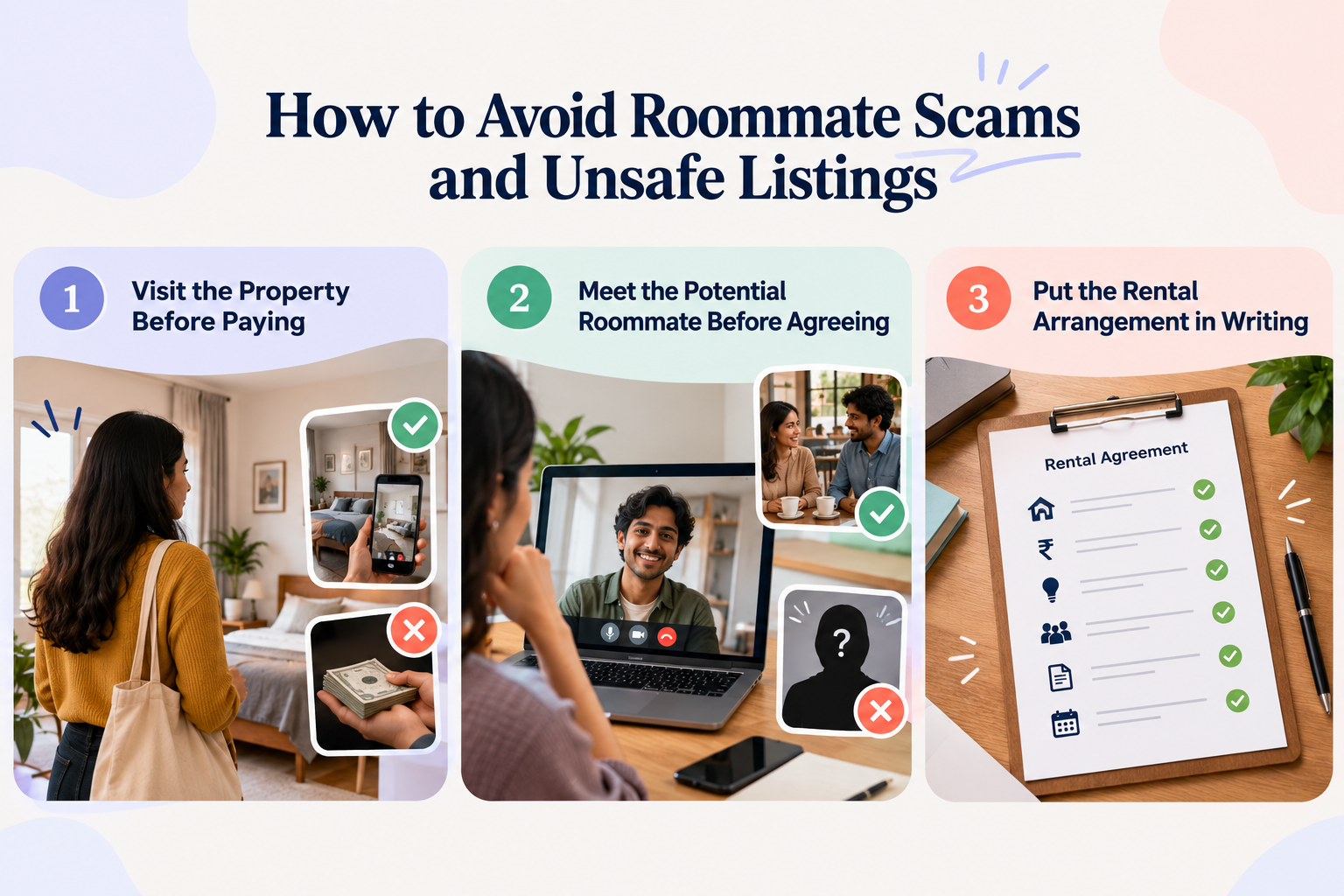
How to Avoid Roommate Scams and Unsafe Listings
Roommate searches often involve sharing personal information, visiting unfamiliar properties, and discussing deposits. Taking a few precautions can help you avoid fraudulent listings and uncomfortable situations.
Visit the Property Before Paying
Always try to visit the property in person before paying a token amount, security deposit, or advance rent.
Check whether the room matches the listing, whether the shared spaces are usable, and whether the person showing you the property has the authority to offer it for rent.
If you cannot visit immediately because you are relocating from another city, ask for a live video tour. However, a video call alone is not proof that the listing is genuine. Arrange independent verification and a physical visit before transferring money.
Meet the Potential Roommate Before Agreeing
A short video call can help you get an initial sense of the person and discuss basic expectations. You can use FaceTime, Zoom, or another video-calling service.
If you decide to meet in person, choose a public place first and let someone you trust know where you are going. If the person avoids reasonable questions about the property, pressures you to pay immediately, or refuses to let you inspect the room, treat that as a warning sign.
Put the Rental Arrangement in Writing
Do not rely only on verbal promises or messages exchanged with a potential flatmate.
Before moving in, confirm:
- Who is named on the rental agreement.
- Whether the landlord has approved the roommate arrangement.
- How rent and the security deposit will be paid.
- Who is responsible for bills and household expenses.
- What happens if someone wants to leave early.
- How notice periods and deposit refunds will be handled.
Make sure the arrangement is consistent with the rental agreement and applicable requirements. Keep copies of payment receipts and written agreements.
What to Do After You Find a Roommate
Once you have found someone suitable, take a little time to organise the move rather than rushing straight into sharing the property.
Start by confirming the final rent, deposit, move-in date, and who will be responsible for each payment. Make sure both of you have access to the agreed rental documents.
When you move in, take photographs of the room and shared areas, particularly any existing damage. This can help avoid disagreements when the tenancy ends.
It is also useful to establish a few basic household rules from the beginning. Decide how cleaning will be managed, where groceries and personal belongings will be stored, and how you will communicate about shared expenses.
You do not need an elaborate roommate contract for every household preference, but a written record of important financial and rental arrangements can make expectations clearer.
Conclusion: Finding a Roommate Is About More Than Splitting Rent
Finding a roommate can make renting more manageable, but the right person should fit your budget as well as your everyday routine.
Start with dedicated roommate-finding platforms, social media communities, rental websites, or trusted referrals. Compare potential flatmates based on location, budget, lifestyle, and move-in date. Then take the time to meet them, inspect the property, discuss expenses, and verify the rental arrangement.
A little screening before moving in can save you from a lot of stress after the lease begins. The goal is not simply to find someone who can share the rent. It is to find someone with whom you can build a comfortable, respectful, and financially clear living arrangement.
FAQ’S
1. How early should I start looking for a roommate before moving?
Start your search a few weeks before your planned move-in date so you have enough time to compare profiles, visit properties, and discuss rental terms. Starting early also gives you more flexibility if your first choice does not work out.
2. Can I find a roommate if I already have a rented flat?
Yes, you can look for someone to share your existing flat, but first check your rental agreement and get the landlord’s permission if required. Agree on rent, bills, deposit contributions, and responsibilities in writing before they move in.
3. What is the difference between a roommate and a flatmate?
A roommate generally refers to someone who shares your living space, while a flatmate usually shares an apartment or flat with you. In everyday Indian rental searches, the terms are often used interchangeably, even when people have separate bedrooms.
4. Should I choose a furnished or unfurnished flat when finding a roommate?
A furnished flat can reduce the initial cost of buying furniture and appliances, especially if you are relocating for work or studies. An unfurnished flat may offer more flexibility, but you and your flatmate should agree on how to purchase, share, and eventually divide household items.
5. What happens if my roommate wants to move out before the lease ends?
The outcome depends on the rental agreement, notice period, and any agreement between the flatmates and landlord. Discuss how to find a replacement, handle unpaid rent, and settle the security deposit before anyone moves out.
6. Is it better to share a flat with a friend or find a new roommate?
Living with a friend may feel more comfortable initially, but friendship does not always guarantee compatible living habits. Whether you choose a friend or someone new, discuss finances, privacy, cleanliness, guests, and daily routines before committing to a shared home.