
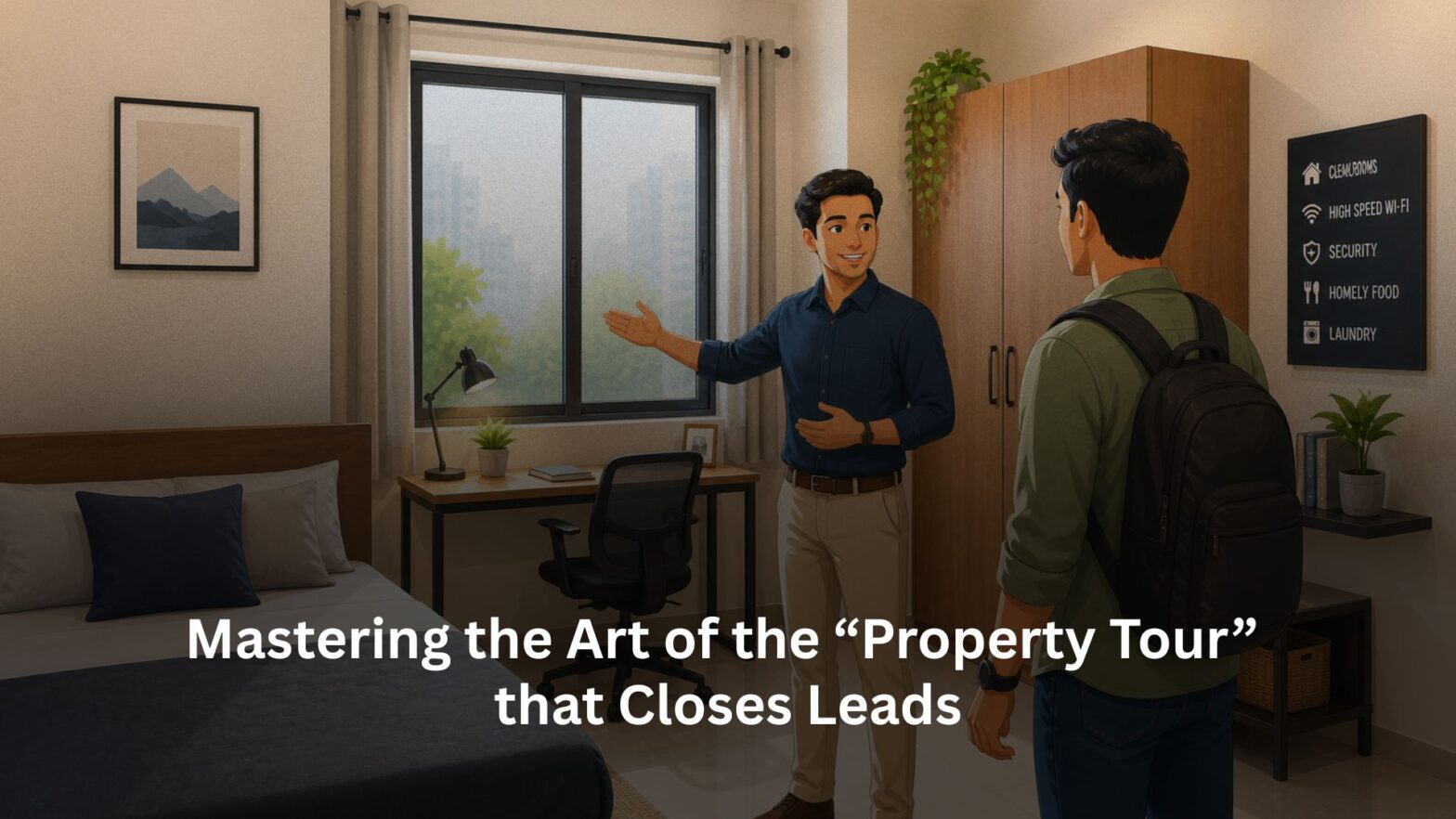
Mastering the Art of the “Property Tour” that Closes Leads
In rental operations, especially in high-density PG environments, most conversions are not lost at the marketing stage, they are lost during the visit. By the time a prospective tenant agrees to a property tour, the hardest barrier has already been crossed: genuine interest. They’ve shortlisted you, carved out time, and are now evaluating seriously.
What follows is the decisive moment, where interest either converts into occupancy or slips into hesitation.
A property tour is far more than a casual walkthrough. It is a controlled, high-impact interaction where perception, clarity, and trust are built in real time. Operators who treat it as routine often struggle with low conversions despite having strong properties, while those who approach it strategically turn the same inventory into consistently higher occupancy.
Why the Property Tour Is Your Strongest Conversion Lever
Most PG operators focus heavily on generating leads, platform listings, broker networks, ads, but ignore the final stage where decisions actually happen.
At the tour stage, tenants actively compare:
- Your property against 2–3 serious alternatives they have already seen
- Your communication clarity against past experiences
- Your confidence level against their uncertainty
This is not exploration anymore. This is decision-making.
If the experience feels structured and reliable, the tenant moves forward. If it feels unclear or inconsistent, they delay, and delayed decisions often turn into lost leads.
First Impressions: Where the Decision Quietly Begins
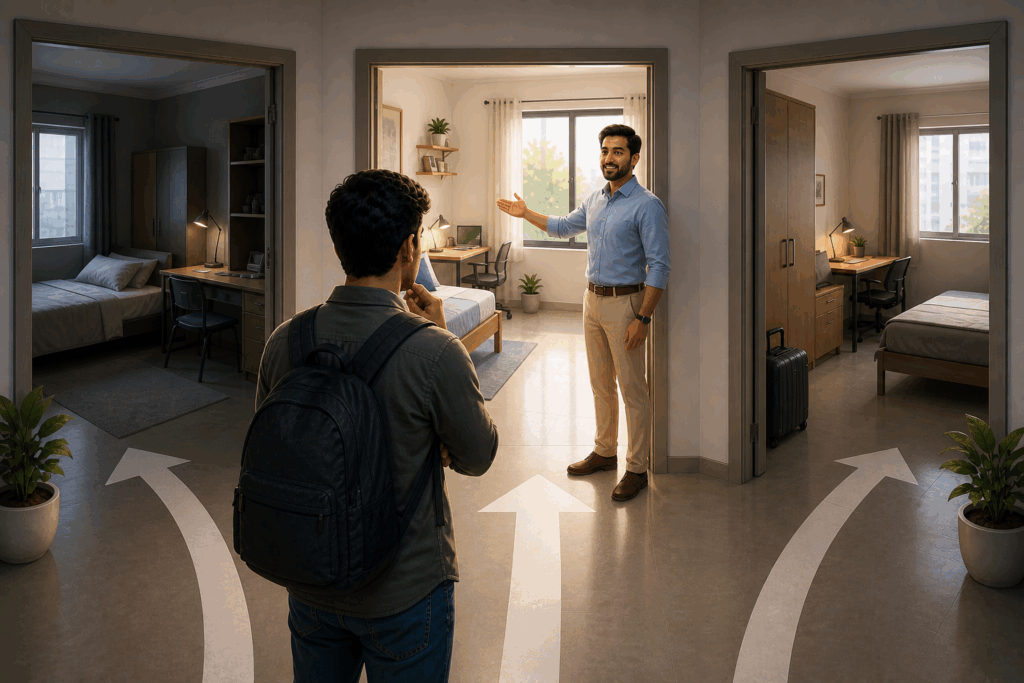
Tenants start forming opinions the moment they step inside. You don’t get time to explain before they evaluate. Their brain processes signals instantly, cleanliness, lighting, smell, layout, and builds a narrative about how well the property is managed.
Strong operators control this moment deliberately.
- The entrance sets the tone. A clean, organized entry immediately signals discipline and attention to detail
- Lighting across common areas must feel consistent, not patchy or dim, because poor lighting suggests neglect
- Rooms must be fully ready, not mid-cleaning, not “almost fixed”, because incomplete spaces create doubt
- Clutter must be removed completely, since visible disorder reduces perceived value
These are not cosmetic details. They directly influence trust. Once trust drops, everything you say afterward feels like justification instead of assurance.
Structuring the Tour: Control the Flow, Don’t Wander
An unstructured tour forces the tenant to interpret the property themselves. That creates confusion and weakens your position.
A structured tour builds confidence because it guides the tenant through a clear narrative.
Start by setting context. Briefly explain who typically stays here and what kind of experience the property offers. This immediately positions your PG in the tenant’s mind.
Then move through the property in a logical sequence. Don’t jump between spaces randomly. Create a natural progression, entry, common areas, rooms, facilities, so the tenant understands how everything connects.
Explain as you go. Don’t wait for questions. Anticipate them. When you explain proactively, you control perception instead of reacting to it.
Close with clarity. Pricing, inclusions, availability, and next steps should feel straightforward and complete. Ambiguity at this stage creates hesitation.
Showing the Room: Sell the Experience, Not the Furniture
Most operators describe rooms in terms of features. Bed, cupboard, lighting, washroom. That approach informs, but it doesn’t convince.
Tenants don’t decide based on features. They decide based on how they imagine living in that space.
Shift the conversation from “what exists” to “how it works.”
- Instead of pointing at storage, explain how it is divided to prevent conflicts and make daily use easier
- Instead of mentioning lighting, connect it to comfort, late-night work, studying, or relaxed evenings
- Instead of describing layout, show how movement works naturally without obstruction
When tenants start visualizing their routine inside the room, the decision becomes emotional as well as logical. That’s where conversion happens.
Handling Objections: Where You Win or Lose the Deal
Every serious tenant raises concerns. That’s not resistance, it’s engagement. The way you respond determines whether the deal moves forward.
Handle objections with clarity, not defensiveness.
- When pricing feels high, break down the value clearly, what’s included, how operations are managed, and how it compares with nearby options
- When space feels tight, acknowledge it directly and shift the focus to usability, layout efficiency, and storage design
- When shared living concerns arise, explain systems, cleaning schedules, issue resolution, and tenant management processes
Never argue. Clarify. When tenants feel understood, they trust your answers more. That trust reduces friction and speeds up decisions.
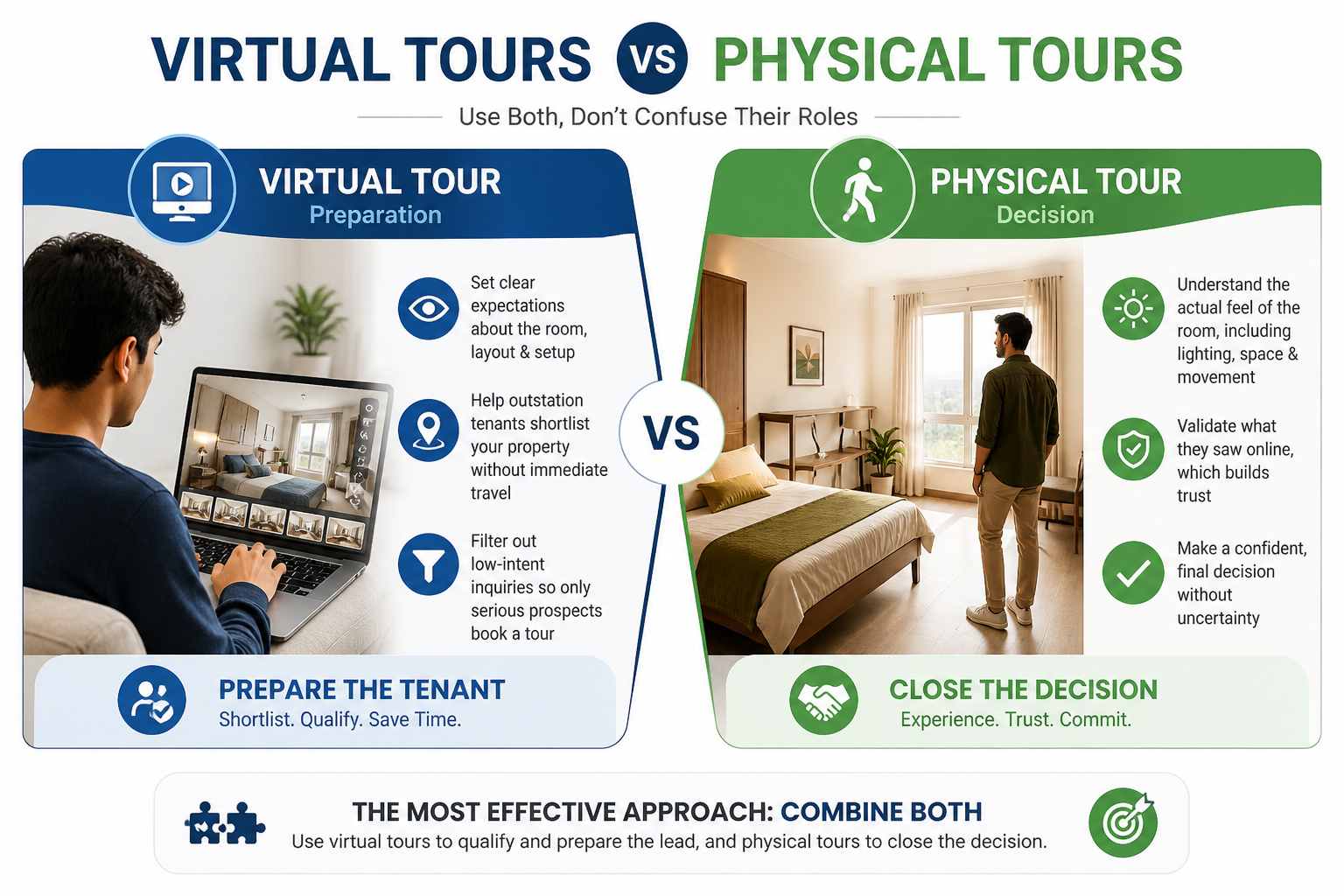
Virtual Tours vs Physical Tours: Use Both, Don’t Confuse Their Roles
Virtual tours and physical tours serve different purposes, and confusing their roles often weakens your conversion process. A virtual tour prepares the tenant, while a physical tour helps them make the final decision with confidence.
Virtual tours work best when you use them to:
- Set clear expectations about the room, layout, and overall setup before the visit
- Help outstation tenants shortlist your property without immediate travel
- Filter out low-intent inquiries so only serious prospects book a tour
However, virtual tours cannot replace physical visits. Tenants still want to experience the space in real conditions before committing.
Physical tours allow them to:
- Understand the actual feel of the room, including lighting, space, and movement
- Validate what they saw online, which builds trust
- Make a confident, final decision without uncertainty
The most effective approach is to combine both. Use virtual tours to qualify and prepare the lead, and use physical tours to close the decision.
Creating Urgency Without Losing Credibility
Urgency plays an important role in decision-making, but only when it feels genuine. Forced urgency often creates resistance instead of action.
The goal is not to pressure the tenant, but to give them the right context.
You can do this by:
- Sharing real demand signals, such as recent move-outs or multiple visits scheduled
- Explaining realistic timelines around availability so they understand how quickly rooms get filled
- Keeping your tone factual and calm, rather than overly persuasive
This creates natural urgency. The tenant becomes aware that waiting may cost them the opportunity, but they still feel in control of their decision.
Follow-Up: The Most Ignored Conversion Multiplier
Many operators assume the tour ends when the tenant leaves. In reality, this is where the decision process continues, and where many conversions are lost.
After the visit, tenants start comparing options. Without a follow-up, your property gradually loses recall.
A strong follow-up helps you stay relevant:
- Reach out within a few hours while the experience is still fresh
- Reinforce key highlights of the property to strengthen recall
- Reconfirm pricing, availability, and inclusions clearly
- Address any pending questions or concerns from the tour
This keeps the conversation active and reduces hesitation. In many cases, a well-timed follow-up is what converts an interested lead into a confirmed tenant.
Why Most PG Tours Underperform
Low conversion rates are rarely caused by poor properties. More often, they come from inconsistent execution during the tour process.
You’ll typically notice patterns like:
- No clear structure, which makes each tour feel different and sometimes incomplete
- Weak articulation of value, where features are shown but not explained properly
- Unresolved objections that leave tenants unsure
- Lack of follow-up, which breaks the decision momentum
These gaps create silent friction. The tenant may not always express it, but they move toward options that feel clearer and more reliable.
Turning Property Tours Into a Repeatable System
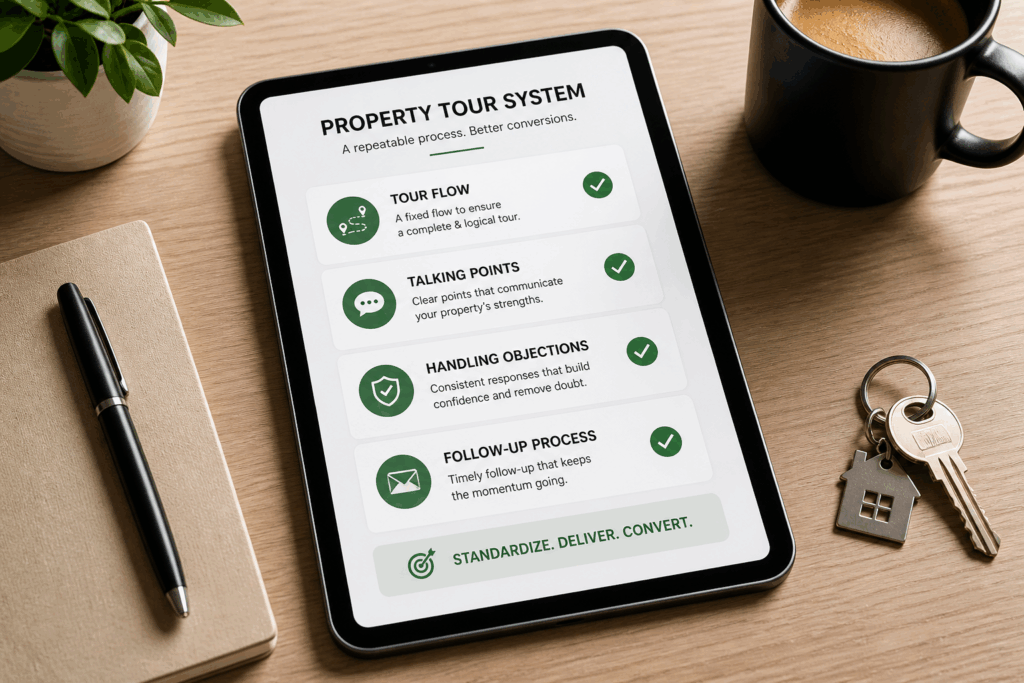
If you want consistent conversions, you need to treat property tours as a system rather than an individual effort. This ensures every lead gets the same experience, regardless of who conducts the tour.
A structured approach includes:
- A fixed tour flow that guides every visit in a logical and complete manner
- Defined talking points that clearly communicate your property’s strengths
- A consistent way to handle objections so responses remain confident and aligned
- A follow-up process that activates after every tour to maintain momentum
When you standardize these elements, your results become predictable. Instead of relying on chance or individual style, you create a repeatable process that consistently drives better conversions.
How Rentok Helps You Close More Leads Consistently
As your PG grows, managing leads manually becomes difficult. You start dealing with multiple inquiries, overlapping tours, scattered communication, and missed follow-ups. This is exactly where conversions start slipping, not because of the property, but because of lack of visibility.
Rentok solves this by bringing your entire lead-to-conversion flow into one structured system.
With Rentok, you can:
- Track every inquiry from the moment it comes in, so no lead gets lost or forgotten
- Maintain a clear record of conversations, ensuring you always know what was discussed with each prospect
- Schedule and manage property visits efficiently, avoiding overlaps or missed opportunities
- Automate follow-ups or set reminders so that every interested tenant is engaged at the right time
This creates a controlled pipeline where:
- Every lead is tracked
- Every tour is consistent
- Every follow-up happens on time
Instead of relying on memory or scattered tools, you operate with clarity. And that clarity directly improves your conversion rate.
Conclusion: Turn Every Tour Into a Conversion Opportunity
A property tour is not just a visit. It is the moment where decisions take shape. When you structure it correctly, guide the experience, and follow through consistently, you remove doubt and build trust, two factors that directly drive conversions.
If your current process feels inconsistent or dependent on manual effort, it’s time to move toward a system that supports you at every step.
Explore Rentok to streamline your lead management, structure your property tours, and ensure every visit moves closer to a confirmed booking.