
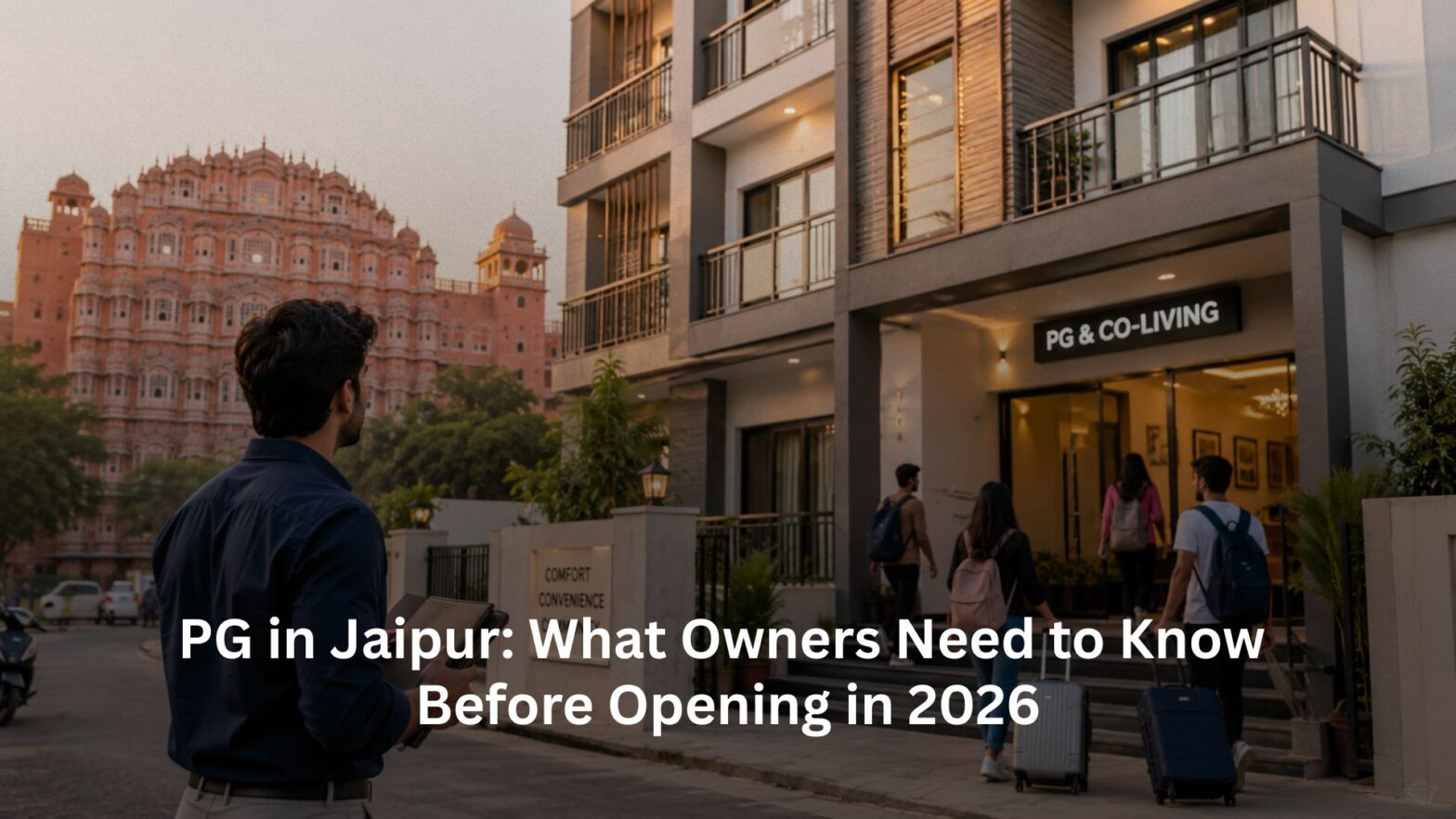
PG in Jaipur: What Owners Need to Know Before Opening in 2026
For years, Jaipur has been known for its heritage, tourism, and vibrant culture. While those sectors continue to thrive, the city has quietly transformed into one of India’s fastest-growing Tier-2 markets for rental accommodation. A steady influx of students, working professionals, startup employees, healthcare workers, and government exam aspirants has significantly increased the demand for professionally managed PGs and co-living spaces.
Unlike metro cities, where competition is intense and operating costs continue to rise, Jaipur offers a unique balance. Property prices are comparatively affordable, infrastructure is improving rapidly, and demand is spreading across multiple localities rather than being concentrated in just one part of the city. For entrepreneurs looking to enter the rental accommodation market in 2026, this creates a promising opportunity, but only if the business is planned strategically.
Opening a PG today is about much more than renting furnished rooms. Tenants expect digital payments, transparent policies, timely maintenance, and a seamless living experience.
As your business grows, managing occupancy, rent collection, expenses, and tenant communication efficiently becomes essential. Our guide on What is Rental Management? Tools to Manage Your Property Efficiently explains the systems and processes that help modern rental businesses scale successfully.
If you’re planning to start a PG business in Jaipur, understanding the local market before making an investment will help you avoid costly mistakes and build a property that remains profitable in the long run.
Why Jaipur Has Become One of India’s Fastest Growing PG Markets
Several factors have come together to make Jaipur an attractive destination for both tenants and property investors. Unlike cities where demand depends heavily on one industry, Jaipur benefits from multiple demand drivers that continue to support the rental market throughout the year.
Some of the biggest contributors include:
- A strong student population. Universities such as the University of Rajasthan, JECRC University, Manipal University Jaipur, Poornima University, and several coaching institutes attract students from across Rajasthan and neighbouring states. Many of these students require accommodation for multiple years, creating stable occupancy throughout the academic cycle.
- Growing employment opportunities. Jaipur’s IT parks, BPO companies, startups, healthcare institutions, and corporate offices have expanded considerably over the past few years. Young professionals relocating to the city often prefer managed PGs over traditional rental apartments because they offer flexibility and lower upfront costs.
- Improved infrastructure and connectivity. Better road networks, metro connectivity, and commercial development have made several new neighbourhoods attractive for rental housing. Areas that previously had limited rental demand are now witnessing increasing occupancy as businesses expand.
These trends indicate that Jaipur’s rental market is becoming more diversified. Demand no longer depends solely on students, which helps operators reduce seasonal fluctuations and maintain healthier occupancy levels.

Choosing the Right Location Matters More Than the Property Itself
One of the biggest misconceptions among first-time operators is that a well-designed property automatically attracts tenants. In reality, location often determines occupancy long before amenities come into the picture.
A premium property in the wrong locality can struggle to maintain occupancy, while a well-managed PG in a high-demand area can achieve consistent bookings throughout the year.
Before finalising a property, evaluate factors such as:
- The primary tenant segment in the area. Localities close to universities naturally attract students, whereas business districts generally see higher demand from working professionals. Understanding your target audience helps determine everything from room design to pricing and amenities.
- Connectivity and accessibility. Tenants increasingly prioritise properties that reduce their daily commute. Easy access to public transport, office hubs, coaching centres, hospitals, and markets can become a major deciding factor during property selection.
- Existing competition. Instead of simply counting the number of PGs nearby, analyse how they position themselves. Study their pricing, occupancy, facilities, online reviews, and service quality to identify opportunities where your property can stand out.
Successful PG operators don’t compete on price alone, they stand out with better management and a superior tenant experience.
Technology plays a key role in making that possible. Our guide on How Tech is Changing Property Management explores how automation helps improve occupancy, streamline operations, and enhance the tenant experience.
Which Areas in Jaipur Are Seeing the Highest Demand?
Rental demand is distributed across several micro-markets, each catering to a different tenant profile. Choosing the right locality should depend on the audience you want to serve instead of simply following market trends.
Some of the most promising areas include:
- Malviya Nagar, which continues to attract students and working professionals due to its educational institutions, commercial establishments, and excellent connectivity.
- Jagatpura, where rapid residential development and the presence of universities have created significant demand for student accommodation.
- Vaishali Nagar, a preferred location for professionals and families, has also witnessed increasing interest in premium PGs offering modern amenities.
- Mansarovar, one of Jaipur’s largest residential areas, supports demand from students, office employees, and individuals preparing for competitive examinations.
- Sitapura, home to industrial zones, educational institutions, and business parks, has emerged as an attractive market for professionally managed accommodation targeting working professionals.
Each locality has different pricing expectations, occupancy trends, and tenant behaviour. Conducting local market research before investing can significantly improve long-term profitability.
Understanding Your Tenant Before Designing Your Property
Many first-time operators spend a large portion of their budget on interiors without first understanding who will actually live in the property. As a result, they invest in features that tenants rarely value while overlooking aspects that influence everyday living.
For example, students generally prioritise affordability, reliable Wi-Fi, study-friendly environments, and flexible meal options. Working professionals, however, often place greater importance on cleanliness, privacy, security, housekeeping, and uninterrupted internet connectivity because these directly affect their work routines.
Instead of designing for “everyone,” define your primary audience early. This allows you to make smarter decisions regarding:
- Room configurations and occupancy levels.
- Amenities that genuinely improve tenant satisfaction.
- Pricing strategies suitable for your target segment.
- Operational policies around visitors, meals, housekeeping, and security.
- Marketing messages that attract the right audience instead of generating irrelevant enquiries.
The most successful PG businesses focus on serving a specific tenant segment instead of trying to appeal to everyone.
A great tenant experience starts before move-in. Our guide on Seamless Digital Tenant Onboarding explains how digital onboarding simplifies the process, reduces paperwork, and improves conversions.
Competition Is Increasing, But So Are Tenant Expectations
The Jaipur rental market is becoming more competitive each year. However, increased competition does not necessarily make it harder to succeed. It simply raises the standard that tenants expect.
Modern tenants compare multiple properties online before making a decision. They evaluate reviews, photographs, facilities, pricing transparency, responsiveness, and even how professionally enquiries are handled.
Today, a property’s reputation is shaped by much more than its infrastructure.
Tenants increasingly notice:
- How quickly management responds to enquiries and maintenance requests.
- Whether rent payments and deposits are handled transparently.
- If agreements clearly define notice periods, security deposits, and house rules.
- Whether common facilities remain consistently clean and well maintained.
- How professionally issues are resolved after move-in rather than just during the sales process.
These operational aspects directly influence online reviews, referrals, occupancy rates, and long-term business growth.
Legal and Regulatory Considerations You Shouldn’t Ignore
Many first-time operators focus heavily on interiors, amenities, and marketing but postpone legal compliance until after the property starts running. This often creates unnecessary complications later, especially when the business begins scaling.
The legal requirements for a PG may vary depending on the property’s size, location, and local regulations. While you don’t need to complete every formality on day one, it’s important to understand what approvals and documentation may be required before accepting your first tenant.
Some of the key areas to plan for include:
- Business registration and local permissions. Depending on your operating model, you may need municipal registrations or licences applicable to commercial accommodation. Understanding these requirements early helps avoid interruptions later.
- Tenant documentation and verification. Proper KYC verification protects both the property owner and residents while helping maintain compliance with local regulations. Digital documentation also makes future record management much easier.
- Rental agreements and house policies. Clearly written agreements reduce disputes related to notice periods, security deposits, lock-in clauses, and property rules. Every tenant should know what to expect before moving in.
If you’re unfamiliar with tenant verification, you may also find our guide on How to Spot a Fake ID During Tenant Verification useful before onboarding new residents.

Setting the Right Pricing Strategy for 2026
Pricing is one of the most misunderstood aspects of running a PG. Many operators either set prices too high based on their investment or compete solely by offering the lowest rates in the market.
Neither strategy is sustainable.
Instead, your pricing should reflect the value you provide while remaining competitive within your target locality.
When deciding your room rates, consider factors such as:
- Your target audience and the services they value. Students may prioritise affordability, whereas working professionals are often willing to pay more for privacy, better housekeeping, faster internet, and improved security.
- Operational costs beyond rent. Electricity, staff salaries, maintenance, housekeeping, Wi-Fi, food services, repairs, and marketing all contribute to your monthly expenses. Your pricing should leave enough margin to maintain service quality consistently.
- The level of competition nearby. Instead of undercutting competitors, identify opportunities to justify a premium through better management, transparent pricing, digital payments, or faster complaint resolution.
A slightly higher price supported by a better tenant experience often performs better than a low-cost property struggling with poor service standards.
Occupancy Doesn’t Grow Through Marketing Alone
Many new PG owners assume that once the property is listed on Google or accommodation platforms, enquiries will automatically convert into tenants.
In reality, occupancy depends on far more than visibility.
Prospective tenants compare multiple properties before making a decision. During this process, they evaluate not only the room but also how professionally the business operates.
Some operational factors that directly influence occupancy include:
- Speed of response. A delayed reply to an enquiry often results in losing that lead to another property. Quick responses create a stronger first impression and improve conversion rates.
- Professional communication. Clear information about pricing, facilities, meals, deposits, and policies builds trust before the tenant even visits the property.
- Online reputation. Reviews increasingly influence booking decisions. A property with slightly higher pricing but consistently positive reviews often outperforms cheaper alternatives.
- Consistent tenant experience. Happy residents naturally generate referrals, helping reduce customer acquisition costs over time.
If you’re interested in building occupancy through existing residents, our article on Building a Referral Program: Turn Your Tenants into Your Sales Team explains how referral-driven growth can become one of your strongest acquisition channels.
Common Mistakes New PG Owners Make
The Jaipur market offers excellent opportunities, but many operators still struggle because they repeat the same avoidable mistakes.
Some of the most common ones include:
- Choosing a property before studying the local demand. A building may look perfect on paper, but if the surrounding area doesn’t attract your target audience, maintaining occupancy becomes difficult regardless of the facilities you offer.
- Managing everything manually. Spreadsheets, handwritten registers, and WhatsApp messages may work initially, but they quickly become difficult to manage as occupancy increases. Manual operations often lead to delayed rent collection, missed follow-ups, and scattered tenant records.
- Ignoring operational systems. Many businesses invest heavily in interiors but very little in backend processes. Without structured workflows for payments, maintenance, complaints, and communication, operational efficiency declines as the property grows.
- Competing only on price. Lower pricing may attract enquiries, but sustainable growth comes from delivering a consistently better tenant experience rather than constantly reducing margins.
Avoiding these mistakes early can save both time and money while helping build a business that scales more smoothly.
Technology Is Becoming a Competitive Advantage
Running a successful PG in 2026 isn’t just about having good rooms, it’s about operating efficiently.
As your business grows, managing rent collection, maintenance, expenses, occupancy, and tenant communication manually becomes increasingly difficult. Our guide on How to Build a Rental Business That Runs on Auto-Pilot explains how automation helps you scale without adding operational complexity.
Modern operators are therefore investing in technology that helps them:
- Automate rent reminders and payment tracking instead of following up manually every month.
- Maintain digital tenant records, agreements, and KYC documents in one organised platform, reducing paperwork and making information easier to access whenever required.
- Track complaints, maintenance requests, occupancy, and expenses through structured workflows rather than relying on multiple disconnected tools.
This shift isn’t just about convenience. It allows owners to make faster decisions, improve tenant satisfaction, and manage multiple properties more efficiently as the business expands.
If you’d like to explore how digital property management works in practice, RentOk’s YouTube channel features videos covering product walkthroughs, feature updates, and operational best practices for PG operators.
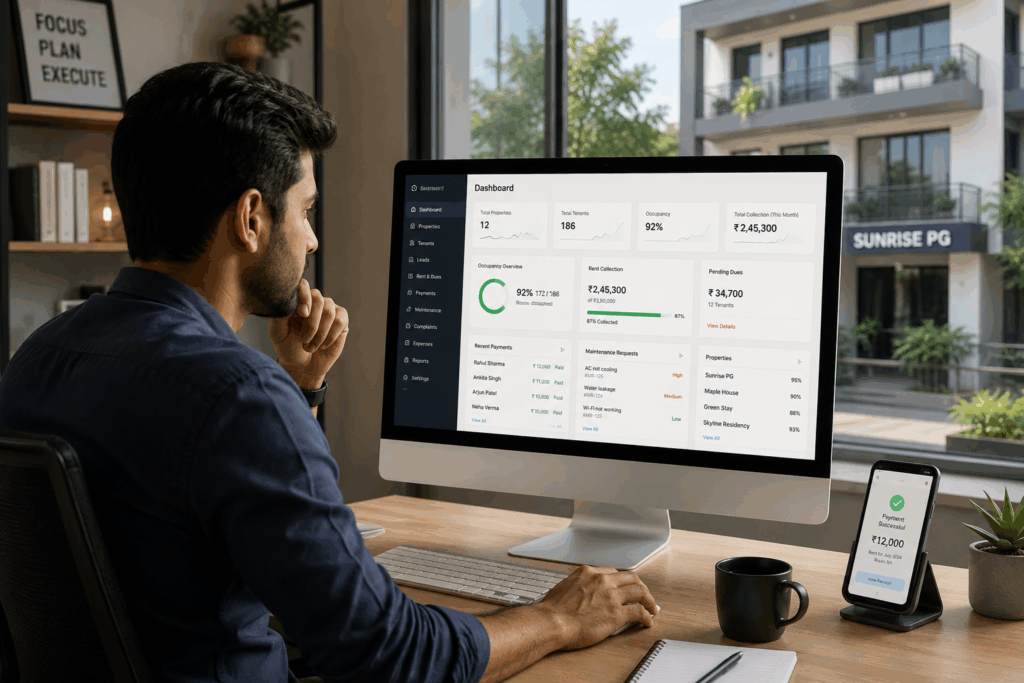
How RentOk Helps PG Owners Manage and Scale Their Business
Opening a PG is only the beginning. As occupancy increases, managing payments, tenant records, complaints, staff coordination, expenses, and daily operations manually becomes increasingly challenging.
RentOk brings these workflows together on a single platform, allowing property owners to manage their business more efficiently without juggling multiple spreadsheets or disconnected tools.
With RentOk, you can streamline:
- Rent collection through automated reminders, digital payment tracking, and better visibility into pending dues.
- Tenant management by maintaining digital records, agreements, KYC documents, and occupancy information in one place.
- Complaint tracking and operational communication, ensuring maintenance requests are monitored and resolved systematically instead of getting lost across WhatsApp chats or phone calls.
- Business reporting with dashboards that provide insights into collections, occupancy, expenses, and overall property performance, helping you make informed decisions as your business grows.
Whether you’re opening your first PG or planning to expand across multiple properties, structured operational systems can make scaling significantly easier.
Conclusion
Jaipur is expected to remain one of India’s most promising Tier-2 cities for managed rental accommodation in 2026. Strong demand from students, professionals, and relocating workers continues to create opportunities for well-managed PG businesses.
However, success today depends on much more than choosing a good property. Operators who understand their target audience, select the right location, build efficient operational processes, and embrace technology will be far better positioned to achieve consistent occupancy and long-term profitability.
If you’re planning to start or expand your PG business in Jaipur, now is the right time to build your operations on a system designed for growth.
Start your free RentOk trial today and discover how smarter property management can help you automate operations, improve tenant experience, and scale your PG business with confidence.
FAQ’S
1. Is Jaipur a good city for women-only PG businesses?
Yes. Jaipur has a large population of female students and working professionals, creating steady demand for secure and professionally managed women-only PGs. Properties with strong safety measures and reliable management often see better occupancy.
2. How long does it usually take for a new PG in Jaipur to reach full occupancy?
The timeline depends on factors like location, pricing, marketing, and tenant experience. A well-planned property in a high-demand area can start attracting tenants quickly, while consistent service quality helps maintain occupancy over time.
3. Should I lease a property or buy one to start a PG business in Jaipur?
Both models have advantages. Leasing requires lower upfront investment and offers flexibility, whereas owning a property provides long-term asset appreciation and greater control over operations. The right choice depends on your budget and business goals.
4. What amenities do tenants value the most in a Jaipur PG?
Reliable Wi-Fi, clean rooms, regular housekeeping, secure premises, comfortable furniture, and transparent management are among the most sought-after amenities. These often influence booking decisions more than luxury features.
5. Can I manage multiple PG properties without hiring a large team?
Yes, provided your operations are well organised. Using digital systems for rent collection, tenant records, complaint management, and communication can make it easier to manage multiple properties efficiently without significantly increasing staff.
6. How can I make my PG stand out in Jaipur’s competitive market?
Instead of competing only on price, focus on delivering a better tenant experience through professional management, transparent policies, timely maintenance, and responsive communication. Positive reviews and referrals often become your strongest competitive advantage.