Property Management Software for Owners vs. Managers
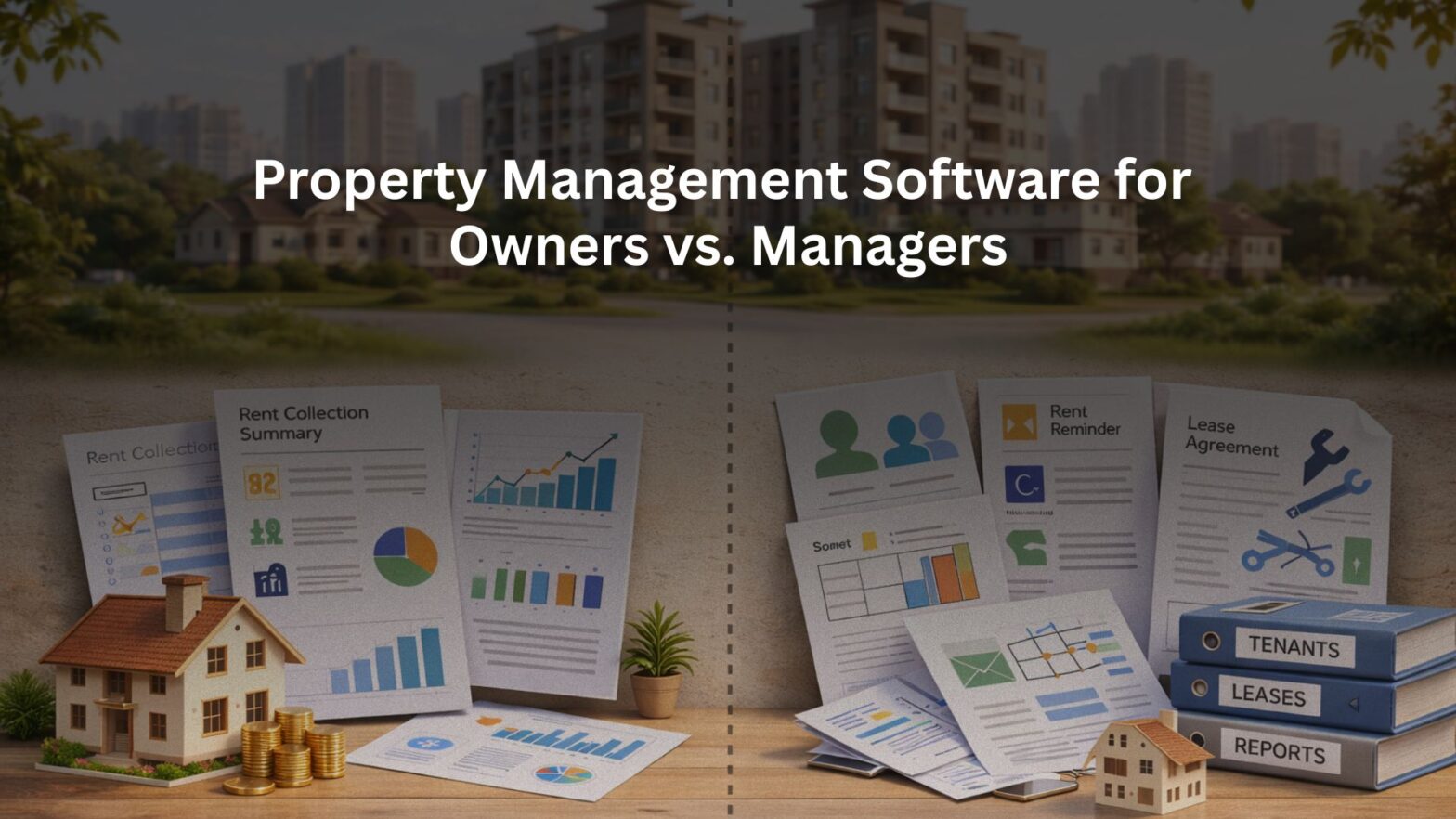
Property management involves multiple stakeholders, but the two most important roles are property owners and property managers. While both work toward maximizing occupancy and revenue, their responsibilities and expectations are very different.
Property owners typically focus on performance and returns. They want visibility into how their properties are doing without getting involved in day-to-day tasks. Property managers, on the other hand, handle operations, tenant coordination, rent tracking, maintenance, and reporting.
Because of this, property management software for owners and property management software for property managers should support different needs within the same platform. The right tool doesn’t just manage properties, it helps owners and managers work together efficiently.
Different Needs for Different Roles
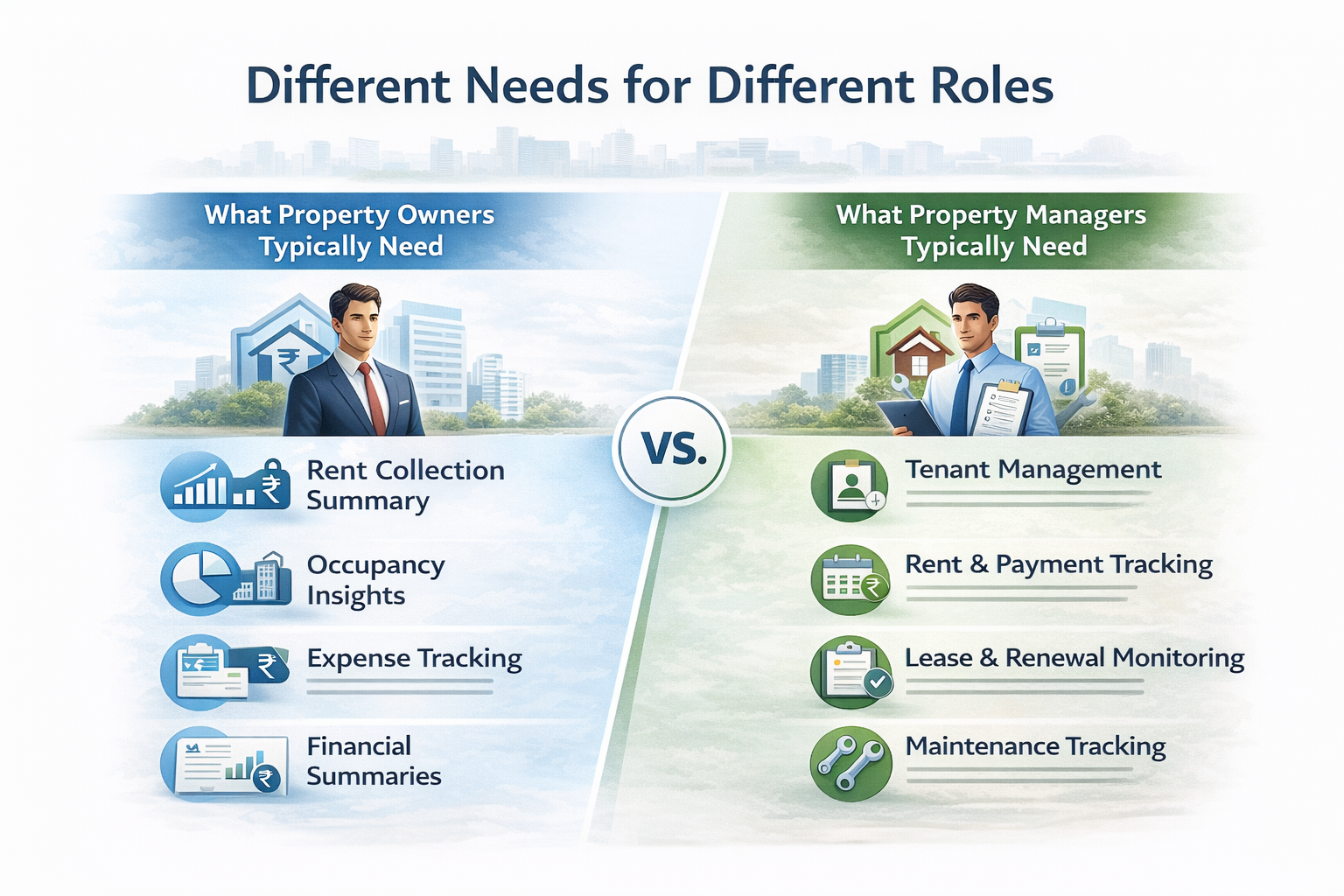
Although owners and managers are connected to the same properties, their priorities differ significantly. Property owners want high-level insights, while property managers need operational control.
Owners are typically interested in understanding how their investment is performing. They want to check financial performance, occupancy levels, and expense tracking without going through operational details.
Property managers, however, are responsible for execution. Their focus is on managing tenants, collecting rent, handling renewals, and ensuring smooth daily operations.
This difference creates two distinct sets of software requirements.
What Property Owners Typically Need
Property owners prefer clarity and simplicity. They want quick access to important metrics without navigating through complex dashboards.
Owners usually look for:
- Rent collection summaries that show how much revenue has been generated across properties
- Occupancy insights that help identify vacancies and performance trends quickly
- Expense tracking to understand operational costs and overall profitability
- Financial summaries that provide a clear view of property performance over time
These insights help owners stay informed without relying on manual updates. Instead of requesting reports, owners can simply log in and check performance.
This becomes especially important when owners manage multiple properties or work with property managers.
What Property Managers Typically Need
Property managers require more operational functionality. Their role involves handling tenants, managing payments, and coordinating daily activities.
Property managers typically need:
- Tenant management tools to maintain records, agreements, and tenant history in one place
- Rent tracking and reminders to ensure payments are recorded and follow-ups are automated
- Lease tracking features to monitor renewals, notice periods, and expirations
- Maintenance tracking to handle service requests and property issues efficiently
- Reporting tools to monitor operational performance and share updates with owners
As property portfolios grow, these requirements become more important. Without structured tools, managing multiple tenants and properties becomes difficult.
This is why choosing the right property manager software for landlords becomes essential for scaling operations.
Why Role-Based Access Matters
When owners and managers use the same platform, role-based access helps maintain clarity. Not everyone needs access to every feature.
Role-based access allows:
- Owners to view financial performance without accessing operational tools
- Property managers to handle tenant operations without exposing unnecessary data
- Teams to collaborate while maintaining clear responsibilities
- Sensitive financial or tenant information to remain controlled
This structure improves workflow and reduces confusion. Instead of creating multiple systems, role-based access ensures everyone uses the same platform efficiently.
As property businesses grow, role-based access becomes even more valuable. It helps maintain structure across teams and stakeholders.
Owner Portals: Improving Transparency and Communication
Owner portals are one of the most important features when multiple stakeholders are involved. They allow property owners to access information directly, without depending on manual updates.
Instead of calling or requesting reports, owners can log in and view performance in real time.
A well-designed owner portal typically allows owners to:
- View rent collection summaries across properties and time periods
- Check occupancy status to understand vacancies and tenant movement
- Review expense summaries and operational costs
- Monitor financial performance and property-level insights
This level of transparency reduces communication gaps and improves trust between owners and managers.
For property managers, owner portals also reduce reporting workload. Instead of preparing manual reports, information is automatically available to owners.
Over time, this improves operational efficiency and helps property businesses scale smoothly.
Management Fee Calculations for Property Managers
Property managers often handle multiple properties for different owners. In such cases, management fee tracking becomes an important part of operations.
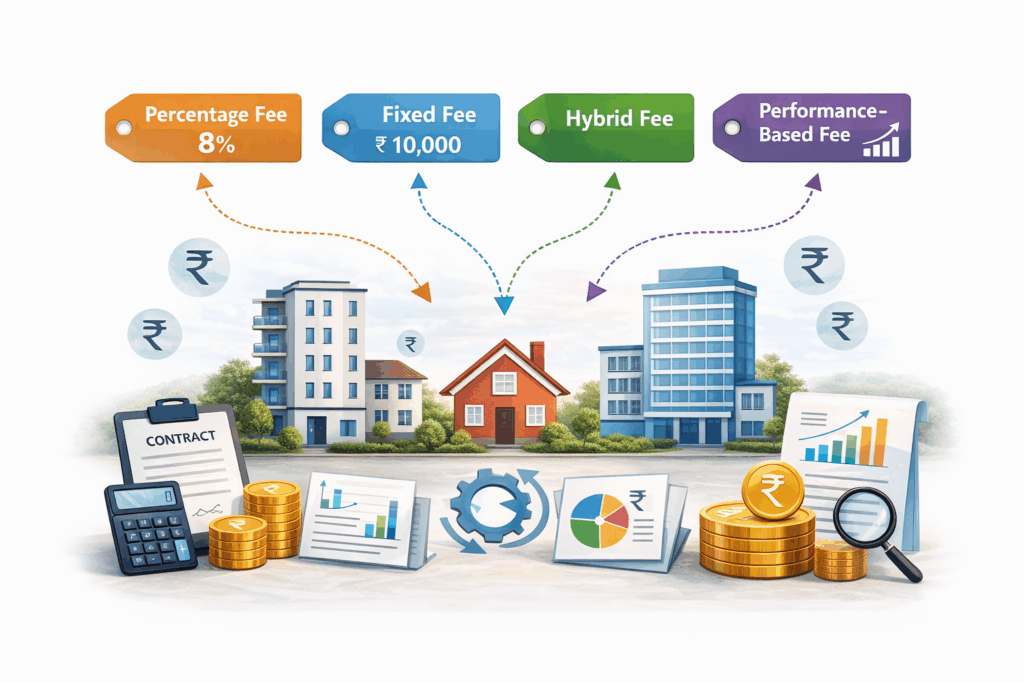
Management fees can vary depending on agreements. Some managers charge a percentage of rent, while others use fixed or hybrid models.
Common management fee structures include:
- Percentage-based fees calculated based on total rent collected
- Fixed monthly management fees for ongoing property operations
- Hybrid fee structures combining fixed and performance-based components
- Performance-based fees linked to occupancy or revenue growth
Tracking these manually can quickly become complicated, especially when managing multiple properties.
Property management software helps simplify this process by automating calculations and maintaining transparency. Managers can easily track revenue, calculate fees, and generate reports for owners.
This reduces manual effort and ensures accuracy across properties.
As property portfolios grow, automated management fee tracking becomes essential.
Reporting Requirements for Owners vs. Managers
Reporting is one of the most important features in property management software. However, owners and managers often require different types of reports.
Property owners usually prefer summary-level insights. They want quick updates that help them understand performance.
Owners typically look for:
- Monthly rent collection summaries showing revenue across properties
- Occupancy reports highlighting vacancies and tenant movement
- Expense tracking reports that show operational costs and profitability
- Property performance summaries comparing multiple properties
Property managers, however, need more detailed operational reports.
Managers often require:
- Tenant payment tracking to monitor pending dues and collections
- Lease expiry tracking to manage renewals and notice periods
- Maintenance tracking to monitor property issues and requests
- Operational summaries to manage daily activities efficiently
The best property management software supports both reporting needs without creating additional workload.
Can One Software Work for Both Owners and Managers?
Many property businesses involve both owners and managers working together. Using separate tools for each role can create unnecessary complexity.
A unified system helps maintain consistency and transparency.
Using one platform allows:
- Real-time data sharing between owners and managers
- Reduced manual reporting and communication gaps
- Improved operational efficiency across properties
- Better visibility into financial and operational performance
This approach simplifies operations and supports business growth.
Instead of switching between systems, teams can manage everything from one platform.
Choosing the Right Property Management Software
When selecting property management software, it’s important to choose a system that supports both roles effectively.
Look for features such as:
- Owner portals that provide visibility into performance and financial reports
- Role-based access that separates owner and manager responsibilities
- Management fee tracking to automate calculations and reporting
- Rent tracking and expense management for operational clarity
- Reporting and analytics for both owners and property managers
These features help create a structured workflow and improve collaboration.
The right software should adapt to your operations, not create additional complexity.
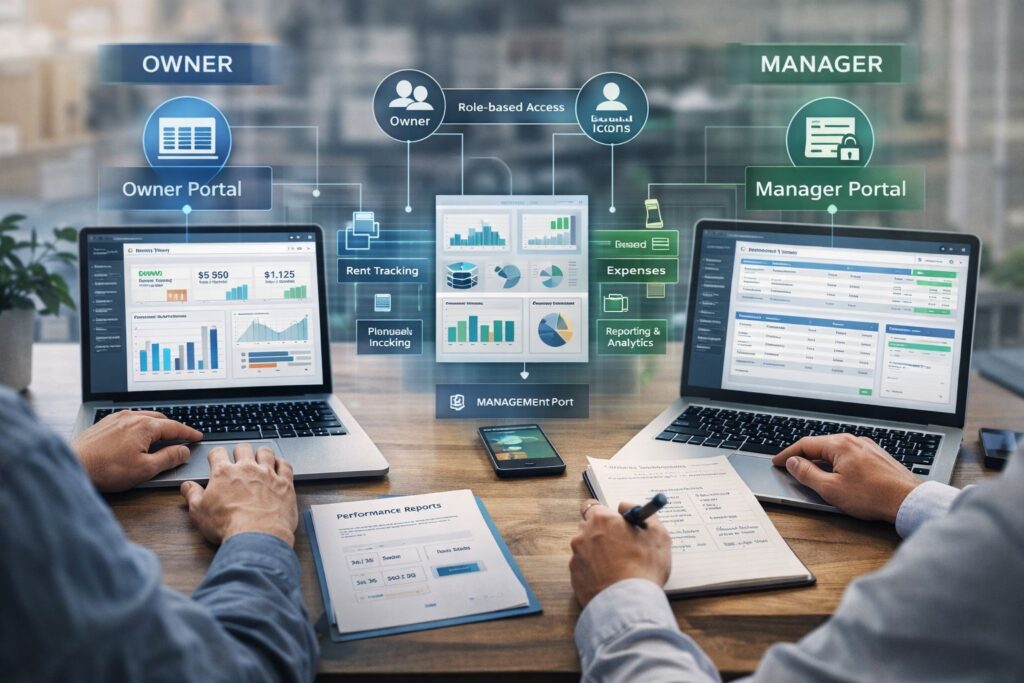
How RentOk Supports Owners and Property Managers
Managing properties for multiple stakeholders often creates communication gaps. Property managers handle daily operations, while owners expect clear visibility into performance. Without a structured system, this usually leads to manual reporting and scattered information.
RentOk helps bring everything into one place. Property managers can manage tenants, track rent, and monitor leases, while owners get access to performance insights without needing regular updates.
With RentOk, you can:
- Provide owner-level access so property owners can view rent collection, occupancy, and financial performance anytime
- Track rent payments and tenant details from a centralized dashboard
- Simplify management fee tracking and reporting across multiple properties
- Generate reports that help both owners and managers stay aligned
By keeping operations and reporting in one platform, RentOk makes it easier to manage properties while maintaining transparency between owners and managers.
Choosing the Right Approach for Your Property Business
Property owners and property managers have different priorities, but both rely on accurate data and structured workflows. Choosing software that supports both roles helps improve efficiency and transparency.
Whether you’re managing a few properties or handling large portfolios, having the right system in place makes operations smoother and more scalable.
If you’re looking to improve collaboration between owners and managers while maintaining full visibility, the right property management software can make a significant difference.