
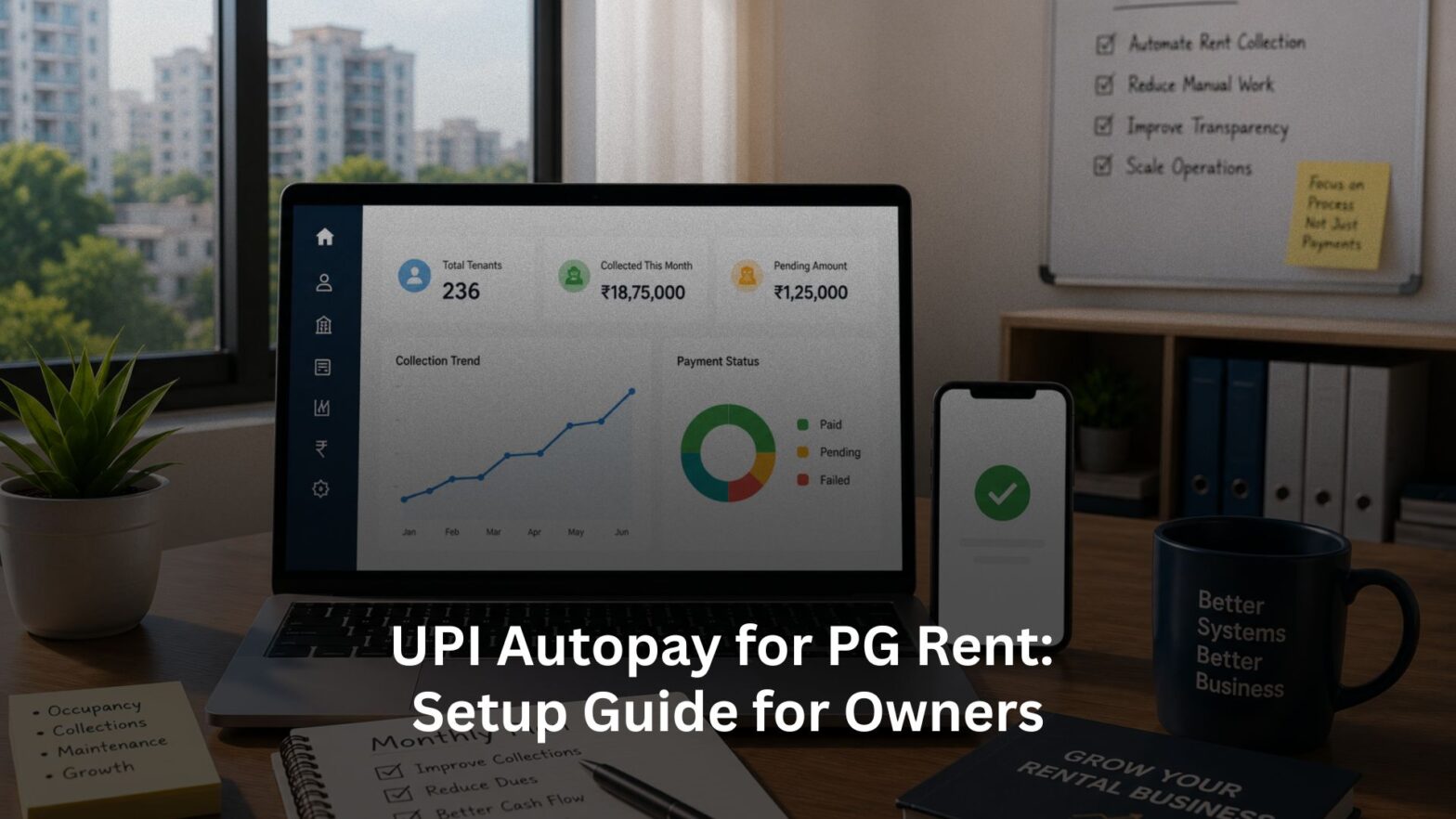
UPI Autopay for PG Rent: Setup Guide for Owners
Rent collection has always been one of the most important operational functions inside a PG, hostel, or co-living business. Occupancy may be strong, facilities may be excellent, and tenant demand may remain consistent, but if rent collection becomes unpredictable, the entire financial rhythm of the property starts getting affected.
Most property owners are familiar with the monthly cycle. Rent due dates approach, reminders need to be sent, tenants promise to pay “by evening,” staff members follow up repeatedly, and payment reconciliation consumes valuable time that could have been spent on more strategic activities. While this process may seem manageable for smaller properties, it quickly becomes inefficient as occupancy grows.
A property with 20 tenants can often survive on manual reminders and individual follow-ups. A property with 200 tenants operating across multiple floors, buildings, or locations cannot rely on the same approach without eventually creating administrative bottlenecks.
This is one of the biggest reasons why UPI Autopay is becoming increasingly important for modern rental businesses. Instead of treating rent collection as a recurring manual task, operators are beginning to automate the process through pre-approved recurring payment mandates that reduce delays, improve predictability, and simplify payment management.
But before implementing it, it is important to understand how UPI Autopay works, where it delivers the most value, and how property owners can set it up effectively.
Why Traditional Rent Collection Becomes Difficult at Scale
Many operators initially believe rent collection problems are caused primarily by tenants delaying payments intentionally. In reality, most payment delays occur because the collection process itself becomes difficult to manage as occupancy increases.
Every month, property managers need to:
- Track upcoming due dates across dozens or even hundreds of residents while ensuring reminders are sent consistently and on time to avoid unnecessary payment delays.
- Monitor partial payments, pending dues, and outstanding balances while simultaneously handling new move-ins, complaints, maintenance requests, and day-to-day operations.
- Follow up with tenants who may have simply forgotten the due date rather than intentionally delaying payment, creating additional administrative work that repeats every month.
- Reconcile payments manually and verify whether collections have been received correctly, especially when multiple payment methods are being used across the property.
Over time, these small tasks consume significant operational bandwidth.
The challenge becomes even greater when properties expand across multiple locations. What was once a simple payment collection process gradually evolves into a recurring operational responsibility that requires constant attention from managers and staff.
This is exactly where automation begins creating value.

What Is UPI Autopay?
UPI Autopay is a recurring payment system built on India’s Unified Payments Interface (UPI) infrastructure. It allows users to authorize future payments in advance, enabling businesses to collect recurring charges automatically without requiring manual approval every month.
For rental businesses, this means tenants can approve a recurring rent mandate that automatically processes payments according to an agreed schedule.
Instead of relying on:
- Monthly payment reminders that depend on tenant action every single time rent becomes due.
- Repeated follow-up calls or WhatsApp messages that consume staff bandwidth and create unnecessary friction in the payment process.
- Manual payment tracking workflows where managers constantly monitor who has paid and who still needs reminders.
The collection process becomes significantly more structured and predictable.
The important thing to understand is that UPI Autopay does not remove tenant control. Tenants approve the mandate themselves and remain fully aware of upcoming deductions. The system simply reduces the manual effort required to complete the same payment cycle every month.
Why UPI Autopay Is Growing Rapidly Across India
The rise of UPI Autopay reflects a broader shift in consumer payment behavior.
Indian consumers are increasingly comfortable using recurring payment systems for:
- OTT subscriptions such as streaming platforms where payments happen automatically without requiring monthly intervention.
- Utility payments including electricity, internet, and mobile services that operate through scheduled billing cycles.
- Insurance premiums and financial products that depend on recurring payment commitments throughout the year.
- Memberships, educational services, and software subscriptions that require consistent monthly payments.
As recurring digital payments become more common, tenant expectations are changing as well.
Many residents no longer want to remember payment dates manually. They prefer systems that remove friction and ensure payments happen on time without disrupting their schedules every month.
For property owners, this trend creates an opportunity to modernize rent collection in a way that benefits both management teams and residents.
How UPI Autopay Works for PG Rent Collection
The actual setup process is much simpler than many operators assume.
A typical UPI Autopay workflow looks like this:
- The property owner creates a recurring rent payment request for the tenant.
- The tenant receives a mandate authorization request through their preferred UPI application.
- The tenant reviews the amount, frequency, and payment schedule before approving the mandate.
- Once approved, the recurring payment instruction becomes active.
- Rent payments are automatically processed according to the agreed schedule.
- Both the tenant and property owner receive payment visibility and transaction confirmation.
The process feels familiar because it operates similarly to other recurring payment services that consumers already use regularly.
This familiarity often improves adoption because tenants do not need to learn an entirely new payment system.
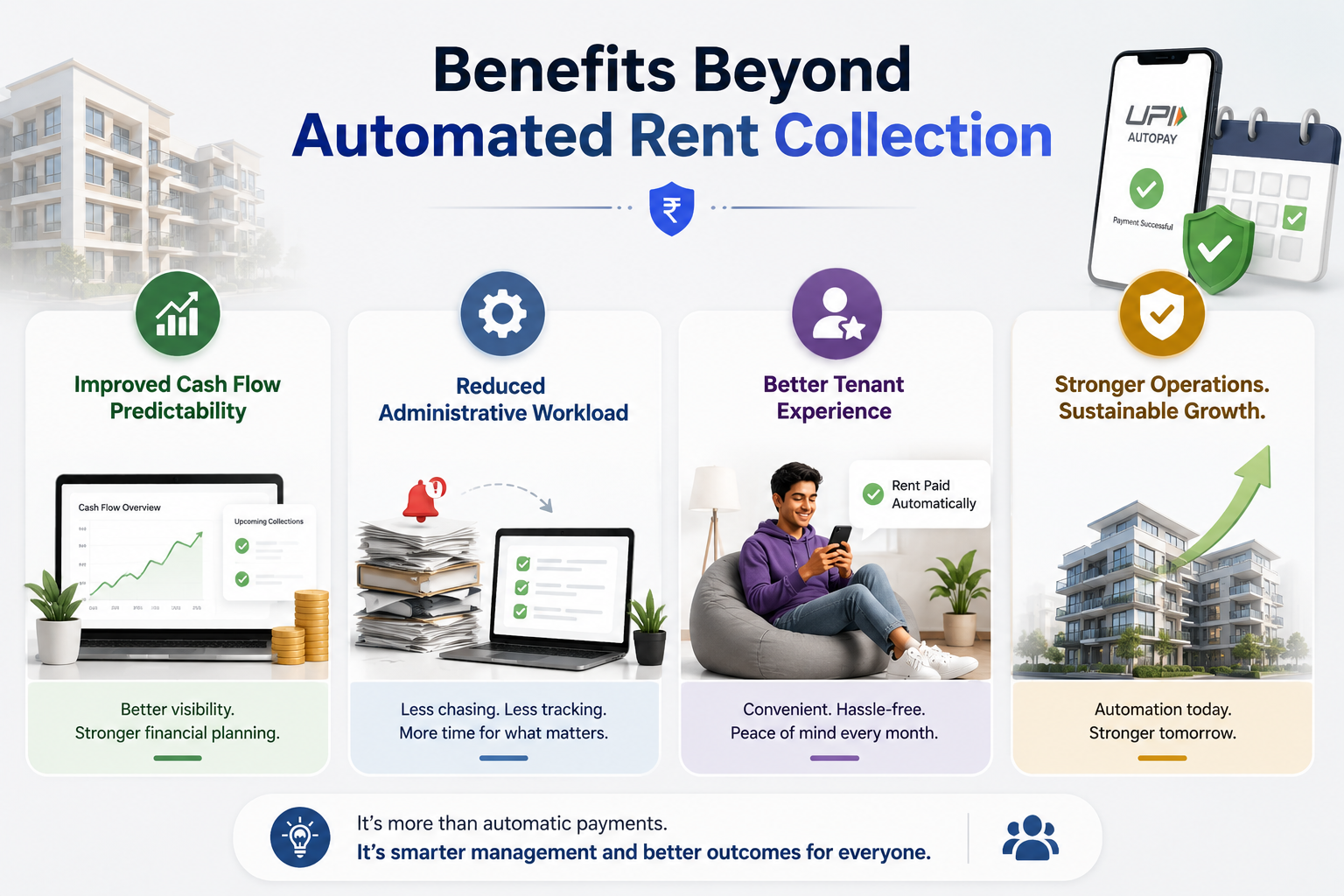
Benefits Beyond Automated Rent Collection
Many property owners initially view UPI Autopay as a payment convenience feature. In reality, its impact extends far beyond simply collecting rent automatically.
Improved Cash Flow Predictability
One of the biggest operational advantages of Autopay is predictability.
When a larger percentage of tenants pay through recurring mandates, managers gain much better visibility into expected collections. This makes it easier to plan:
- Property maintenance budgets without constantly worrying about collection fluctuations throughout the month.
- Vendor payments and operational expenses that depend on consistent cash flow management.
- Staffing and expansion decisions that require greater confidence in revenue visibility.
Predictability often becomes more valuable than speed because it improves overall business planning.
Reduced Administrative Workload
Manual collection workflows create repetitive tasks that add little strategic value.
Without automation, teams spend time:
- Sending reminders repeatedly.
- Tracking payment status manually.
- Following up on pending collections.
- Updating records after every transaction.
Autopay significantly reduces these recurring activities, allowing managers to focus on occupancy growth, tenant experience, and operational improvements instead.
Better Tenant Experience
From a tenant perspective, recurring payments often feel more convenient than manual transactions.
Residents no longer need to:
- Remember rent due dates every month while balancing work schedules, academic responsibilities, or relocation challenges.
- Search for payment details repeatedly before making transfers manually.
- Worry about accidental delays caused by busy schedules or missed reminders.
The payment process becomes smoother and more predictable, improving the overall resident experience.
Common Mistakes Property Owners Make While Implementing Autopay
Although UPI Autopay offers significant benefits, implementation quality matters.
Many operators make the mistake of treating Autopay as a technical feature rather than an operational process.
Introducing It Without Proper Communication
Some tenants immediately assume automatic payments mean they are losing financial control.
This concern can be addressed easily by explaining:
- How mandates work.
- When deductions occur.
- What notifications they will receive.
- How they can manage or review their authorization.
Transparency improves adoption significantly.
Making Autopay Mandatory Too Quickly
Not every tenant will be comfortable switching immediately.
Professional operators usually encourage adoption gradually instead of forcing participation abruptly. This creates stronger trust and reduces resistance during onboarding.
Ignoring Payment Visibility
Automation should never reduce transparency.
Residents should continue receiving clear visibility regarding:
- Upcoming deductions.
- Successful transactions.
- Payment confirmations.
- Rent records and receipts.
The strongest systems combine automation with communication rather than replacing communication entirely.
Is UPI Autopay Suitable for Every Property?
While UPI Autopay offers substantial advantages, implementation should align with property requirements.
It tends to perform particularly well for:
- PGs with recurring monthly rent structures where payment amounts remain relatively predictable over time.
- Co-living businesses managing larger occupancies where manual collection effort increases significantly as operations scale.
- Multi-property operators looking to standardize rent collection workflows across different locations and management teams.
- Digitally managed rental businesses already using software-driven operational systems.
Properties with highly variable monthly billing structures may require additional planning before implementing recurring mandates.
However, for most PG and co-living businesses, the benefits generally outweigh the operational adjustments required during setup.
Why UPI Autopay Is More Than Just a Payment Feature
The most successful rental businesses increasingly view rent collection as a workflow rather than a transaction.
The goal is not simply to receive money.
The goal is to create a collection process that is:
- Predictable enough to support long-term financial planning.
- Efficient enough to reduce administrative overhead.
- Transparent enough to maintain tenant trust.
- Scalable enough to support future occupancy growth.
UPI Autopay helps achieve these objectives by converting rent collection from a recurring manual activity into a structured operational system.
As occupancy grows, this distinction becomes increasingly important.
How RentOk Helps Simplify UPI Autopay Collection
Managing recurring rent payments becomes significantly easier when Autopay is integrated directly into the broader property management workflow.
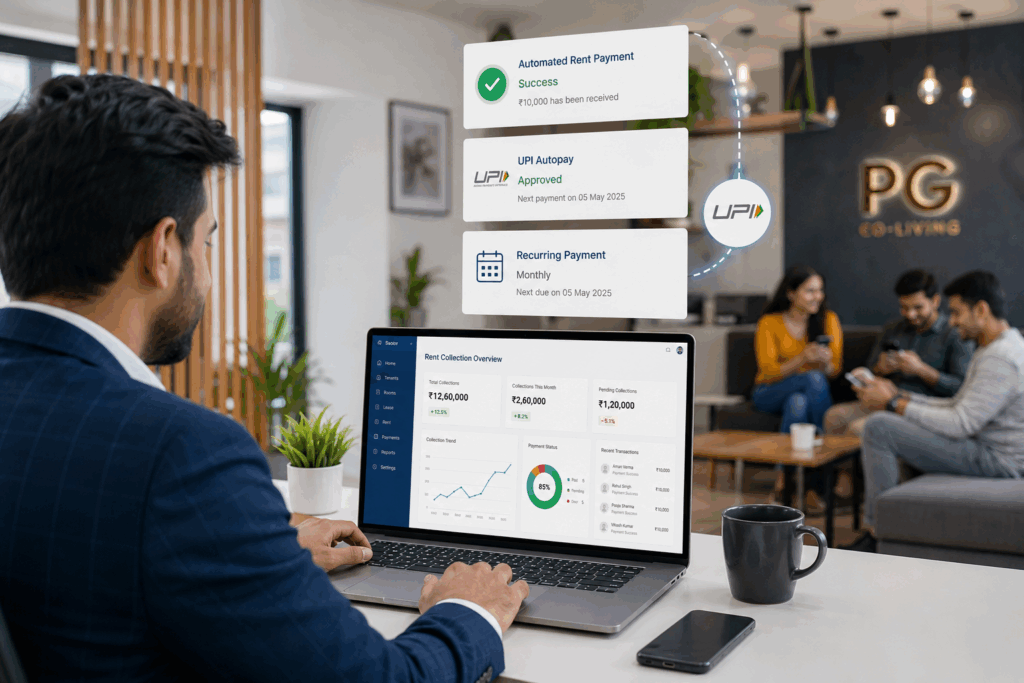
RentOk helps property owners streamline rent collection by combining payment management, tenant records, occupancy tracking, dues visibility, and recurring payment workflows within one connected platform.
Instead of managing collections through multiple disconnected tools, operators can centralize:
- Tenant payment records and recurring collection schedules within a single system that provides better operational visibility.
- Automated reminders and payment tracking workflows that reduce dependency on manual follow-ups every month.
- Collection monitoring and dues management processes that help managers identify payment patterns quickly and efficiently.
- Occupancy and financial operations together, creating a more organized approach to property management overall.
For growing PGs and co-living businesses, this creates a much smoother collection process while reducing the administrative burden that often increases alongside occupancy.
Conclusion
The future of rent collection is moving steadily toward automation. As rental businesses continue scaling and tenant expectations become increasingly digital, relying entirely on manual reminders and payment follow-ups will become harder to sustain efficiently.
UPI Autopay offers a practical solution by simplifying recurring rent collection, improving payment consistency, reducing administrative effort, and creating greater financial predictability for property owners. More importantly, it helps transform rent collection from a monthly operational challenge into a structured process that can scale alongside occupancy growth.
If you’re looking to modernize your rent collection workflow and reduce the time spent chasing payments every month, explore RentOk’s Autopay feature and discover how automated rent collection can help create a more efficient and predictable rental business.