
Fire NOC for PGs and Hostels: Process, Documents and Fees State by State
Before you pay an agent for a fire NOC for PG accommodation, check what approval your building actually needs. A certificate issued before construction, a clearance for an occupied building and a renewal are different services. Choosing the wrong one can leave you with paperwork that does not cover the stage your property has reached.
The process also changes by location. Delhi, Maharashtra, Karnataka, Telangana, Gujarat and Uttar Pradesh use different authorities, categories and compliance cycles. This guide explains where to start, which documents to prepare and how to separate government fees from the cost of making your PG fire ready.
What is Fire NOC?
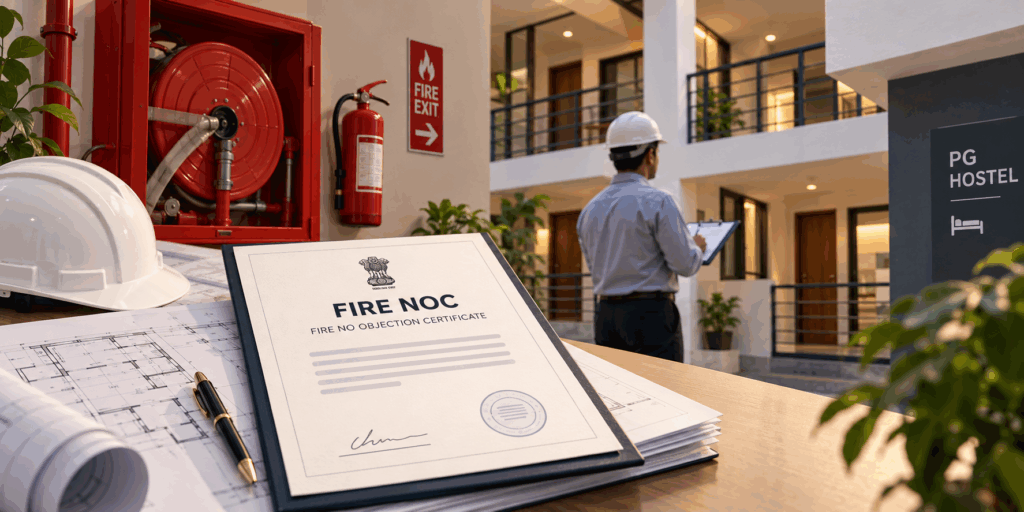
A Fire No Objection Certificate records the relevant authority’s approval against applicable fire-safety requirements, subject to its scope and conditions. Some states use names such as Fire Safety Certificate or Clearance Certificate. The document’s stage matters as much as its name.
For a new building, the process commonly includes:
- Plan or provisional approval: The proposed layout and fire-safety arrangements are reviewed before construction or the relevant development stage.
- Final or occupancy clearance: Installed arrangements are checked against the applicable requirements before the relevant occupancy approval.
- Renewal and continuing compliance: Equipment, inspections, declarations and certificates must remain up to date as prescribed locally.
An equipment invoice is not an approval. Keep the certificate with the inspection findings and maintenance records, and treat the wider fire-safety responsibilities of PG owners as an ongoing part of running the property.
When does a PG legally need a fire NOC?
There is no single nationwide rule that every PG above a particular bed count needs the same certificate. Applicability can depend on occupancy classification, building height, area, floors, use and local licensing conditions. Calling a property a family home does not establish that its conversion into a hostel is exempt.
Ask the competent fire or building authority to confirm:
- How the building is classified: A PG, institutional hostel, guest house and apartment building may fall under different requirements.
- Which approval is required: Identify the correct stage for a new project, existing operation, conversion or extension.
- Whether changes need fresh review: Added floors, a revised layout, changed use or other alterations can affect the earlier approval.
For example, Delhi Fire Service’s Rule 27 guidance sets different height and floor criteria for residential buildings and hotels or guest houses. Confirm the correct category before applying those thresholds. Review fire clearance alongside the other licences needed to run a PG rather than treating it as complete permission to operate.
Documents to keep ready
Prepare one consistent property file before starting the online form. The address, ownership details, floor count and use should agree across the application, drawings and supporting records. Your state portal’s checklist remains the final submission reference.
Typically useful records include:
- Applicant and property records: Identity, ownership or lease documents, owner’s authorisation and the operator’s registration details where requested.
- Building drawings: Site and floor plans, sections, elevations, area calculations, access roads and proposed or installed fire-safety arrangements.
- Earlier approvals: Provisional NOC, approved plans, existing fire certificate and relevant completion or occupancy records.
- Installation and maintenance evidence: Equipment details, testing reports, licensed-agency certificates and photographs where prescribed.
- Renewal records: The previous certificate, required declarations, inspection reports and evidence that deficiencies were corrected.
Keep the document names and versions clear. This is the same practical discipline needed when starting a PG business legally: establish the requirements first, then build the file around the actual premises.
How to apply online in Delhi, Maharashtra, Karnataka, Telangana, Gujarat and UP
The right application depends on whether you are planning construction, preparing a completed building for use or renewing an existing certificate. Use the state guide below to identify your route and prepare for the next step.
Delhi
Start with Delhi Fire Service’s building-safety guidance. Your PG’s classification determines the application route.
- For a new proposal: Ask the building or licensing authority whether your plans must be referred to DFS. Have your architect prepare the plans and prescribed fire-safety questionnaire.
- For a completed building: Install the measures recommended by DFS, then follow its process for inspection and issuance of the Fire Safety Certificate.
- For renewal: Keep the existing certificate ready and check DFS renewal services. The general online renewal manual excludes lodging and guest houses from that workflow, so confirm the correct route before submitting.
Maharashtra
Open the Maharashtra fire approval page. First confirm whether your local fire office, planning authority or state directorate handles the property.
- Before construction: Apply for provisional approval through the applicable route. Prepare the authorisation letter, architectural drawings, floor-wise area calculations and proposed fire-protection arrangements.
- When the building is ready: Apply for final approval using approved or revised drawings, the provisional approval where applicable and the prescribed installation or agency certification.
- Before clearance: Complete the required verification or inspection and address observations. Final approval concerns the arrangements actually provided, not just those shown in the original plans.
Karnataka
Start with Karnataka State Fire and Emergency Services and the fire office responsible for your property’s location.
- Explain your property: Provide the address, height, floors and proposed or existing PG use. Ask whether the required service is a building NOC, clearance for completed premises or renewal.
- Confirm the submission route: Request the current application link, checklist and fee demand. The PG-specific online workflow could not be verified for this guide, so avoid relying on an agent’s unsupported instructions.
- Prepare for assessment: Keep building plans, previous approvals and installed-system records ready. Follow the office’s inspection and correction requirements, and retain the issued clearance with its conditions.
Telangana
Begin at the Telangana fire-services website. The department distinguishes provisional, occupancy and renewal NOCs.
- Choose your stage: Provisional approval covers proposed arrangements; occupancy approval checks the completed building; renewal concerns an existing approval.
- Prepare the application: For occupancy approval, keep the building plans, provisional NOC where obtained and prescribed payment details ready. For renewal, retain the latest occupancy or renewal certificate and requested maintenance records.
- Follow the assessment: Submit through the applicable service, answer queries and arrange inspection. Confirm the checklist and charges for your PG; industrial TS-iPASS requirements should not be copied automatically.
Gujarat
Use Gujarat’s Fire Safety Compliance Portal and select the citizen fire-safety services.
- For a proposed building: Select Fire Safety Plan Approval, commonly shortened to FSPA, and provide the building details, plans and category-specific checklist.
- For a completed building: Select Fire Safety Certificate Approval, or FSCA. Submit the prescribed records for the installed arrangements and complete the authority’s scrutiny or inspection.
- For renewal: Select Fire Safety Certificate Renewal, or FSCR, and appoint an eligible Fire Safety Officer. Check the officer’s authorised category and complete the required inspection and reporting process before relying on the renewed certificate.
Uttar Pradesh
Use Nivesh Mitra. Its official fire NOC workflow explains how the application moves from registration to approval.
- Set up the application: Register, complete the Common Application Form and create the required unit record for your establishment.
- Choose the fire service: Select provisional approval before construction, completion approval for the completed premises or renewal for an existing certificate. Upload the documents required for that service.
- Track it to completion: Monitor the dashboard, answer department queries and arrange inspection. Once approved, download the digitally signed NOC from your account; the application receipt alone is not clearance.
Fees, validity and renewal
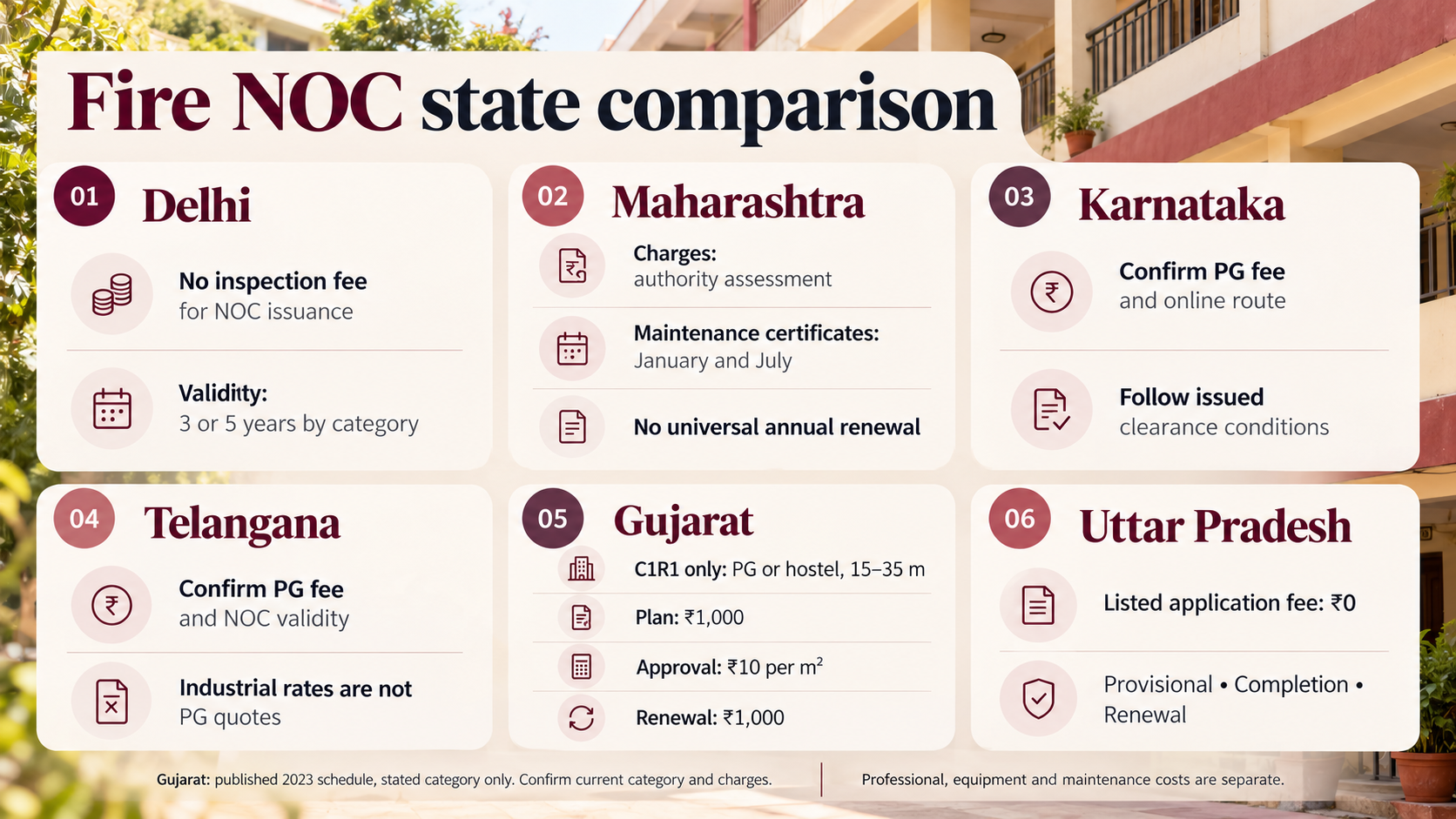
A zero application fee does not mean zero compliance cost. Budget separately for professional support, equipment, installation, testing and maintenance, and request an itemised quotation.
| State | Government fees | Validity and continuing requirements |
|---|---|---|
| Delhi | No inspection fee for NOC inspection or issuance. | Five years for residential buildings other than hotels; three for non-residential buildings including hotels. Apply at least six months before expiry. |
| Maharashtra | Obtain the authority’s applicable assessment. | No universal annual renewal; maintenance certification in January and July. Other statutes may require renewal. |
| Karnataka | Obtain the category-specific KSFES demand; current PG tariff unverified. | Follow the issued clearance and current departmental directions. |
| Telangana | Confirm PG-specific charges; industrial tariffs may not apply. | Confirm occupancy-specific validity and renewal conditions. |
| Gujarat | Published 2023 C1R1 rates for PGs/hostels 15–35 metres high: ₹1,000 plan approval, ₹10/m² certificate approval, ₹1,000 renewal. | Initial certificate: three years; renewals: two years, with six-monthly inspections and drills under the applicable framework. |
| Uttar Pradesh | Listed application fee: ₹0 for provisional, completion and renewal services. | Follow the issued certificate and current rules. |
Confirm current categories and charges before payment. Gujarat’s official FAQ explains the separate professional Fire Safety Officer fees and renewal responsibilities.
The equipment inspectors look for first
There is no universal inspection order, and the required systems depend on the building’s approved fire-safety scheme. Use the following as a preparation checklist, not a shopping list that guarantees a fire safety certificate for PG premises.
- Exits and access: Keep escape routes, stairs, doors and fire-vehicle access usable. A staircase should not become storage for mattresses or furniture.
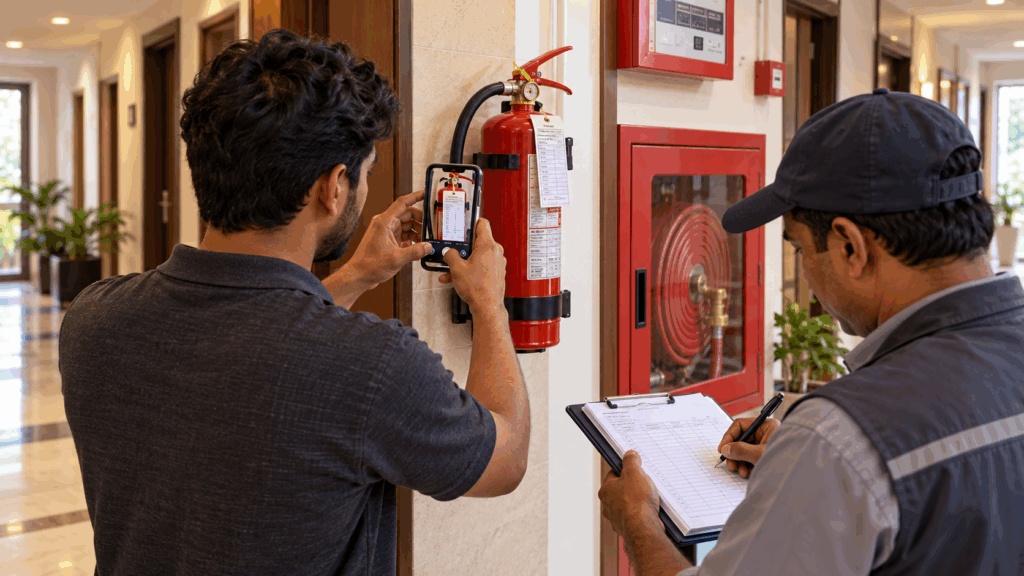
- Extinguishers: Check suitable type, placement, accessibility and service condition with the competent technician. Buying a few units does not establish compliance.
- Detection and warning: Test the alarms, detectors, call points and emergency lighting required for the premises.
- Water-based protection: Where prescribed, maintain fire-water storage, pumps, hydrants, hose reels and sprinklers as a working system.
- Electrical and kitchen risks: Have qualified professionals review unsafe wiring, overloaded circuits and cooking-fuel arrangements relevant to the property.
Keep service records and defects linked to maintenance requests and follow-up. Explain emergency reporting and evacuation arrangements in the tenant handbook and cover them when new residents move in, so they know what to do when an alarm sounds.
What if inspection fails or the certificate expires?
Ask for the written deficiencies, assign responsibility and keep evidence of corrective work. Follow the authority’s reinspection or resubmission process rather than assuming a contractor’s invoice resolves the observation. An expired certificate also needs prompt attention; filing a renewal application does not itself extend validity unless the applicable framework permits it.
If your PG is sealed for fire-safety violations, obtain the actual order and professional advice on compliance and the available remedy. Follow closure or evacuation directions and do not reopen merely because equipment has been purchased. The response depends on the legal grounds and authority’s order, not a universal fine or automatic reopening rule.
How RentOK helps organise fire compliance work
A fire certificate creates recurring operational tasks: servicing equipment, correcting complaints, informing residents and tracking expenditure. RentOK supports relevant parts of this coordination:
- Complaints and tenant notices: Support maintenance follow-up and communication about inspection visits, access or safety instructions.
- Room and occupancy records: Keep resident and room information organised when planning access or operational changes.
- Expense records: Track equipment purchases, servicing and contractor expenditure alongside property accounts.
Maintain a compliance calendar with the certificate expiry, renewal lead time, service dates, required declarations and responsible person. Confirm with RentOK whether Fire NOC renewal reminders and building-certificate storage are supported for your account; neither capability was verified in the public product material reviewed. Software supports coordination, while approvals remain with the competent authority.
Conclusion
Start with the correct building classification and approval stage. Keep the certificate, equipment, inspection records and renewal calendar current; a successful upload is only one step in the process.
Get renewal reminders on RentOk. Ask the team to confirm support for Fire NOC reminders for your account before relying on them for statutory deadlines.
FAQ
1. Is a fire NOC compulsory for every PG or hostel?
Not under one identical nationwide rule. Requirements depend on state and local provisions, building classification and characteristics, so confirm the applicable category with the competent authority before assuming either exemption or mandatory certification.
2. Can I apply online for a fire NOC for my PG?
Many states provide online services, but the portal and approval stage differ. Use the relevant government route and check whether you need provisional approval, final or occupancy clearance, or renewal.
3. How much does a fire NOC for a hostel cost?
Separate the government application charge from professional, equipment and maintenance costs. Delhi and UP publish no-fee positions for the listed services, while other states require category-specific assessment; obtain an itemised quotation.
4. Can I operate using only a provisional fire NOC?
Do not treat provisional approval as final clearance for a completed building. It generally concerns the proposed arrangements; obtain the final or occupancy-stage fire approval and other operating permissions applicable to your premises.
5. Does every fire safety certificate need annual renewal?
No. Validity, renewal and periodic maintenance declarations vary by jurisdiction and occupancy. Check the certificate and applicable rules, and record each separate deadline rather than setting one generic annual reminder.
6. Can a PG be sealed for fire-safety non-compliance?
Closure or sealing may follow action under the applicable law, depending on the breach and order issued. Obtain the written order, correct deficiencies and follow the authority’s process; purchasing equipment does not authorise reopening.