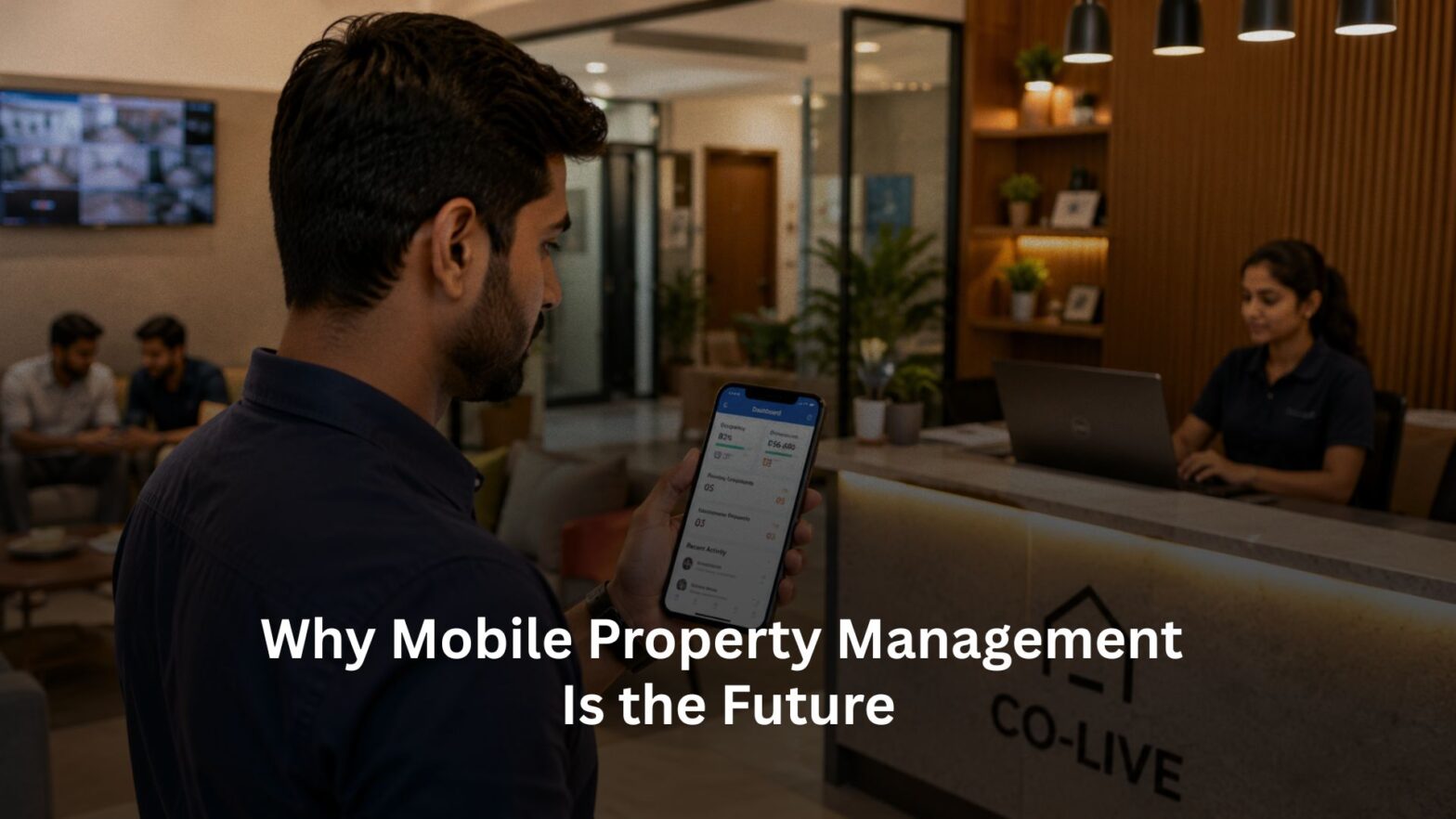
Why Mobile Property Management Is the Future
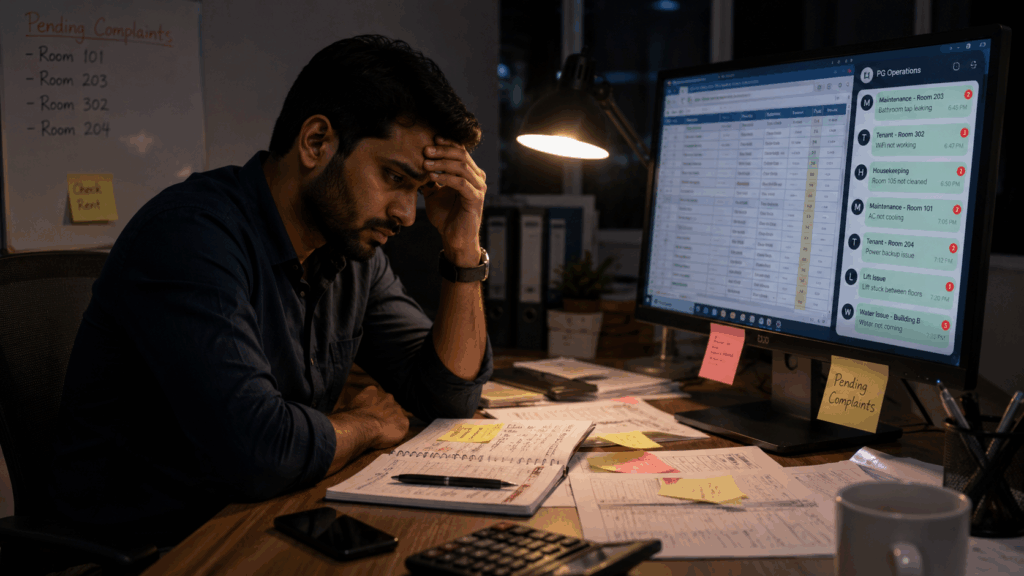
There was a time when property management could comfortably run from a desktop setup. Landlords and PG operators would sit at a reception desk with spreadsheets open, tenant registers nearby, and a desktop system that handled most administrative work at the end of the day. Complaints were written down manually, payments were tracked through notebooks or bank screenshots, and operational updates moved slowly enough for this workflow to function.
That model does not work anymore.
Modern rental businesses move in real time. Occupancy changes happen faster, tenants expect quicker responses, maintenance coordination happens continuously, and landlords are no longer managing just one building from a single location. Today’s operators are handling multiple properties, distributed teams, remote staff, and tenants who expect the same responsiveness they receive from every other digital service they use daily.
This is exactly why mobile-first property management is becoming essential for modern rental businesses.
The shift is not happening because mobile apps “look modern.” It is happening because the business itself has become mobile. Operators are no longer sitting behind desks all day. They are constantly moving between properties, coordinating vendors, handling emergencies, reviewing occupancy, and responding to tenant requests while on the go.
A desktop-only workflow creates delays in an industry where speed and visibility now directly affect tenant experience.
Why Traditional Property Management Systems Are Falling Behind
One of the biggest operational problems with desktop-heavy workflows is delayed action. Most traditional systems depend on the landlord or manager being physically present in front of a computer before anything meaningful gets updated.
That creates a chain reaction of operational inefficiencies throughout the day.
For example, many operators still follow workflows where:
- complaints are reviewed only after office hours, which means maintenance issues remain unresolved longer than necessary and tenants feel ignored even when the issue itself is manageable.
- occupancy updates happen late because room availability is checked manually, creating confusion between staff members, brokers, and incoming tenants trying to confirm bookings.
- payment verification gets delayed until someone accesses the desktop system, slowing down onboarding, receipt generation, and financial visibility across the property.
- operational communication becomes fragmented because updates are spread across personal WhatsApp chats, spreadsheets, calls, and handwritten notes instead of one connected system.
Individually, these may seem like small delays. But once occupancy scales across multiple rooms or properties, these gaps start affecting:
- tenant satisfaction,
- operational speed,
- staff accountability,
- and overall business efficiency.
This is where mobile-first systems create a completely different operational environment.
Property Management No Longer Happens in One Place
The modern landlord rarely operates from a single fixed location anymore. Many operators today manage:
- multiple PGs across different areas,
- co-living properties in different cities,
- franchise-based accommodation businesses,
- or rental operations alongside another full-time business.
This naturally changes how operational visibility needs to work.
A landlord may be inspecting one property while another property receives:
- a maintenance complaint,
- a move-in request,
- a rent payment,
- or a housekeeping escalation.
In desktop-dependent systems, visibility gets delayed until the operator returns to the office.
In mobile-first systems, operational awareness continues throughout the day itself.
That difference matters more than most people realize because modern property management is heavily dependent on response speed. Tenants are no longer comparing your PG only with nearby accommodation options. They are subconsciously comparing your responsiveness with every other digital service they use daily.
And digital responsiveness has become the new normal.
Mobile-First Does Not Mean Mobile-Only
One misconception many operators have is that mobile-first systems are trying to replace desktops entirely. That is not the actual goal.
Desktop systems still remain useful for:
- detailed reporting,
- financial analysis,
- administrative reviews,
- and large-scale operational planning.
But daily rental operations require mobility. Strong operators today need systems that allow them to:
- track occupancy while traveling,
- review complaints instantly,
- upload room updates during inspections,
- verify payments immediately,
- and coordinate teams without waiting to “reach the office later.”
The goal is operational continuity.
Property management should not stop functioning efficiently simply because the operator is away from a desk.
How Mobile Visibility Improves Daily Operations
One of the biggest operational advantages of mobile-first property management is continuous visibility. Instead of reviewing issues in batches at the end of the day, landlords can monitor operational movement throughout the day itself.
This changes management quality significantly.
For example:
- A complaint raised in the morning can immediately be assigned to maintenance staff, tracked in real time, and resolved before it escalates into tenant frustration.
- A room inspection update can instantly be shared with brokers or incoming tenants, reducing booking delays and improving occupancy movement.
- Payment verification can happen immediately, allowing smoother onboarding and reducing unnecessary follow-up calls between tenants and staff.
- Managers can track occupancy changes across multiple properties without depending entirely on verbal updates from local teams.
This creates a much more proactive operational structure.
And proactive management almost always performs better than reactive management because issues are handled before they grow larger.
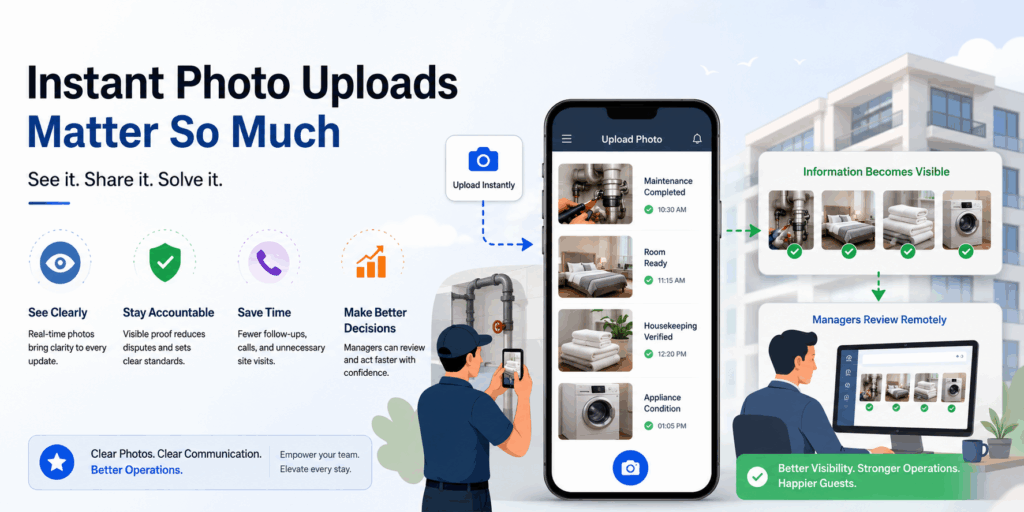
Why Instant Photo Uploads Matter So Much
One of the most overlooked operational problems in property management is poor visual coordination. Many misunderstandings happen because updates are explained verbally instead of documented clearly.
For example, maintenance staff may say a repair is completed, but the actual work quality remains unclear. Housekeeping teams may claim rooms are ready even though cleaning standards are inconsistent. Damage disputes may arise later because there was no proper visual documentation during move-in or move-out.
Mobile-first systems solve this naturally through instant photo uploads.
Staff can upload:
- maintenance completion photos directly from the property,
- room readiness updates before occupancy,
- housekeeping verification images,
- or appliance condition records during inspections.
This improves operational transparency significantly because information becomes visible instead of assumed.
It also reduces unnecessary site visits and repetitive follow-up calls because managers can review updates remotely with much better clarity.
Push Alerts Reduce Operational Blind Spots
One major reason property operations become chaotic is delayed awareness. Many issues are not ignored intentionally — they are simply noticed too late.
For example:
- rent dues may remain pending unnoticed,
- complaints may get buried inside chats,
- or operational escalations may sit unresolved because nobody manually checked the system in time.
Push notifications reduce this visibility gap.
Instead of constantly opening systems manually, operators receive real-time alerts about:
- payment updates,
- maintenance escalations,
- complaint activity,
- occupancy changes,
- and operational reminders.
This creates a more responsive management environment where decisions happen faster because information reaches the operator immediately.
And in modern rental businesses, faster visibility usually translates directly into better tenant experience.
Mobile-First Systems Improve Staff Accountability
The benefits of mobile-first operations are not limited to landlords alone. Staff coordination improves dramatically as well.
In traditional workflows, many tasks rely heavily on:
- verbal instructions,
- repeated follow-ups,
- or fragmented communication through personal chats.
This creates inconsistency because updates are difficult to track properly.
Mobile-first systems create better operational accountability because:
- housekeeping teams can update cleaning status instantly after task completion,
- maintenance staff can upload progress photos and track pending requests,
- managers can monitor operational timelines across multiple properties,
- and support teams can maintain centralized complaint visibility instead of relying on scattered conversations.
This reduces operational confusion significantly while improving workflow consistency across departments.
Modern Tenants Expect Mobile-Level Responsiveness
Tenant expectations have changed more in the last few years than many operators realize.
Today’s residents already manage most daily activities through their phones:
- banking,
- shopping,
- customer support,
- food delivery,
- transportation,
- and payments.
Naturally, they expect accommodation systems to feel equally responsive.
When rental operations still depend heavily on:
- delayed updates,
- office-only workflows,
- paper-based systems,
- or fragmented communication,
the experience immediately feels outdated.
Tenants may not explicitly say:
“This property is not mobile-first.”
But they absolutely notice the symptoms:
- slower complaint handling,
- delayed responses,
- poor visibility,
- and inconsistent coordination.
Operational responsiveness has now become part of the tenant experience itself.
Why Younger Property Brands Are Scaling Faster
Many modern co-living and rental startups are scaling quickly because they built operational systems around mobility from the beginning.
Instead of treating mobile access as an additional feature, they treat it as core operational infrastructure.
This allows them to:
- manage distributed properties more efficiently,
- reduce operational dependency on physical offices,
- coordinate teams faster,
- and maintain stronger visibility across occupancy and maintenance.
Traditional operators relying heavily on spreadsheets, desktop-only systems, and manual coordination often struggle to achieve the same operational speed once the business expands.
Because scaling a modern rental business requires operational flexibility.
And flexibility becomes difficult without mobile visibility.
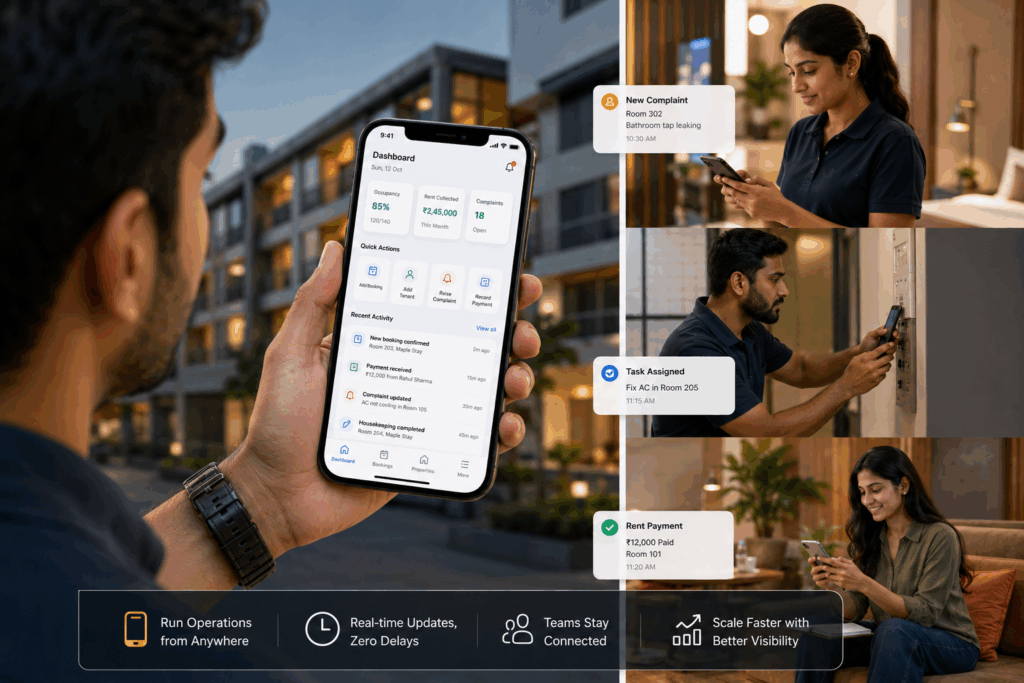
How RentOk Helps Operators Manage Properties More Efficiently
As rental businesses grow, operational coordination becomes harder to manage manually. Occupancy tracking, payment verification, complaint handling, housekeeping updates, and tenant communication often become fragmented across spreadsheets, chats, and disconnected systems.
RentOk helps simplify these workflows by centralizing:
- tenant management,
- occupancy tracking,
- payment visibility,
- complaint coordination,
- operational communication,
- and maintenance updates
within one mobile-first platform designed for modern rental businesses.
This allows landlords and property managers to monitor operations in real time, upload updates instantly, coordinate teams more efficiently, and maintain stronger visibility across properties without depending entirely on office-based workflows.
For operators managing multiple properties or growing rental portfolios, this creates a much more scalable and responsive operational structure.
Conclusion
Property management is no longer a desk-bound business.
Modern rental operations move too quickly for landlords to depend entirely on desktop systems and delayed updates. Tenants expect faster responses, smoother coordination, and operational visibility that matches the speed of the digital services they already use every day.
Mobile-first property management is not just about convenience anymore. It is becoming the operational foundation of modern PGs, co-living spaces, and rental businesses.
The operators who adapt early will build stronger systems, faster workflows, and better tenant experiences as the industry continues evolving toward real-time management.
If you want to streamline operations, improve visibility, and manage your rental business more efficiently from anywhere, explore how RentOk helps modern property managers simplify day-to-day operations through one centralized mobile-first platform.